




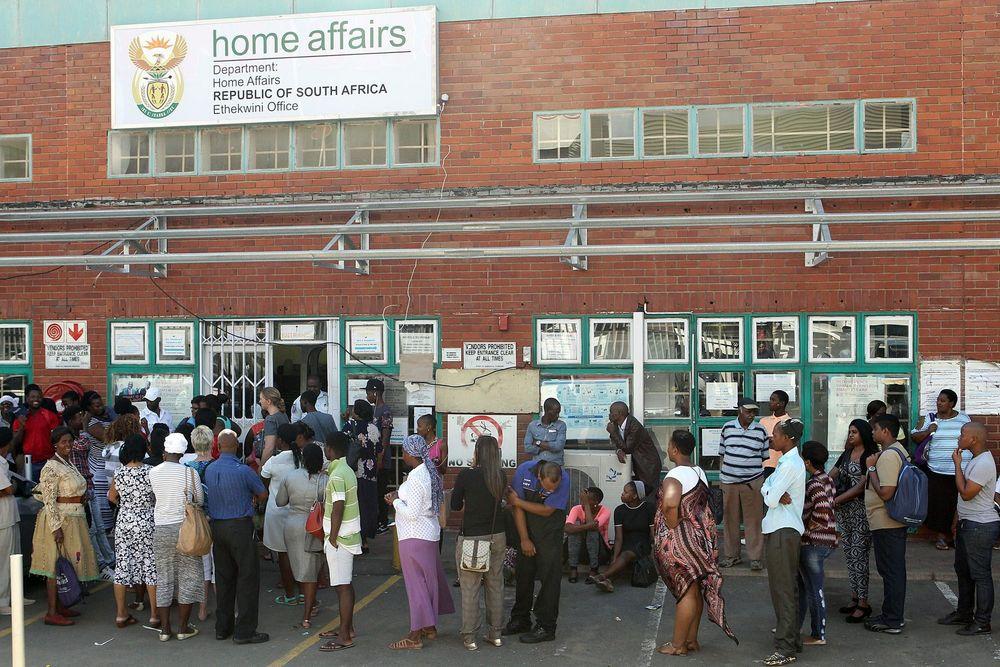
“South Africa’s government is facing renewed pressure to explain how it will administer the asylum system after a Constitutional Court judgment invalidated provisions that had restricted some people from accessing the asylum process because of how they entered the country or failed to meet certain procedural requirements. The Inter-Ministerial Committee on Migration is expected to address the practical consequences of the judgment, including the capacity of Home Affairs, while officials attempt to balance constitutional obligations, immigration enforcement and public-order concerns.”
South Africa’s migration governance system is facing a significant administrative and constitutional test as the government works to respond to the consequences of a Constitutional Court judgment concerning access to the country’s asylum system. The issue has moved quickly from a legal dispute into a practical governance challenge, with the Department of Home Affairs required to implement the court’s decision while managing concerns about the capacity of refugee reception offices and maintaining the country’s immigration controls.
The immediate issue follows a Constitutional Court judgment delivered on 7 July 2026 in Scalabrini Centre of Cape Town and Another v Minister of Home Affairs and Others. The court confirmed the invalidity of several provisions of the Refugees Act that restricted access to the asylum process on grounds including irregular entry into South Africa, failure to report to a refugee reception office within five days and the absence of an asylum transit visa.
The ruling has important implications for governance because it places the administration of the asylum system firmly within the constitutional framework. Rather than allowing procedural barriers to prevent an asylum seeker from having a claim considered on its merits, the court found that the challenged provisions were inconsistent with the Constitution and invalid. The judgment was unanimous, according to the Constitutional Court’s official summary.
Following the judgment, Home Affairs instructed refugee reception offices not to turn away people who want to apply for asylum on the basis of how they entered the country. That directive has now created an immediate operational challenge for the department, particularly as groups of people have gathered at refugee reception facilities seeking access to the asylum system.
The situation became particularly visible in Durban, where tensions developed outside the Home Affairs refugee reception centre on Che Guevara Road. According to reports, protesters disrupted the process and prevented asylum seekers from entering the facility. Police were deployed as tensions escalated.
For the government, the challenge is therefore not limited to implementing a court judgment. It involves coordinating several departments, protecting access to a constitutionally governed process, maintaining public order and continuing to enforce immigration laws.
The Inter-Ministerial Committee on Migration has been brought into the response. According to eNCA, the committee held an urgent meeting involving legal experts and key stakeholders to consider the implications of the judgment and identify what government described as a lawful, practical and sustainable way forward.
The committee’s involvement reflects the broader institutional nature of migration governance in South Africa. Migration policy involves Home Affairs, policing, border management, justice, international relations and other government functions. The government previously established the committee to coordinate its migration-management programme and has described its role as bringing different departments together around border management, law enforcement, immigration administration and related matters.
The latest developments also highlight a central tension in public administration: government must enforce immigration legislation while ensuring that enforcement remains consistent with constitutional rights and judicial decisions.
Home Affairs has stressed that it respects the Constitutional Court and is constitutionally required to implement its judgments. In a statement issued on 7 October, the department said the judgment in the Scalabrini matter was binding and rejected claims that changes to the asylum process were introduced voluntarily by the minister or political parties.
The Constitutional Court’s decision itself provides important context. The court considered provisions that could prevent asylum seekers from entering the asylum process because of procedural or immigration-related non-compliance. It confirmed that sections 4(1)(f), 4(1)(h), 4(1)(i) and 21(1B) of the Refugees Act were inconsistent with the Constitution and invalid.
The court’s reasoning also considered the consequences for children and the principle that people seeking protection should have access to a determination of their claims. The judgment followed a challenge brought by the Scalabrini Centre, with several organisations participating as amici curiae.
This creates a governance requirement for Home Affairs to redesign or adjust administrative procedures so that officials can receive asylum applications while still maintaining an orderly and efficient system.
Capacity is one of the immediate concerns. The government has been pursuing wider reforms to modernise immigration management, including technological systems, stronger border controls and changes to legislation and administrative procedures. In September, the Inter-Ministerial Committee said government was developing reforms intended to improve the efficiency and integrity of the immigration system.
Those reforms now have to operate alongside the Constitutional Court ruling.
The government has also previously said that migration management must involve both stronger enforcement and respect for the rule of law. In June, the Inter-Ministerial Committee outlined a five-point strategy involving stronger border security, reinforcement of the rule of law, action against corruption, measures against violence and lawlessness, and refinement of the legislative framework.
That policy approach illustrates why the asylum dispute is fundamentally a governance story. The government is being required to manage competing administrative responsibilities rather than simply choose between immigration enforcement and access to asylum procedures.
South Africa has continued to strengthen its border-management programme during 2026. Government reported progress in border infrastructure, technology and cooperation between agencies in September, including the implementation of an Electronic Travel Authorisation system and an upgraded movement-control system at OR Tambo International Airport.
At the same time, authorities have continued enforcement operations against people found to be unlawfully in the country. Government figures published in June reported thousands of arrests for alleged immigration violations, while officials said the broader programme was intended to ensure that immigration enforcement remained within the law.
The Constitutional Court judgment does not remove the government’s responsibility to administer immigration laws. Instead, it establishes limits on how access to the asylum system can be restricted. This distinction is important because an asylum application and a final decision granting refugee status are not the same thing.
The immediate administrative obligation is to provide access to the application process. Claims can then be considered through the relevant legal and administrative mechanisms.
The government must consequently find ways to prevent the reception system from becoming overwhelmed while ensuring that people seeking protection are not excluded through procedures that the court has declared unconstitutional.
Public confidence is another important dimension. The government has said that uncertainty surrounding the judgment has contributed to confusion and has warned against misinformation. The Department of Home Affairs stated on 7 October that it was concerned about what it described as a coordinated disinformation campaign relating to the Constitutional Court decision.
Clear communication will therefore be an important part of the government’s response. Officials need to explain what the court actually decided, what asylum seekers are entitled to do, what Home Affairs officials must do, and what immigration enforcement powers remain available to the state.
The developments in Durban demonstrate why communication and institutional coordination matter. Reports indicated that protesters disrupted access to the refugee reception centre while foreign nationals gathered to make applications following the government directive.
The government has previously maintained that immigration enforcement is a responsibility of the state and warned against citizens conducting their own immigration checks or enforcement activities. Its stated position is that protests must remain peaceful and within the law.
The coming period will therefore test the ability of South Africa’s institutions to translate a constitutional judgment into workable public administration. Home Affairs will need sufficient staff, reception capacity, documentation systems and procedures to deal with applications while government as a whole manages border security, public order and international obligations.
The issue also demonstrates the role of courts in South Africa’s constitutional democracy. Parliament and the executive are responsible for developing and administering immigration policy, but legislation and administrative practices must comply with the Constitution. Where provisions are found unconstitutional, government institutions are required to adjust their practices accordingly.
For the government, the task now is to turn that constitutional requirement into an effective administrative system. The Inter-Ministerial Committee’s engagement with legal experts and other stakeholders is intended to help establish that pathway.
Ultimately, the governance challenge is about ensuring that different objectives are administered within a single legal framework. South Africa must maintain effective immigration controls, protect the integrity of its borders, respond to public concerns and maintain public order, while also ensuring that people seeking asylum can access the process established under constitutional and refugee law.
The Constitutional Court judgment has clarified one part of that framework. The next test is administrative: whether government can implement the ruling consistently across the country while maintaining an asylum system that is accessible, orderly and capable of processing applications.
As the Inter-Ministerial Committee addresses the immediate pressures, the government’s response will be closely watched because it will reveal how effectively South Africa’s migration institutions can adapt when judicial decisions require significant changes to established administrative practices. The outcome will also have implications for public confidence in the rule of law and for the broader governance of immigration and asylum in the country.



