




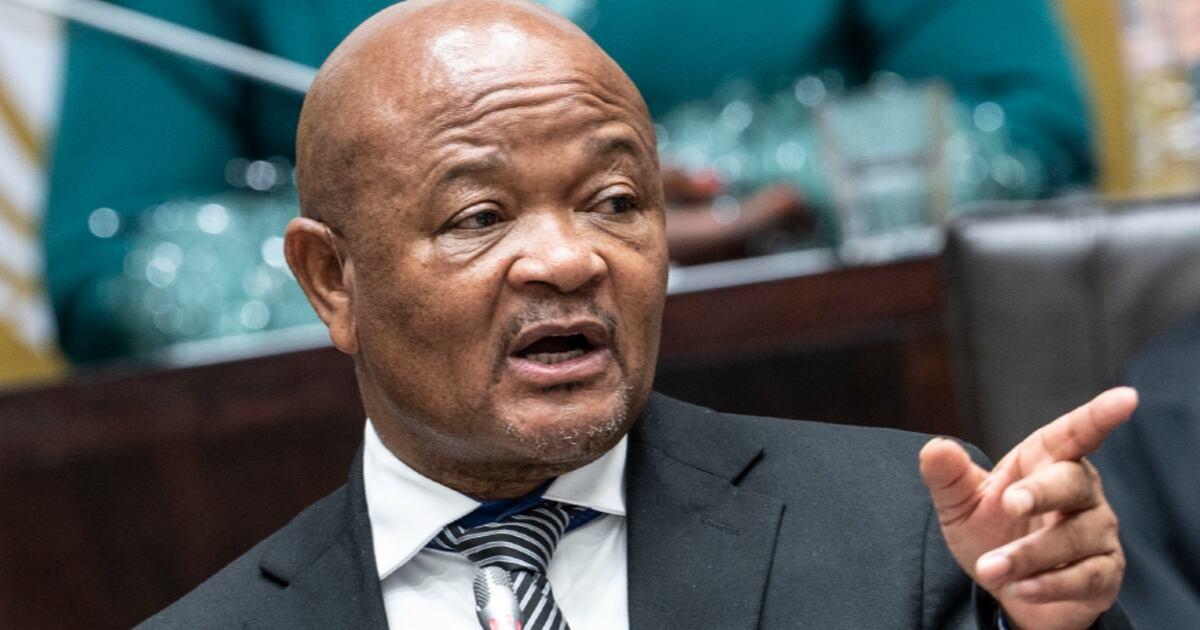
“South Africa’s political parties have taken different positions over allegations involving suspended Police Minister Senzo Mchunu and alleged criminal kingpin Vusimuzi “Cat” Matlala, with ANC Chief Whip Mdumiseni Ntuli rejecting the EFF’s proposed findings while the EFF and MK Party have supported stronger conclusions. The dispute comes as Parliament’s ad hoc committee concludes its deliberations on allegations concerning political influence, police operations and possible interference in the country’s justice system, making the committee’s final recommendations a significant political issue.”
Political parties divided as Mchunu allegations reach crucial stage
South Africa’s political landscape has been given another reminder of the deep divisions between major political parties after the African National Congress (ANC), Economic Freedom Fighters (EFF) and uMkhonto weSizwe Party (MK Party) adopted different positions during deliberations on Parliament’s investigation into allegations surrounding the country’s policing and justice system.
The latest development centres on ANC Chief Whip Mdumiseni Ntuli’s rejection of an EFF submission concerning Police Minister Senzo Mchunu. The EFF argued that the committee should make findings that included allegations that Mchunu solicited bribes, among other claims, from Vusimuzi “Cat” Matlala, who has been described in parliamentary proceedings as an alleged criminal kingpin. Ntuli disagreed with that interpretation and urged the committee not to make such a finding.
The disagreement is politically significant because the ad hoc committee’s work has placed competing political parties in a position where they must interpret the same evidence and decide how strongly Parliament should respond to allegations involving senior political figures and policing structures.
The committee has been investigating allegations concerning interference in the justice system and the functioning of law-enforcement institutions. Its work has included evidence and submissions involving Mchunu, Matlala and other individuals. Parliament’s official records show that the committee collected witness statements from a wide range of senior figures, including Mchunu, Matlala, former Police Minister Bheki Cele, national police leadership and other witnesses.
ANC challenges EFF interpretation
At the centre of the latest political dispute is the question of whether the evidence before the committee is sufficient to justify conclusions that Mchunu solicited bribes or was involved in unlawful activity.
According to SABC News, Ntuli disagreed with the EFF’s submission during deliberations on the committee’s draft report. The MK Party supported the stronger position advanced by the EFF, meaning that political parties on the committee were not united on how the evidence should be interpreted.
Ntuli also questioned whether evidence concerning Brown Mogotsi’s alleged role in communicating ministerial directives was sufficient to support the conclusions being proposed. His position was that the evidence should not automatically be interpreted as establishing the more serious allegations being advanced by other parties.
The disagreement illustrates one of the most difficult responsibilities facing parliamentary committees: separating political interpretation from evidence-based findings. Political parties have different interests, ideological positions and approaches to government accountability, but parliamentary reports are expected to establish conclusions that can withstand legal and public scrutiny.
For the ANC, the issue also has broader political implications. Mchunu is a senior government figure, and allegations involving a sitting or suspended minister can affect public confidence in both the government and the governing party. Consequently, ANC representatives have an interest in ensuring that parliamentary findings are supported by evidence rather than assumptions.
For opposition parties such as the EFF and MK Party, however, the committee provides an opportunity to demand greater accountability and to challenge what they regard as failures within the political and law-enforcement establishment.
Committee recommendations could carry political consequences
The committee’s final report is important because its recommendations could influence how law-enforcement authorities approach some of the allegations that have emerged during the inquiry.
Another development reported on 8 October involves political parties supporting a recommendation that former Police Minister Bheki Cele be investigated over allegations involving Matlala. The committee wants investigators to examine records, including banking and accommodation information, to test evidence presented during its proceedings. The ANC, EFF and MK Party supported that recommendation, according to Eyewitness News.
This distinction is important. A parliamentary recommendation for further investigation does not itself establish criminal guilt. Instead, it can ask competent investigative authorities to examine allegations and determine whether sufficient evidence exists for further action.
That principle will remain important as South Africans follow the committee’s final report. Allegations involving senior politicians can quickly become politically charged, particularly when different parties use the same evidence to support competing interpretations.
Political parties and accountability
The dispute also highlights the changing role of political parties in South Africa’s coalition-era politics.
The country’s political environment has become more fragmented following the 2024 national elections, with the ANC no longer governing nationally with an outright parliamentary majority. The emergence of a Government of National Unity and the growing influence of opposition parties have created an environment in which parliamentary committees can become important arenas for negotiation, confrontation and accountability.
The ANC remains the largest political force in national government, while the EFF and MK Party have positioned themselves as strong critics of the governing establishment. Their differing views on the Mchunu allegations therefore form part of a wider contest over how political power should be exercised and scrutinised.
The MK Party, in particular, has increasingly challenged established political structures, while the EFF has continued to emphasise aggressive oversight and accountability. The ANC, meanwhile, has sought to defend institutional processes while maintaining that serious allegations must be properly investigated.
These differences are not limited to Parliament. They are also becoming increasingly important as South Africa approaches the 2026 Local Government Elections.
Election politics adds another layer
South Africa is preparing for local government elections scheduled for November, and political parties are already competing for support across municipalities. SABC News reported separately that the IFP is willing to work with parties that share its commitment to putting community interests first, demonstrating how coalition-building and political alliances are becoming central issues ahead of the elections.
The political environment therefore extends beyond national parliamentary disputes. Voters will also judge parties according to their positions on corruption, service delivery, policing, unemployment, infrastructure and municipal accountability.
The controversy surrounding the parliamentary committee could influence those debates because public trust in political institutions remains closely connected to perceptions of accountability.
If voters believe that political parties protect their own leaders from scrutiny, that could damage confidence in established parties. Conversely, if parliamentary investigations are perceived as politically motivated rather than evidence-based, public trust in oversight mechanisms could also suffer.
Importance of evidence and due process
The latest dispute reinforces the need for political parties to distinguish between allegations, findings and proven wrongdoing.
Parliamentary committees can examine evidence and make recommendations, but criminal investigations and prosecutions remain the responsibility of the relevant law-enforcement and prosecutorial institutions.
That distinction is particularly important in cases involving senior public officials. A political party may argue that evidence points towards wrongdoing, while another party may conclude that the same evidence is insufficient. Ultimately, investigative authorities must determine whether the evidence meets the relevant legal threshold.
The committee’s work therefore matters not only because of the individuals involved but also because it tests South Africa’s institutions of accountability.
The Parliament investigation has already brought together evidence from numerous witnesses and placed questions about policing, political influence and alleged criminal networks under public scrutiny.
What happens next
The immediate focus will now shift towards the committee’s final report and its recommendations. The report is expected to reflect areas where committee members reached agreement as well as issues where political parties remained divided.
For the ANC, the challenge will be to demonstrate that its position is based on a careful assessment of evidence rather than an attempt to shield a government colleague. For the EFF and MK Party, the challenge will be to demonstrate that their stronger findings are supported by evidence capable of withstanding legal and institutional scrutiny.
The outcome will also be watched closely by South Africans preparing to vote in local elections. Political parties are increasingly competing not only over traditional ideological differences but also over questions of governance, integrity, public safety and institutional accountability.
Ultimately, the Mchunu dispute demonstrates how parliamentary investigations have become an important battleground in South Africa’s fragmented political system. The disagreement between the ANC, EFF and MK Party is more than a dispute over wording in a committee report. It reflects competing visions of accountability and political responsibility.
As the ad hoc committee concludes its work, the credibility of its final recommendations will depend on whether they clearly distinguish established facts from allegations and whether the evidence is presented transparently. For voters, the episode provides another opportunity to judge political parties not only by what they promise during election campaigns but also by how they respond when powerful public officials face serious allegations.
The final report will therefore have consequences beyond Parliament. It could influence public confidence in political parties, shape election debates and contribute to the continuing national conversation about corruption, policing and the strength of South Africa’s democratic institutions.



