




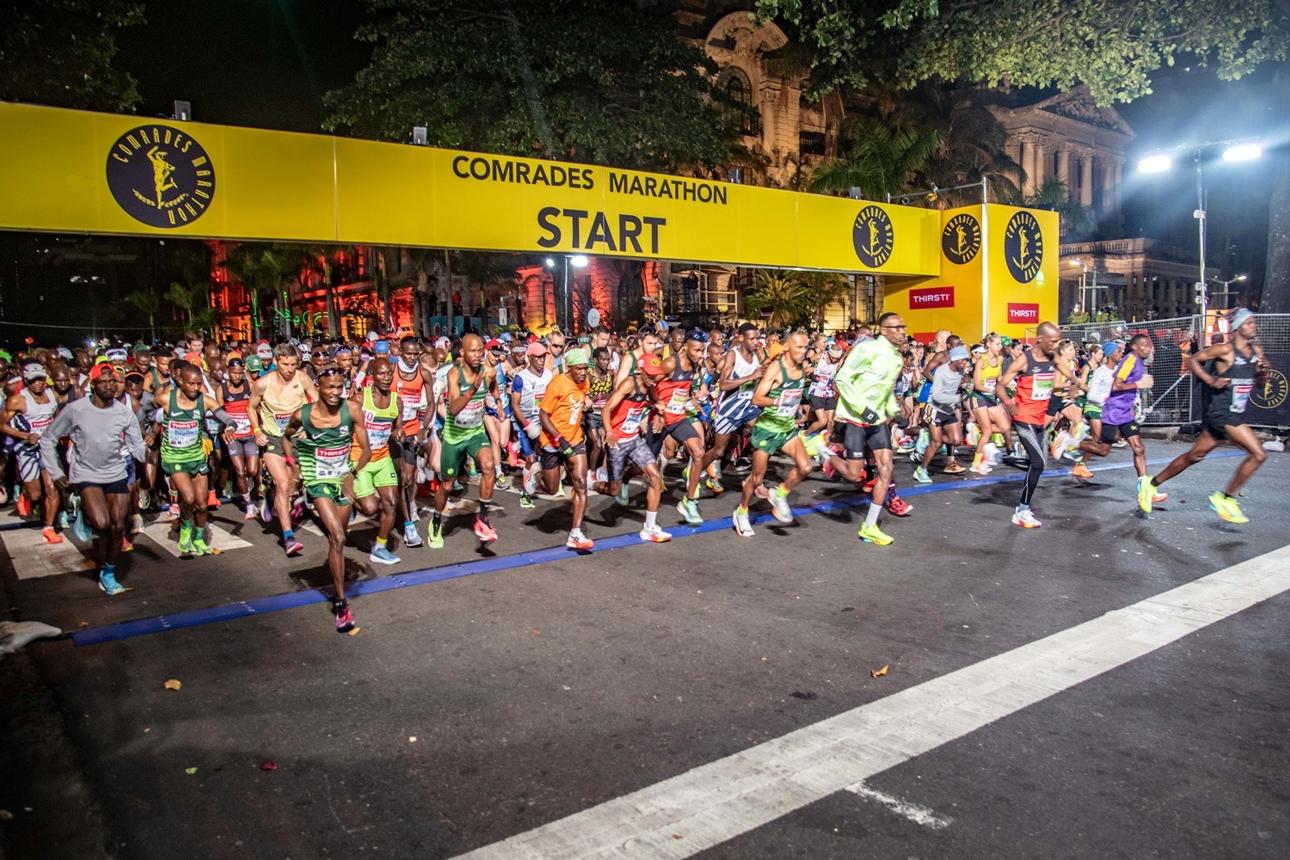
“A High Court judgment has overturned a KwaZulu-Natal Athletics (KZNA) resolution that sought to remove voting and governance rights from Comrades Marathon Association members living outside KwaZulu-Natal. The decision reinforces the association’s independence and represents an important development for South African road running ahead of the historic 100th Comrades Marathon in June 2027.”
High Court ruling strengthens Comrades Marathon Association’s independence ahead of historic 100th race
South African athletics governance faces a major turning point as court protects Comrades Marathon members’ voting rights
South African athletics has reached another important moment in its ongoing governance challenges after the High Court ruled in favour of the Comrades Marathon Association (CMA), overturning a KwaZulu-Natal Athletics (KZNA) decision that attempted to restrict the voting and governance rights of members living outside the province.
The judgment represents a significant development for one of the world’s most recognised ultramarathons and comes at a particularly important time as South Africa prepares for the historic 100th edition of the Comrades Marathon in June 2027.
The dispute has attracted considerable attention because the Comrades Marathon is more than an annual sporting competition. It is a major part of South Africa’s athletics culture, bringing together professional runners, recreational athletes, running clubs, volunteers, sponsors and supporters from across the country and internationally.
The High Court’s decision has therefore raised important questions about sporting independence, membership rights, organisational accountability and the responsibilities of athletics governing bodies.
According to reporting by IOL Sport, the court set aside a KZNA executive board resolution that attempted to downgrade Comrades Marathon Association members from outside KwaZulu-Natal to non-voting observers or volunteers.
The judgment confirmed that ordinary CMA membership is not geographically restricted to KwaZulu-Natal residents. It also recognised that the association operates independently of KZNA in its internal governance, policies and procedures.
High Court overturns the disputed KZNA resolution
The legal dispute centred on whether KwaZulu-Natal Athletics had the authority to restrict the participation of Comrades Marathon Association members based on where they lived.
The provincial athletics federation had attempted to change the status of members residing outside KwaZulu-Natal, removing their voting and governance rights within the association.
However, the High Court found that KZNA did not have the necessary legal or constitutional authority to impose those restrictions.
An important distinction in the judgment concerned the athletics domicile rule. The court found that this rule applies to athletes and participation structures rather than ordinary membership of a race-organising association.
Consequently, the geographical location of a CMA member could not automatically determine whether that person was entitled to participate in the association’s governance.
The ruling provides an important clarification for sports organisations that operate nationally while maintaining relationships with provincial and national sporting federations.
For the Comrades Marathon Association, the decision reinforces its ability to manage its internal affairs without allowing geographical restrictions to undermine the rights of its membership.
KZNA ordered to pay legal costs
Another significant aspect of the judgment concerned the court’s criticism of KZNA’s handling of the legal proceedings.
The High Court reportedly raised concerns about procedural conduct, including late filings and an incomplete review record.
As a result, the provincial federation was ordered to pay the applicants’ legal costs, including the costs associated with two counsel.
This financial consequence highlights the importance of following appropriate legal procedures when sporting organisations make decisions that affect membership rights and institutional governance.
In a statement circulated to club chairpersons on Thursday evening, KZNA confirmed that it had received the judgment.
The federation also indicated that it would not challenge the ruling.
KZNA acknowledged the court’s decision to set aside the disputed executive board resolution and confirmed that it would respect the outcome.
The federation expressed its intention to move forward constructively and concentrate on the future of athletics in KwaZulu-Natal.
This response could provide an opportunity for the parties to move beyond the legal confrontation and focus on rebuilding relationships within the provincial athletics community.
CMA leadership welcomes the decision
The Comrades Marathon Association leadership welcomed the court’s ruling, describing it as an important outcome for members and the wider running community.
CMA chairperson Mark Leathers emphasised that the Comrades Marathon belongs to runners across all provinces and around the world.
His position reflects the international reputation of the event and its importance to athletes who travel to South Africa to participate in the challenging ultramarathon.
The association’s general manager, Alain Dalais, also welcomed the judgment, describing the outcome as a victory for all.
Deputy chairperson Nontuthuko Mashimane indicated that legal costs recovered from KZNA were expected to be directed towards official Comrades charities.
This aspect is particularly important because the Comrades Marathon has developed a strong charitable identity alongside its sporting achievements.
The event attracts significant public participation and provides opportunities to support charitable organisations through fundraising and community initiatives.
The leadership’s response suggests that the association wants to use the outcome as an opportunity to move forward rather than prolong the disagreement.
A major development before the 2027 Comrades Marathon centenary
The timing of the judgment is especially significant because the Comrades Marathon is approaching its historic 100th running in June 2027.
The race, traditionally contested between Durban and Pietermaritzburg, is one of the most demanding and prestigious ultramarathons in the world.
Its centenary edition is expected to attract substantial interest from South African and international runners.
For athletes, the event represents an opportunity to become part of a historic sporting occasion.
For running clubs, it provides an important platform to showcase their development programmes, coaching structures and commitment to distance running.
For sponsors and commercial partners, the centenary presents an opportunity to support an internationally recognised sporting institution.
However, major sporting events require effective governance and administrative stability.
Disagreements between organisations responsible for managing the sport can create uncertainty around event planning, official recognition, athlete participation and long-term development.
The High Court judgment therefore provides an important legal clarification as preparations continue for the 2027 event.
Nevertheless, the ruling should not automatically be interpreted as resolving every disagreement involving the association and the wider athletics administration.
The parties will still need to establish constructive working relationships and ensure that the necessary sporting arrangements are in place.
The wider conflict within South African athletics
The Comrades Marathon dispute has developed against a wider background of governance challenges affecting South African athletics.
According to the IOL report, CMA members voted overwhelmingly at a special general meeting in August to sever affiliation ties with KZNA.
That decision contributed to tensions with Athletics South Africa (ASA), which subsequently threatened to withhold official sanctioning for the 2027 centenary event.
These developments raised concerns about the relationship between independent race organisers, provincial athletics federations and the national governing structure.
The situation also coincided with significant leadership changes within South African athletics.
The reported developments included the resignation of former KZNA president Steve Mkasi during a disciplinary hearing, the removal of former ASA president James Moloi and the resignation of ASA deputy president John Mathane.
At national level, Athletics South Africa has also faced pressure to undertake constitutional reforms.
A separate IOL report published in November described a nine-month reform and election roadmap intended to address governance problems and avoid the possibility of international sanctions.
These developments demonstrate that the challenges facing South African athletics extend beyond a single provincial dispute.
The sport requires transparent administration, clearly defined responsibilities, accountable leadership and effective cooperation between its various structures.
Why the ruling matters to ordinary runners
Although the legal proceedings involved sporting organisations and membership rights, their implications extend to ordinary runners.
The Comrades Marathon attracts athletes with different backgrounds, abilities and levels of experience.
Some participants compete for elite positions, while others enter to achieve personal goals, complete their first ultramarathon or raise funds for charitable causes.
Running clubs also play a critical role in preparing participants through training programmes, coaching, mentorship and organised group activities.
A governance structure that recognises the rights of members from different provinces can help ensure that the association remains connected to its national and international running community.
The court’s clarification also demonstrates that membership rights should be determined according to applicable constitutional and legal provisions rather than assumptions about geographical boundaries.
For athletes and supporters, stable administration is important because it creates confidence in the organisations responsible for managing major competitions.
However, the practical benefits will depend on how the organisations implement the judgment and cooperate in the months ahead.
The importance of accountability in athletics administration
The latest court decision provides a broader lesson for sports administrators across South Africa.
Athletics organisations have responsibilities that go beyond organising races and selecting athletes.
They must also protect members’ rights, manage finances responsibly, follow their constitutions and ensure that decisions are made through appropriate procedures.
When disputes emerge, transparent communication and proper governance processes can help prevent disagreements from developing into expensive legal battles.
The legal costs imposed on KZNA demonstrate that administrative decisions can have significant financial consequences when they are challenged successfully.
Sports organisations must therefore ensure that their boards understand the limits of their authority and the constitutional rights of their members.
For Athletics South Africa, the wider reform process will be important in restoring confidence among athletes, clubs, provincial structures, sponsors and international sporting partners.
A stronger national administration could also help South Africa maintain its position as an important athletics nation.
What happens next for the Comrades Marathon?
The immediate priority will be ensuring that the judgment is respected and that the association can continue preparing for the 2027 centenary edition.
KZNA has indicated that it will not challenge the decision, potentially creating space for a more constructive relationship between the organisations.
However, questions surrounding affiliation, official sanctioning and the broader administration of athletics will still require attention.
The Comrades Marathon Association will also need to maintain its focus on the operational requirements of the historic event.
These include athlete registration, route preparations, medical arrangements, safety, logistics, sponsorship coordination and communication with running clubs.
International participation will also remain important as the association works to protect the event’s reputation.
The centenary edition represents an opportunity to celebrate the achievements of generations of runners while demonstrating the strength of South African distance running.
For that reason, effective cooperation between all relevant sporting stakeholders will be essential.
Conclusion: A significant victory for membership rights and athletics governance
The High Court’s decision marks an important development in South African athletics.
By overturning the disputed KZNA resolution, the court has reinforced the rights of Comrades Marathon Association members living outside KwaZulu-Natal and clarified the boundaries of the provincial federation’s authority.
The decision also provides an opportunity for the organisations involved to move towards a more stable relationship ahead of the historic 100th Comrades Marathon in June 2027.
Ultimately, the future of South African athletics depends on more than talented runners and successful competitions. It also requires transparent leadership, accountable administration, respect for membership rights and cooperation between sporting institutions.
For the Comrades Marathon, the immediate challenge is to turn this legal outcome into a foundation for stronger governance and a successful centenary celebration.
For South African runners, the hope is that the attention surrounding the dispute will eventually give way to a renewed focus on participation, sporting excellence and the development of athletics throughout the country.



