




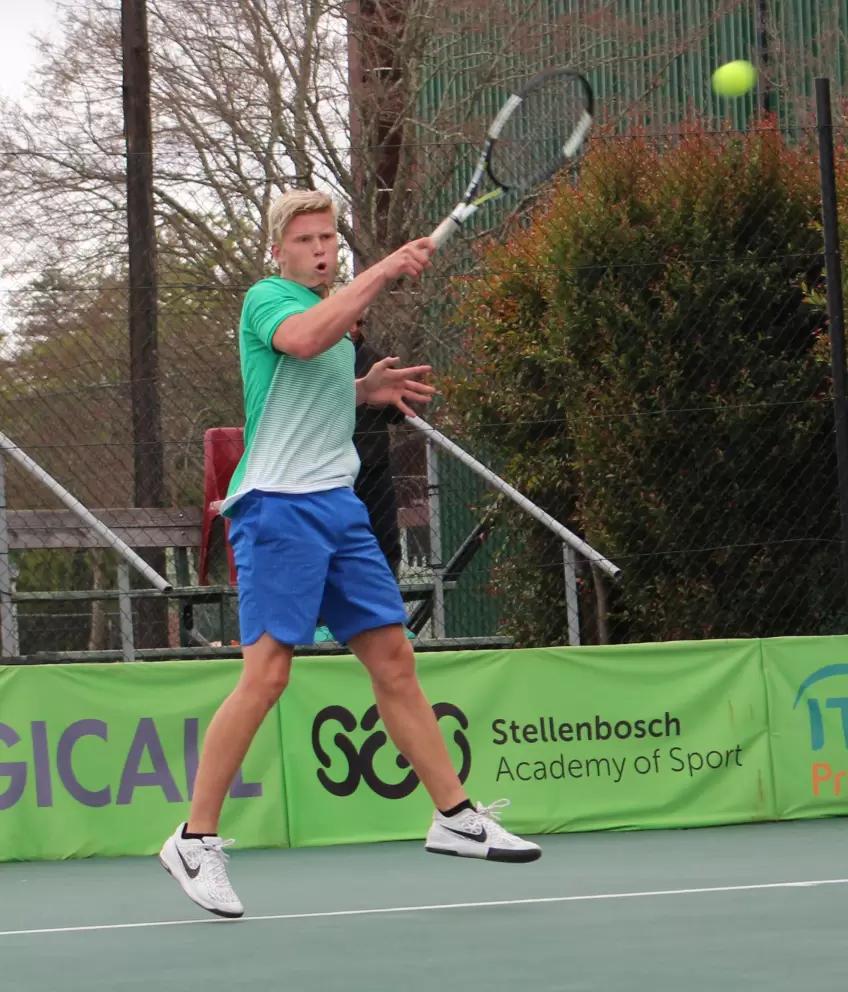
“The Winelands J30 junior tennis tournament is reaching its scheduled conclusion in Stellenbosch on 22 November 2026, bringing international junior competition to South African courts. The ITF-sanctioned event provides developing South African players with opportunities to gain international match experience, test their abilities and strengthen their competitive development.”
STELLENBOSCH, WESTERN CAPE, SOUTH AFRICA – 22 NOVEMBER 2026
South African junior tennis is receiving another important opportunity to demonstrate its development as the Winelands J30 tournament reaches its scheduled conclusion in Stellenbosch, Western Cape. The international junior competition, which began on 17 November and runs until 22 November 2026, has brought young tennis players together at Van der Stel Tennis Club for several days of competitive matches.
Organised within the International Tennis Federation’s (ITF) World Tennis Tour Juniors programme, the competition provides developing athletes with an opportunity to experience international-standard tennis on home soil. Furthermore, its presence in South Africa highlights the importance of hosting international sporting events to strengthen local tennis development and create opportunities for emerging players.
According to the ITF tournament information, the Winelands J30 is an outdoor hard-court competition featuring boys’ and girls’ events. Its tournament structure includes singles and doubles competitions, giving participating athletes different opportunities to demonstrate their abilities.
The event is particularly important for South African juniors seeking exposure to international competition without necessarily having to travel overseas.
Stellenbosch becomes a centre of international junior tennis
Stellenbosch is hosting the Winelands J30 at Van der Stel Tennis Club, providing an established sporting environment for young competitors.
The tournament has attracted attention because international junior competitions offer valuable experiences that cannot always be replicated through ordinary club matches.
Young players must compete against opponents with different playing styles, technical abilities and tactical approaches. Consequently, they have opportunities to improve their understanding of the game while testing the effectiveness of their training.
The tournament also contributes to Stellenbosch’s reputation as a destination for sporting activities.
Hosting international competitors can bring additional attention to local tennis facilities while encouraging community participation in the sport.
According to tournament information published by the ITF, the competition runs from 17 to 22 November 2026, with Van der Stel Tennis Club serving as the official venue.
The tournament’s international character also demonstrates how local sporting facilities can contribute to wider international development programmes.
International competition creates opportunities for South African juniors
One of the most important benefits of hosting an ITF junior tournament is the opportunity it creates for South African athletes to compete against international opponents.
For developing players, international exposure can be an important step towards improving their competitive performance.
Athletes who regularly participate in tournaments encounter different playing styles, match situations and levels of pressure.
For example, some opponents may rely on powerful serves and aggressive baseline shots, while others may prefer defensive strategies, longer rallies and careful placement.
Learning to respond to these different approaches helps young players become more adaptable.
Additionally, international competition can improve confidence. Players learn to manage challenging matches, recover from losing points and maintain concentration when the pressure increases.
These experiences can contribute to their long-term development and preparation for higher-level competitions.
The Winelands J30 therefore offers more than an opportunity to compete for tournament honours. It provides an environment in which young athletes can learn important lessons about professional preparation and competitive discipline.
Boys’ and girls’ competitions strengthen participation
The Winelands J30 includes separate boys’ and girls’ competitions, providing opportunities for young athletes across both categories.
Singles tennis requires players to demonstrate individual technical ability, physical fitness, tactical awareness and mental strength.
Competitors must manage their own performances throughout matches, making decisions about shot selection, positioning and movement.
Serving and returning are particularly important because they influence how players establish control over rallies.
Meanwhile, doubles competition introduces another dimension of tennis development.
Players must communicate effectively with their partners, coordinate movement and develop strategies that make use of their combined strengths.
These differences make the inclusion of singles and doubles valuable for junior athletes.
Participating in both formats can help players develop broader tennis skills while learning to perform in different competitive situations.
The importance of outdoor hard-court tennis
The ITF identifies the Winelands J30 playing surface as outdoor hard court.
Hard courts are widely used in international tennis competitions and require players to develop effective movement, timing and shot selection.
Athletes must understand how to position themselves during rallies and when to change from defensive play to attacking tennis.
Outdoor conditions also introduce additional challenges.
Wind, sunlight and temperature can influence how players serve, return and control their shots.
Consequently, competitors need to develop the ability to adapt their strategies according to the conditions.
For junior athletes, these experiences are important because international competitions can take place in different environments.
Learning to adjust to changing conditions can improve match management and overall competitive confidence.
The role of tennis academies and coaching
The development of successful junior players depends on consistent coaching, structured training and access to competitive opportunities.
Tennis academies play an important role in helping young athletes establish strong technical foundations.
Training generally involves serving, returning, groundstrokes, footwork, court positioning and match strategy.
However, technical ability alone is not enough.
Young players also need to develop physical conditioning and mental resilience.
Coaches help athletes understand how to manage difficult situations, remain disciplined and maintain confidence throughout competitions.
Tournament performances can also provide valuable information for coaches.
A player may demonstrate excellent serving ability but struggle with consistency during longer rallies. Another may have strong defensive skills but need to become more effective when attacking.
These observations can guide future training programmes.
The Winelands J30 provides an opportunity for participating athletes and their coaches to evaluate performance in an internationally structured competitive environment.
Stellenbosch’s contribution to local sporting development
Hosting an international tennis tournament can create benefits beyond the tennis courts.
Players, coaches, officials and accompanying families contribute to activity around the tournament venue.
Their presence can generate additional demand for accommodation, restaurants, transport and other local services.
Furthermore, sporting events provide opportunities for local residents to watch competitive tennis and become more interested in participating.
Van der Stel Tennis Club’s involvement demonstrates the importance of local sporting facilities in supporting international competitions.
Established tennis clubs can contribute significantly to development by providing courts, training opportunities and organised competitions.
However, the long-term success of these initiatives depends on continued investment in grassroots participation.
Young athletes need access to affordable coaching, appropriate equipment and regular opportunities to compete.
International tournaments should therefore complement local development programmes and help strengthen the wider tennis ecosystem.
South Africa’s junior tennis development pathway
South Africa’s tennis future depends on creating opportunities for young athletes at different stages of development.
Grassroots participation introduces children to the sport, while school competitions and local clubs provide opportunities to develop fundamental skills.
Junior tournaments then allow talented players to gain more competitive experience.
International events such as the Winelands J30 form part of this wider development environment.
They help expose young players to international standards and encourage them to establish stronger competitive ambitions.
The domestic tennis calendar also includes other junior development activities.
November competitions such as the Tshwane Solinco Mini, Rainbow Kidz events and KZN Mini Masters demonstrate the importance of providing opportunities for young players at different ability levels.
Maintaining these development pathways requires cooperation between sporting organisations, coaches, schools, academies, parents and local communities.
It also requires consistent access to quality facilities.
The more opportunities young players receive to train and compete, the better positioned they may become to progress through the different levels of tennis.
The final stages bring attention to player performance
As the Winelands J30 reaches its scheduled final day on 22 November, attention turns towards the closing stages of the competition.
Multi-day tournaments demand considerable physical and mental preparation.
Players who progress through the draws must manage recovery while maintaining concentration and competitive consistency.
Physical fatigue can influence movement, serving accuracy and shot selection.
Mental preparation is equally important because athletes must remain focused even when matches become difficult.
For junior players, learning how to manage these demands is an important part of sporting development.
However, confirmed final-day winners, finalists and match scores should be established through the official tournament results before being published.
The available ITF draws and results page did not provide sufficiently complete results during this research. Therefore, no unverified champion or final score is included in this report.
International tournaments can inspire the next generation
One of the wider benefits of international junior tennis is its potential to inspire young people.
Seeing athletes compete at an international level can encourage children and teenagers to take up tennis and become more involved in organised sport.
Local competitions also provide opportunities for families and communities to support emerging athletes.
Furthermore, exposure to international players can introduce young competitors to different sporting cultures and approaches to training.
Tennis teaches important values, including discipline, patience, respect, perseverance and responsibility.
These qualities are useful beyond competitive sport.
For this reason, supporting junior tennis development can contribute to broader youth participation and community sporting opportunities.
Looking ahead: Building a stronger future for South African tennis
The Winelands J30 represents another important opportunity for South Africa to host international junior tennis competition.
Its presence in Stellenbosch highlights the contribution of local tennis clubs, academies and sporting organisations to developing the next generation of athletes.
However, the long-term impact of the tournament will depend on what follows after the final matches.
Young players need consistent training, regular competitions and access to development opportunities throughout the year.
South Africa must continue encouraging grassroots participation while creating pathways for talented juniors to progress towards higher-level competitions.
International tournaments can support these ambitions by giving local players valuable exposure without requiring every opportunity to take place overseas.
As the Winelands J30 reaches its scheduled conclusion, the broader message is that junior tennis development remains essential to the future of the sport.
For South African tennis, the value of competitions such as this extends beyond trophies and match results. They provide opportunities to build confidence, develop skills, strengthen sporting communities and inspire future generations of tennis players.



