




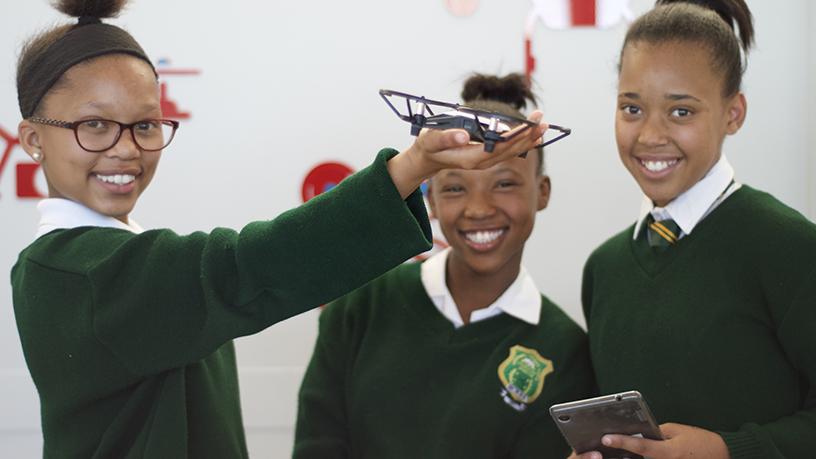
“HONOR South Africa and Optimas Robotics have partnered to establish a Cyberlab at the Kimberley Teachers Centre, expanding access to robotics, artificial intelligence, cybersecurity and digital-skills education. The initiative, involving local innovator Evans Parson Zwane, seeks to strengthen technology learning opportunities for students and communities in the Northern Cape while supporting South African innovation and digital inclusion.”
South Africa Expands Access to Robotics Education Through Kimberley Cyberlab Initiative
South Africa’s efforts to expand access to robotics, artificial intelligence and digital education have received renewed attention following a partnership between HONOR South Africa and Optimas Robotics to establish a Cyberlab at the Kimberley Teachers Centre in the Northern Cape.
The initiative represents an important development in the country’s technology education landscape, particularly as South Africa seeks to improve digital inclusion, develop technical skills and encourage young people to participate in the emerging technology economy.
The partnership brings together an established technology company and a South African robotics entrepreneur, Evans Parson Zwane, founder and chief executive of Optimas Robotics. Through the initiative, the partners aim to provide community members and university students with opportunities to explore robotics, artificial intelligence, cybersecurity and other digital technologies.
The development is particularly significant for Kimberley and surrounding communities, where access to advanced technology learning opportunities can support educational advancement, innovation and future employment prospects.
According to Tech Scene ZA’s report published on 9 November 2026, the Cyberlab was launched in collaboration with the Northern Cape Department of Education, with Education MEC Abraham Vosloo delivering the keynote address.
Building Technology Skills Beyond Major Cities
The establishment of the Kimberley Cyberlab reflects a growing recognition that technological education should not be limited to South Africa’s largest metropolitan areas.
Johannesburg, Cape Town and Pretoria have traditionally attracted significant technology investment, research institutions and innovation activities. However, smaller cities and rural communities also require access to modern technological infrastructure and learning opportunities.
By establishing a technology learning environment in Kimberley, HONOR South Africa and Optimas Robotics are seeking to make emerging technologies more accessible to learners and community members in the Northern Cape.
The Cyberlab is intended to provide an environment in which participants can explore technological concepts and develop practical knowledge.
Robotics education can introduce learners to programming, engineering, electronics, mechanical design and problem-solving. These disciplines are increasingly relevant across manufacturing, mining, agriculture, logistics, healthcare and other industries.
Furthermore, exposure to robotics can encourage students to develop an interest in science, technology, engineering and mathematics.
This is important because South Africa’s future technological competitiveness will depend not only on importing advanced equipment but also on developing people capable of understanding, maintaining, adapting and creating technological systems.
The Kimberley initiative therefore provides an opportunity to connect technology education with the broader development priorities of the Northern Cape.
Optimas Robotics and South African Innovation
A central component of the initiative is the participation of Optimas Robotics, a South African technology company associated with entrepreneur Evans Parson Zwane.
The company focuses on intelligent technology solutions, robotics and technology education, with activities spanning education, healthcare, government and business applications.
Its involvement highlights the potential contribution of local entrepreneurs to South Africa’s emerging robotics ecosystem.
Rather than treating robotics exclusively as a specialised industrial discipline, the initiative seeks to introduce intelligent technologies to a wider audience.
This approach can help communities understand how robotics and artificial intelligence function and how they may be applied to practical challenges.
Optimas Robotics also offers OptimasGPT, an artificial intelligence-powered educational platform intended to assist students, teachers, researchers and institutions with learning resources, research support and document analysis.
The platform reportedly supports all 11 official South African languages, an important feature in a country where language accessibility remains a significant consideration in education.
Multilingual technology can help make digital learning more inclusive by enabling learners to interact with educational resources in languages with which they are familiar.
However, the effectiveness of such platforms depends on the quality of their educational content, the accuracy of language processing and the availability of appropriate digital infrastructure.
Robotics Education and the Future of Employment
The expansion of robotics education comes at a time when automation and artificial intelligence are increasingly influencing employment and economic development.
South African industries are examining how intelligent systems can improve productivity, safety and operational efficiency.
Mining companies, manufacturers, agricultural businesses and logistics operators are among the sectors where automation has the potential to transform working processes.
Consequently, young people who develop foundational knowledge of robotics and artificial intelligence may gain valuable opportunities to pursue technical careers.
Robotics education can also support entrepreneurship.
Learners who understand programming, mechanical systems and intelligent technologies may eventually develop solutions for local challenges, including agricultural monitoring, industrial inspection, educational assistance and environmental management.
Nevertheless, technological education alone cannot guarantee employment.
The development of a sustainable robotics workforce requires complementary investments in advanced training, technical qualifications, research facilities, industry partnerships and employment opportunities.
The Cyberlab could therefore serve as an entry point into a broader learning pathway if participants receive opportunities to progress from introductory exposure to advanced technical skills.
Artificial Intelligence and Cybersecurity
The Kimberley Cyberlab is not limited to robotics. Its focus also includes artificial intelligence and cybersecurity.
These areas are closely connected because modern robotic systems increasingly rely on intelligent software, connected devices, sensors and data-processing infrastructure.
As robots become more connected, cybersecurity becomes increasingly important.
Industrial robots, autonomous machines and intelligent educational systems may collect information, communicate through networks and depend on software updates.
Poor security practices can expose such systems to unauthorised access, operational disruption or data breaches.
Introducing cybersecurity alongside robotics education can therefore help learners understand both the capabilities and risks of modern technologies.
The initiative may also encourage greater awareness of responsible technology use, privacy protection and digital safety.
Such knowledge is particularly important as artificial intelligence becomes more common in classrooms, workplaces and public services.
The Importance of Partnerships
The collaboration between HONOR South Africa, Optimas Robotics and the Northern Cape Department of Education demonstrates the role partnerships can play in expanding technology access.
Technology companies may contribute equipment, infrastructure, technical expertise and financial resources.
Local innovators can provide knowledge of community needs, educational challenges and practical technology applications.
Government institutions can support coordination, educational integration and the development of programmes aligned with regional priorities.
When these contributions are coordinated effectively, technology initiatives may achieve broader impact than isolated investments.
However, the long-term success of the Kimberley Cyberlab will depend on more than its launch.
Sustained outcomes require adequate equipment maintenance, reliable connectivity, qualified instructors, appropriate learning materials and continued funding.
The availability of structured training programmes will also determine whether participants develop meaningful skills or simply receive temporary exposure to technology demonstrations.
Addressing the Digital Divide
South Africa continues to face differences in access to technology, connectivity and digital skills.
These differences can influence educational opportunities and economic participation.
Communities with limited access to advanced learning resources may find it difficult to participate fully in technology-driven industries.
Initiatives such as the Kimberley Cyberlab can help address these inequalities by creating local opportunities for learning.
Nevertheless, digital inclusion requires a comprehensive approach.
Access to computers and robotics equipment must be supported by affordable internet connectivity, electricity, accessible learning materials and trained educators.
Students also need opportunities to practise their skills and access further education.
For communities outside major urban centres, local technology facilities can become important bridges between basic digital literacy and advanced technical learning.
The Cyberlab’s emphasis on community members and university students offers an opportunity to create connections between different stages of education.
If supported over time, these connections could strengthen the Northern Cape’s technology learning ecosystem.
Measuring the Initiative’s Long-Term Impact
The broader significance of the Kimberley Cyberlab will ultimately depend on measurable outcomes.
Important indicators could include the number of learners participating in training programmes, the frequency of practical robotics activities and the development of technical competencies.
Other useful measures include participation by schools and universities, completion of educational programmes, student-led technology projects and opportunities for advanced training.
Such indicators would provide a clearer understanding of whether the initiative is improving access to technology education.
Regular assessment could also help identify challenges and determine which programmes deliver the greatest educational value.
The availability of transparent reporting would strengthen accountability and help other communities understand how similar initiatives might be developed.
Northern Cape’s Opportunity in the Technology Economy
The Northern Cape has economic strengths in mining, energy, agriculture and related industrial activities.
These sectors increasingly depend on technological innovation, automation and advanced digital systems.
Robotics and artificial intelligence education could help prepare learners to understand technologies used in these industries.
For example, mining operations increasingly explore robotic inspection systems, autonomous equipment and automated monitoring technologies.
Agriculture can benefit from intelligent monitoring, precision systems and automated equipment.
Energy operations may also use robotics for inspection, maintenance and infrastructure monitoring.
Developing technology skills locally could therefore create stronger connections between education and regional economic activity.
However, translating educational opportunities into industrial benefits requires partnerships between learning institutions, businesses and research organisations.
The Kimberley Cyberlab provides a potential foundation for these connections.
Conclusion: A Step Towards More Inclusive Robotics Education
HONOR South Africa’s partnership with Optimas Robotics represents a meaningful development in efforts to expand technology education beyond South Africa’s largest urban centres.
By establishing a Cyberlab at the Kimberley Teachers Centre, the initiative seeks to create opportunities for community members and students to engage with robotics, artificial intelligence, cybersecurity and digital skills.
Its importance extends beyond introducing learners to emerging technologies.
The initiative also highlights the role of South African entrepreneurs, corporate partnerships and educational institutions in developing a more inclusive technology ecosystem.
The long-term opportunity lies in transforming access to technology into practical knowledge, technical competence and innovation.
If sustained through investment, training and meaningful educational partnerships, the Kimberley Cyberlab could contribute to stronger digital participation and help prepare Northern Cape communities for an increasingly technology-driven economy.
For South Africa, the broader lesson is that robotics development requires more than sophisticated machines. It also requires people who understand how those machines work, how they can solve problems and how technological innovation can create opportunities for communities.



