




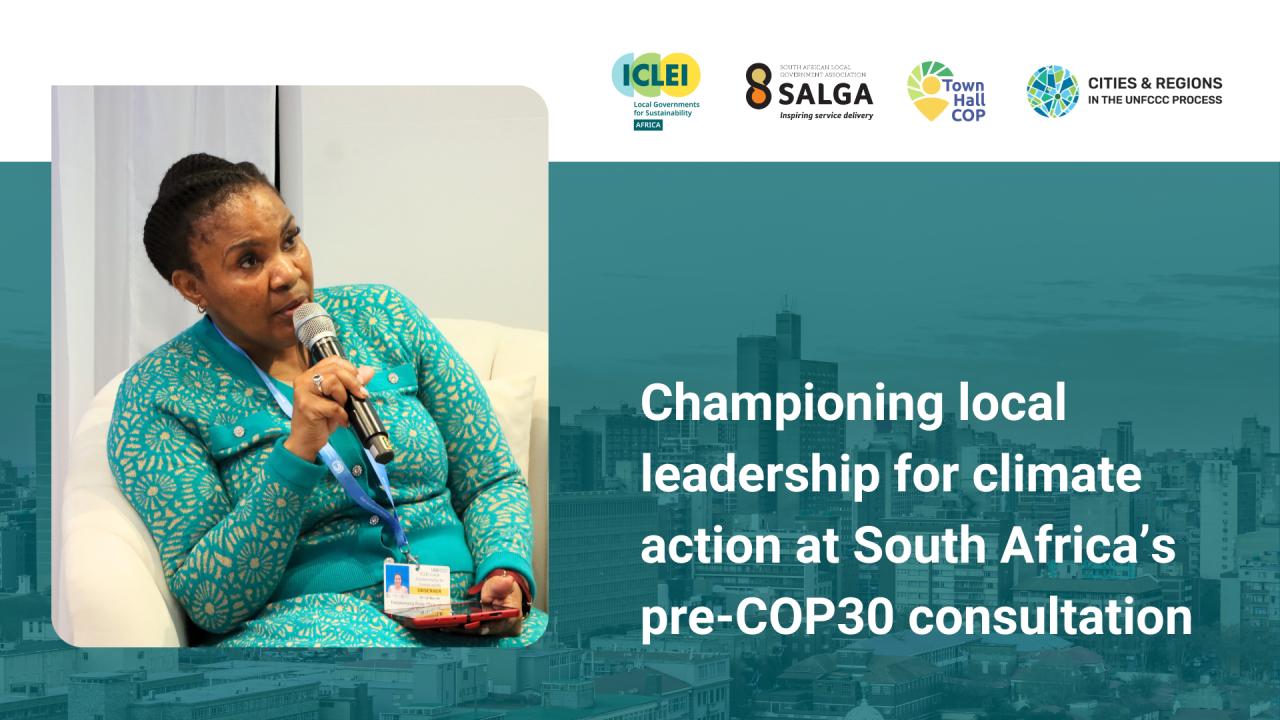
“Gauteng Environment MEC Ewan Botha is representing the province at COP31 in Antalya, Türkiye, to promote climate adaptation, resilience, environmental investment and sustainable development. The provincial delegation is pursuing international partnerships and climate financing opportunities to help translate climate commitments into practical environmental improvements and resilient infrastructure in South Africa.”
Gauteng Takes South Africa’s Climate Action Agenda to COP31 as Province Seeks Climate Finance and Resilience Investments
Gauteng is taking its environmental priorities, climate adaptation plans and sustainable development ambitions to the international stage as the province participates in the 31st United Nations Climate Change Conference (COP31) in Antalya, Türkiye. The provincial delegation, led by Gauteng Environment MEC Ewan Botha, is using the global climate gathering to promote investment opportunities, strengthen international partnerships and advance practical environmental solutions for South African communities.
The participation comes at a critical moment for climate policy, as governments increasingly face pressure to move beyond international commitments and demonstrate measurable progress in reducing emissions, protecting ecosystems and preparing communities for environmental risks.
According to Central News South Africa, Botha is participating in high-level engagements from 9 to 13 November 2026. His programme places provincial and local government leadership at the centre of discussions about climate finance, environmental resilience, waste management, methane reduction and sustainable infrastructure.
Gauteng Places Climate Resilience at the Centre of International Engagement
The Gauteng delegation’s participation reflects the growing importance of provincial governments in implementing environmental policies and translating international climate agreements into practical programmes.
Although national governments negotiate international climate agreements, provincial and municipal authorities frequently oversee the infrastructure, planning systems and community programmes that determine whether climate policies produce meaningful results.
Gauteng’s involvement therefore highlights the relationship between international climate diplomacy and environmental management at the local level.
The province is seeking opportunities to strengthen its climate action programmes through international cooperation, investment partnerships and technical collaboration. Its engagement also creates an opportunity to present regional environmental priorities to organisations and governments involved in financing sustainable development.
Botha is participating in COP31 in his capacity as Gauteng’s MEC for Environment and Vice-President for Africa of Regions4, a network of regional governments working on climate change, biodiversity and sustainable development.
His participation provides an opportunity to advance discussions about the role of African regional governments in shaping climate policies and accessing financial resources needed to implement them.
Climate Finance Emerges as a Major Priority
One of the central priorities of Gauteng’s COP31 programme is climate finance.
Climate finance is essential for developing and implementing projects designed to reduce greenhouse gas emissions, improve environmental protection and strengthen resilience against climate-related disasters.
For regional governments, however, securing financing can be difficult. Environmental projects frequently require substantial investment, technical planning and long-term institutional coordination.
Gauteng is participating in several engagements focused on improving access to investment and developing projects that can attract financial support.
These include the Subnational Investment Forum, where Botha is expected to present the province’s climate investment priorities and opportunities for green growth and sustainable infrastructure.
The Building Investible Project Pipelines Roundtable is another important engagement. Discussions are expected to focus on developing investment-ready climate projects and improving their financial viability.
The emphasis on project preparation is significant because environmental priorities cannot always attract financing simply because they are necessary. Investors and development institutions often require projects to demonstrate clear objectives, credible implementation arrangements and measurable benefits.
Developing stronger investment pipelines could therefore help regional governments move environmental projects from planning into implementation.
Gauteng’s participation also includes the FASTR Closed-Door Roundtable, which focuses on unlocking investment for regional climate solutions and exploring innovative financing mechanisms.
These discussions could contribute to strengthening the financial foundations of environmental programmes across the province.
Adaptation and Resilience Gain Greater Attention
Climate adaptation is another important element of Gauteng’s international engagement.
Adaptation involves preparing communities, infrastructure and ecosystems for climate impacts that are already occurring or expected to intensify.
For South Africa, resilience planning is particularly important because climate-related risks can affect water availability, agricultural production, public infrastructure, human settlements and livelihoods.
Provincial governments have an important role in identifying vulnerable communities, coordinating infrastructure planning and supporting interventions that reduce exposure to environmental hazards.
At COP31, Botha is participating in discussions intended to strengthen climate resilience and accelerate adaptation.
The South Africa Pavilion will host a session examining how governments can move from climate risk assessments towards practical resilience measures.
The engagement is being organised in collaboration with the KwaZulu-Natal Department of Economic Development, Tourism and Environmental Affairs and Regions4.
The session provides an opportunity to discuss how regional governments can strengthen preparedness for extreme weather events and improve cooperation between institutions responsible for environmental management.
The emphasis on practical adaptation reflects a broader challenge facing climate policy: environmental risks are increasing, while governments must simultaneously address infrastructure limitations, financing constraints and development pressures.
Waste Management and Methane Reduction Feature in Climate Discussions
Waste management and methane reduction are also receiving attention during Gauteng’s COP31 engagements.
Methane is a powerful greenhouse gas, and reducing emissions from waste systems can contribute to broader climate mitigation efforts.
Landfills, organic waste disposal and poorly managed waste infrastructure can create environmental problems while also contributing to greenhouse gas emissions.
Improving waste management systems can therefore support several objectives simultaneously, including reducing pollution, protecting public health, improving resource recovery and lowering emissions.
Botha is participating in the Regions Leading on Food Waste and Methane session, which connects waste management, circular economy practices and methane reduction.
The circular economy approach encourages more efficient use of resources by reducing waste, improving recycling and supporting the recovery of materials that would otherwise be discarded.
For Gauteng, discussions around these approaches are relevant to urban environmental management, where waste generation, infrastructure demands and pollution pressures require coordinated responses.
The international engagement may also help the province identify partnerships and technical approaches that support more sustainable waste systems.
Strengthening Regional Climate Cooperation
Gauteng’s COP31 participation also highlights the importance of regional cooperation in environmental governance.
Botha’s role as Vice-President for Africa of Regions4 provides a platform for discussions about how African regions can participate more effectively in international climate processes.
Regional governments often face similar environmental challenges, including water insecurity, extreme weather, biodiversity loss and infrastructure vulnerability.
Cooperation between regions can support knowledge exchange, improve technical capacity and encourage the development of practical solutions suited to local conditions.
Regions4 provides a network through which regional governments can share experiences and strengthen their participation in international environmental discussions.
Botha is also expected to participate in the CHAMP High-Level Political Dialogue, which focuses on strengthening multilevel climate partnerships and accelerating implementation of the Paris Agreement.
Such discussions are important because climate action frequently requires coordination between national governments, provinces, municipalities, businesses and communities.
Without effective cooperation, climate strategies can remain fragmented, making it difficult to achieve their intended environmental and development objectives.
Building Long-Term Climate Adaptation Capacity
Another important engagement is the RegionsAdapt 10 Years session, where Botha will help shape the network’s future adaptation agenda.
The programme places particular emphasis on African regions and their ability to respond to environmental risks.
Strengthening adaptation capacity requires more than emergency responses to disasters. It involves long-term planning, environmental monitoring, resilient infrastructure, community participation and access to reliable information.
Regional governments also need institutional capacity to integrate climate considerations into development decisions.
The discussions at COP31 provide an opportunity to explore how international partnerships can support these requirements.
For Gauteng, strengthening adaptation capacity could help improve the integration of climate considerations into infrastructure planning, environmental management and sustainable development programmes.
Environmental Investment and Sustainable Development
Gauteng’s international engagement also reflects the relationship between environmental protection and economic development.
Climate investment can support infrastructure improvements, technological innovation and the development of more sustainable economic activities.
However, environmental investment must be carefully planned to ensure that projects deliver measurable benefits rather than simply generating financial activity.
The province’s focus on investment-ready projects is therefore particularly relevant.
Effective climate projects should identify environmental objectives, demonstrate their contribution to resilience or emissions reduction and establish credible implementation arrangements.
Investment partnerships can help accelerate these projects, provided that environmental safeguards and public accountability remain central.
International cooperation may also create opportunities for technical assistance and knowledge exchange, particularly in areas where regional governments need additional expertise.
The Challenge of Turning International Discussions into Results
Gauteng’s participation in COP31 is an important opportunity to advance environmental priorities, but the long-term value of the engagement will depend on implementation.
International conferences provide platforms for governments to exchange ideas, establish partnerships and identify financing opportunities.
Nevertheless, environmental improvements ultimately depend on projects being implemented effectively at local level.
For climate resilience programmes, this means identifying vulnerable areas, strengthening infrastructure and ensuring that communities benefit from adaptation measures.
For waste management, it requires effective collection systems, improved disposal practices and stronger resource recovery.
For climate finance, it means converting investment discussions into projects with clear environmental outcomes.
The challenge is therefore not simply to secure international recognition but to establish practical pathways through which climate commitments can produce measurable improvements.
Conclusion: Gauteng Seeks Practical Climate Action Through Global Cooperation
Gauteng’s participation at COP31 demonstrates the growing importance of regional leadership in environmental policy and climate resilience.
Through engagements focused on climate finance, sustainable infrastructure, adaptation, waste management, methane reduction and multilevel governance, the province is seeking to strengthen its capacity to address environmental challenges.
The participation of MEC Ewan Botha also highlights the importance of African regional governments in international climate discussions.
As COP31 continues, Gauteng’s engagement offers an opportunity to build partnerships, explore financing mechanisms and advance practical approaches to sustainable development.
Ultimately, the success of these efforts will be measured by their contribution to stronger environmental protection, improved climate resilience and more sustainable communities across South Africa.
The province’s central challenge remains translating international cooperation into effective local action that delivers lasting environmental and developmental benefits.



