




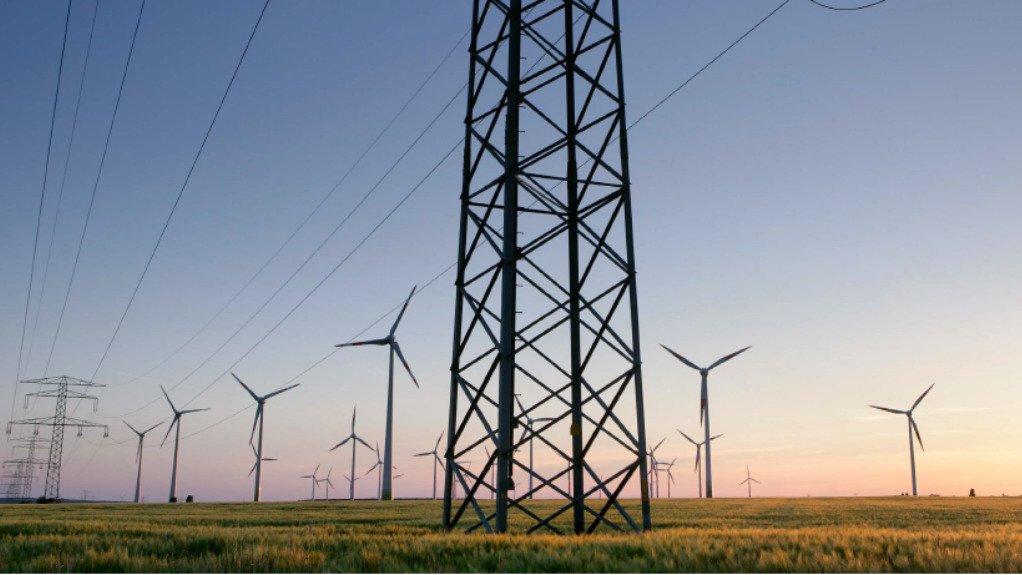
“South Africa’s wind energy industry continues attracting private investment, but insufficient electricity transmission capacity, procurement delays and uncertainty surrounding infrastructure development are slowing renewable energy projects and threatening opportunities for local manufacturers and suppliers. The challenge is particularly significant in the Cape provinces, where strong wind resources coincide with constrained grid capacity, prompting calls for accelerated transmission investment, private-sector participation and improved electricity system flexibility.”
Wind Energy in South Africa Faces Grid Delays Despite Investment Growth
South Africa’s wind energy industry is attracting significant investment, but transmission infrastructure bottlenecks, procurement delays and regulatory uncertainty threaten to slow the expansion of renewable electricity and weaken opportunities for industrial development.
South Africa’s renewable energy sector is confronting a growing infrastructure challenge as wind power investment continues to expand while the national electricity transmission network struggles to accommodate new generation capacity. Although the country possesses substantial wind resources and a growing pipeline of independent power producer projects, limited grid availability is increasingly becoming a major obstacle to converting investment commitments into operational electricity generation.
The issue was highlighted in reporting published on November 11, 2026, by CBN, which examined the difficulties facing wind developers, manufacturers and suppliers. Grid constraints, procurement delays and local manufacturing opportunities were also prominent topics at Windaba 2026, held in Cape Town on October 6 and 7.
South Africa’s Wind Industry Continues to Expand
South Africa remains one of Africa’s most important wind energy markets. According to figures cited from the Global Wind Energy Council’s Status of Wind in Africa report, the continent had approximately 11.1GW of installed wind capacity at the end of 2025, while another 186GW was planned across 259 projects.
South Africa accounted for approximately 4.2GW of installed wind capacity in the figures reported by CBN. Other industry reporting has referenced approximately 5.1GW, reflecting differences in reporting periods and capacity classifications.
The country’s wind development pipeline has expanded considerably, supported by regulatory reforms, private investment and increasing demand for electricity outside the traditional utility procurement system.
Mining companies, cement producers, manufacturers and other energy-intensive businesses are increasingly purchasing electricity from independent power producers through private power purchase agreements.
The Global Wind Energy Council has reported that regulatory changes enabled more than 3.3GW of corporate wind projects through power purchase agreements in less than 30 months.
This development demonstrates that renewable energy demand is no longer exclusively dependent on government procurement programmes. Businesses are increasingly treating electricity supply as a strategic investment that can support operational reliability, competitiveness and environmental objectives.
However, the expansion of generation projects has created a growing mismatch between electricity production opportunities and the infrastructure available to transport power.
Transmission Capacity Emerges as the Critical Constraint
The Cape provinces possess some of South Africa’s strongest wind resources. Nevertheless, these areas are also experiencing significant transmission limitations.
Wind farms require dependable connections to the national electricity grid before they can deliver power to consumers. Where transmission capacity is unavailable, projects may face delays, reduced development opportunities or uncertainty regarding future commercial operations.
The National Transmission Company South Africa has identified a substantial infrastructure expansion programme intended to address these challenges.
Its transmission development plan envisages approximately 14,500km of additional high-voltage transmission lines and 133,000MVA of transformer capacity over the coming decade.
The programme is estimated to require approximately R440-billion in investment.
However, the infrastructure requirement presents a significant financial challenge. The NTCSA has identified a funding shortfall of approximately R134-billion, highlighting the importance of securing additional financing and accelerating implementation.
The transmission programme is essential because new renewable energy generation is increasingly being developed in locations different from traditional electricity generation centres.
Consequently, the electricity system requires additional infrastructure to transport power from renewable energy regions to industrial consumers, cities and other areas experiencing demand.
Without these investments, South Africa risks having electricity generation projects ready for operation but unable to connect efficiently to the national network.
Private Investment and Transmission Procurement
Government has introduced the Independent Transmission Projects Programme to encourage private-sector participation in transmission infrastructure development.
The programme represents an important change in South Africa’s electricity infrastructure model because private companies are expected to contribute financing, construction capacity and technical expertise.
The first phase includes approximately 1,164km of transmission infrastructure.
However, procurement delays have affected implementation. According to CBN’s November 11 report, the final request for proposals for the first phase was expected during the second quarter of 2027 following additional consultations with seven prequalified bidders.
These delays create uncertainty for electricity developers and infrastructure suppliers.
Transmission projects require extensive planning, financing, equipment procurement, land access and construction coordination. When procurement schedules change, businesses may struggle to establish production schedules, secure investment funding or recruit workers.
The uncertainty also affects the renewable energy sector because developers depend on reliable timelines for grid connections before finalising financing and construction decisions.
South Africa therefore faces a dual challenge: expanding electricity generation while simultaneously accelerating the infrastructure required to transport the power.
Wind Development Pipeline Exceeds Long-Term Targets
Despite the transmission constraints, the wind industry remains optimistic about South Africa’s long-term development prospects.
Industry reporting published by Engineering News on November 6 indicated that the country’s wind project development pipeline exceeded 60GW, compared with approximately 43GW of wind capacity envisaged for 2042 under the Integrated Resource Plan 2025.
The scale of the pipeline demonstrates considerable investor interest and confidence in South Africa’s renewable energy potential.
However, a project pipeline should not be confused with installed or operational capacity. Projects must still secure financing, permits, grid access, construction resources and commercial agreements before delivering electricity.
The difference between planned capacity and operational generation illustrates why transmission infrastructure has become particularly important.
The South African Wind Energy Association has emphasised that the sector’s challenges increasingly concern infrastructure, regulatory alignment and the implementation capacity of government institutions rather than the availability of wind resources or technology.
The Northern, Western and Eastern Cape provinces are expected to remain particularly important development regions.
Curtailment Creates Economic and Investment Concerns
Transmission constraints are also contributing to electricity curtailment.
Curtailment occurs when electricity generators are instructed to reduce output because the grid cannot accommodate the available electricity.
Although wind and solar generation can provide substantial power during favourable conditions, the transmission system must be capable of transporting that electricity safely and efficiently.
At Windaba 2026, Electricity and Energy Minister Kgosientsho Ramokgopa reportedly indicated that curtailment was costing South Africa close to R49-billion annually in potential revenue.
The figure reflects the economic significance of electricity that could otherwise have been generated or utilised.
Curtailment can affect renewable energy developers, electricity buyers and infrastructure planners.
For developers, uncertainty regarding curtailment may influence project financing and commercial agreements. For consumers, inefficient electricity system management can undermine the economic benefits associated with additional generation capacity.
The problem also highlights the importance of integrating renewable generation with electricity storage, flexible generation and stronger transmission infrastructure.
Battery energy storage systems can absorb electricity during periods of surplus generation and release it when demand increases.
South Africa has already identified battery storage as a priority within its electricity procurement strategy.
Government Prioritises Storage and Flexible Electricity Supply
The Integrated Resource Plan 2025 provides a framework for addressing South Africa’s changing electricity requirements.
According to the Department of Electricity and Energy, the proposed first procurement determination prioritises approximately 4,600MW of battery energy storage and 5,000MW of gas-to-power capacity.
These investments are intended to strengthen electricity system flexibility and reliability.
Battery storage can help reduce renewable energy curtailment while supporting electricity supply during periods of higher demand.
Gas-to-power generation can provide dispatchable electricity, although infrastructure development, fuel availability and procurement remain important challenges.
The government has indicated that subsequent procurement decisions will address additional wind and solar generation, including hybrid projects combining renewable energy with storage.
South Africa is also considering regional electricity exports as a potential solution to surplus generation.
Export opportunities could allow renewable energy producers to sell electricity to neighbouring countries while supporting regional energy cooperation.
However, cross-border electricity trade requires adequate transmission infrastructure, commercial agreements and coordination between electricity markets.
Local Manufacturing and Industrial Opportunities
The transmission expansion programme could create significant opportunities for South African manufacturers and engineering businesses.
The construction of thousands of kilometres of power lines requires transformers, cables, steel structures, electrical equipment, substations and specialised engineering services.
These requirements could support domestic industrial development, employment creation and technical skills development.
However, manufacturers require clear procurement schedules and predictable demand to invest in production capacity.
The uncertainty surrounding transmission construction timelines can discourage companies from purchasing machinery, expanding facilities or recruiting additional employees.
South Africa also faces questions about the balance between imported equipment and domestic manufacturing.
Developing local production capacity requires investment, technical expertise and competitive manufacturing conditions.
Industry representatives have argued that localisation could provide long-term economic benefits if infrastructure procurement is structured to support domestic suppliers without compromising project delivery.
The transmission programme therefore represents both an electricity infrastructure challenge and an industrial development opportunity.
Outlook: Infrastructure Delivery Will Determine Renewable Energy Progress
South Africa’s wind energy industry is entering an important development phase.
Private investment continues to expand, corporate electricity purchasing is increasing and the country possesses substantial renewable energy resources.
Nevertheless, the pace of future development will depend heavily on transmission infrastructure delivery.
The government, NTCSA, private transmission investors, electricity regulators and renewable energy developers will need to coordinate their activities more effectively.
Accelerating procurement, improving grid access transparency, strengthening financing arrangements and expanding local manufacturing could help address the infrastructure bottleneck.
Battery storage, electricity exports and flexible generation may also contribute to reducing curtailment and improving system efficiency.
Ultimately, South Africa’s renewable energy ambitions will depend not only on constructing wind farms but also on building the infrastructure required to connect them to electricity consumers.
The country’s investment opportunity remains considerable. However, converting that opportunity into reliable electricity, industrial growth and employment will require faster execution of transmission projects and stronger coordination across the electricity sector.



