




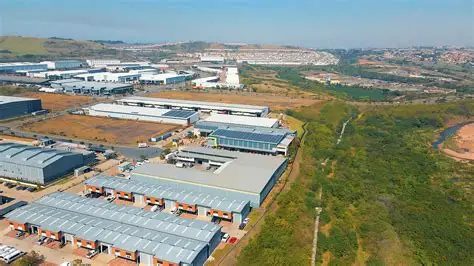
“South Africa’s industrial property sector has become the cornerstone of the country’s real estate rebound, driven by logistics, warehousing, and e-commerce expansion. With record-low vacancies and strong rental growth, investors are flocking to Durban, Cape Town, and Johannesburg, fueling infrastructure upgrades and job creation.”
South Africa’s industrial real estate sector is experiencing a historic surge in August 2026, marking a turning point for the broader property market. After years of pandemic-driven uncertainty, industrial property has emerged as the most resilient and dynamic segment, reshaping the country’s economic landscape.
1. Market Dynamics
Vacancy rates have plummeted to 3.8%, the lowest on record, while rental growth for mid-sized industrial spaces has surged 8.4% year-on-year. This demand is fueled by logistics, warehousing, last-mile distribution, and the rapid expansion of e-commerce.
2. Investor Activity
Developers are capitalizing on this momentum. Fortress Real Estate Investments raised R1.35 billion to expand logistics projects in Cape Town’s industrial corridors. Durban, Cape Town, and Johannesburg are becoming magnets for both local and international investors, who view industrial property as a safe haven amid global uncertainty.
3. Infrastructure Upgrades
The boom is accelerating road, port, and rail improvements to support logistics growth. Durban’s port expansion, Cape Town’s warehousing upgrades, and Johannesburg’s rezoning projects are reshaping urban-industrial dynamics. The Cornubia Industrial Park in KwaZulu-Natal has become a focal point for warehousing and distribution, reinforcing the province’s logistics hub status.
4. Regional Trends
- Durban: Africa’s busiest port continues to anchor industrial demand.
- Cape Town: Warehousing expansion supported by semigration and peri-urban land demand.
- Johannesburg: Rezoning projects unlocking mixed-use hubs combining residential, commercial, and industrial spaces.
- KwaZulu-Natal: Cornubia Industrial Park expansion highlights growing warehousing demand.
5. Risks & Challenges
Despite strong growth, risks remain. Inflationary pressures could slow momentum, even as interest rates remain stable (repo at 7.0%, prime at 10.5%). Regional disparities persist, with Cape Town and Durban outperforming Gauteng. Supply constraints in affordable housing and industrial land are intensifying competition.
6. Economic Impact
The industrial boom is fueling job creation, infrastructure upgrades, and international investment. Buyers from Europe and Asia are entering the market, attracted by favorable exchange rates and South Africa’s lifestyle appeal.
📌 Conclusion
Industrial real estate is firmly positioned as the engine of South Africa’s property recovery in 2026, reshaping the nation’s economic and urban landscape. With logistics corridors expanding, infrastructure upgrades accelerating, and investor confidence soaring, industrial property is not just stabilizing the market—it is redefining it.



