




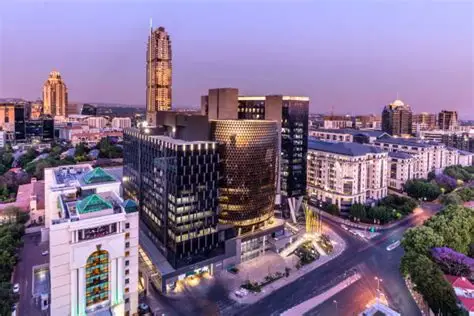
“South Africa’s commercial property sector is experiencing a robust recovery in 2026, led by industrial real estate with record-low vacancies and strong rental growth. Office demand is stabilizing, retail nodes are regaining momentum, and investor confidence is returning, signaling new opportunities for developers and institutional investors.”
After years of pandemic-driven uncertainty, sluggish growth, and high vacancies, South Africa’s commercial real estate sector has entered 2026 on firmer footing than at any point in recent years. Industrial properties are spearheading this resurgence, while office demand stabilizes and retail nodes regain momentum. Investor confidence is returning, signaling new opportunities for developers, landlords, and institutional investors.
Industrial Real Estate: The Star Performer
- Vacancy rates dropped to 3.8% nationally, a record low underscoring resilience.
- Rental growth surged 8.4% year-on-year for 500m² spaces, driven by logistics, warehousing, and last-mile distribution demand.
- The boom is fueled by e-commerce expansion, supply chain restructuring, and South Africa’s strategic role as a logistics hub for the continent.
Industrial parks in Gauteng and Durban are seeing unprecedented demand, with developers racing to deliver new warehousing capacity. Institutional investors are particularly drawn to this segment, viewing it as a hedge against inflation and a stable income generator.
Office Market: Stabilization After Turbulence
The office sector, long plagued by oversupply and remote work trends, is showing signs of stabilization:
- Demand for flexible office spaces is rising as hybrid work models mature.
- Prime office nodes in Sandton and Cape Town are reporting steady absorption rates, with tenants seeking quality over quantity.
- Landlords are investing in green building certifications and smart technologies to attract sustainability-conscious tenants.
While vacancy rates remain elevated compared to pre-pandemic levels, the sector is no longer in freefall. Analysts suggest that the worst is behind the office market, with gradual recovery expected through 2027.
Retail Nodes: Regaining Momentum
Retail centers, once battered by lockdowns and shifting consumer behavior, are regaining traction:
- Foot traffic has rebounded in major malls, supported by stabilized inflation and improved consumer confidence.
- Mixed-use developments combining retail, residential, and leisure are proving resilient, offering diversified revenue streams.
- Township retail hubs are expanding, driven by growing middle-class demand and government-backed infrastructure projects.
Retail landlords are embracing experiential strategies, integrating entertainment, dining, and digital engagement to keep customers coming back.
Investor Confidence Returns
Institutional investors, both local and international, are re-entering the South African market:
- Pension funds and REITs are increasing allocations to industrial and mixed-use assets.
- Foreign investors are eyeing partnerships with local developers, particularly in logistics and renewable-energy-integrated projects.
- The Johannesburg Stock Exchange-listed property sector has seen a 12% uptick in valuations since January 2026.
This renewed confidence is underpinned by macroeconomic stability, with the South African Reserve Bank holding the repo rate at 7.00% and inflation easing within the 3–6% target range.
Risks and Challenges
Despite the optimism, challenges remain:
- Load-shedding and energy insecurity continue to affect operational costs.
- Municipal inefficiencies in water and sanitation services pose risks to property performance.
- Global economic volatility could impact foreign investment flows.
Developers and landlords are mitigating these risks through solar integration, water recycling systems, and private security arrangements.
Outlook for 2027 and Beyond
Analysts forecast sustained growth in industrial and mixed-use segments, with office and retail continuing gradual recovery. The next wave of opportunity lies in smart cities and sustainable developments, aligning with global ESG investment trends.
Conclusion
South Africa’s commercial property market in 2026 is defined by industrial resilience, office stabilization, and retail revival. With investor confidence returning and macroeconomic conditions stabilizing, the sector is poised for a new era of growth. Developers, landlords, and institutional investors who adapt to sustainability and technology trends will be best positioned to capitalize on this recovery.



