




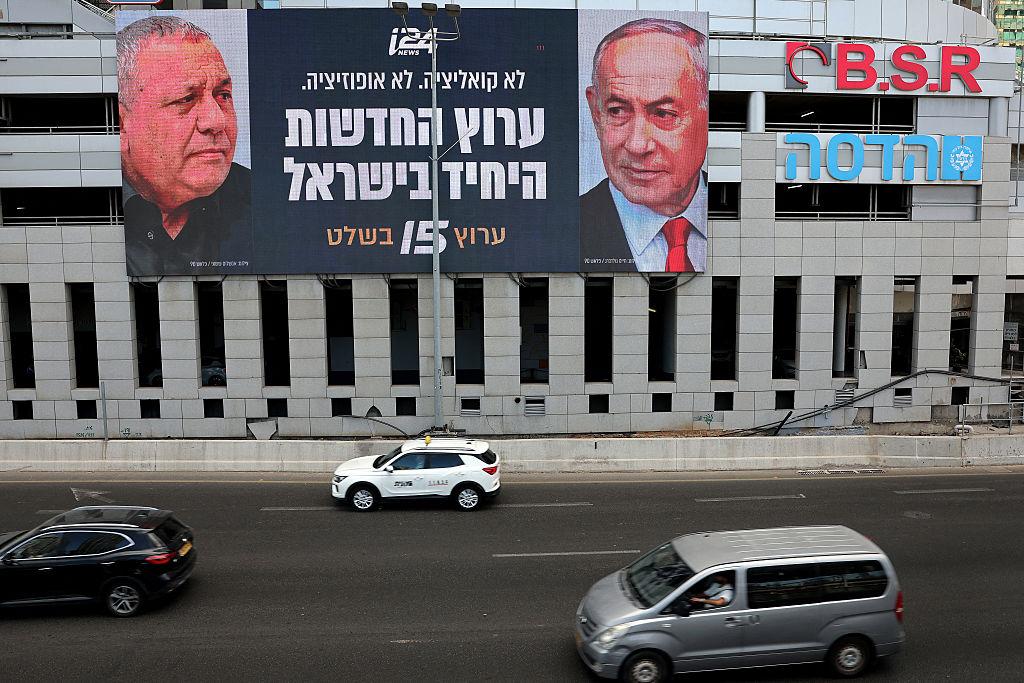
“African governments, including South Africa, are watching Israel’s 27 October 2026 election because its outcome could influence diplomatic relations, cooperation on security and trade, and international responses to the war in Gaza. South Africa’s legal action against Israel contrasts with other African countries’ efforts to preserve or strengthen bilateral ties, highlighting divisions across the continent over Palestinian rights, sovereignty and strategic interests.”
Election results could reshape diplomatic relationships
Israel’s election scheduled for 27 October 2026 is attracting attention beyond the Middle East. Governments across Africa are considering whether a new political leadership in Jerusalem could change Israel’s foreign policy, particularly its approach to the Palestinians and its relationships with countries that have criticised its military operations in Gaza.
For South Africa, the election carries particular diplomatic significance. Pretoria has made Palestinian rights, international law and accountability for alleged international crimes important elements of its foreign policy. Its legal case against Israel at the International Court of Justice (ICJ) has also placed the country at the centre of international debate.
The election presents an important question: can Israel rebuild relationships with African governments while maintaining policies that have generated widespread criticism? The answer will depend not only on the election outcome but also on the policies adopted by the next government.
According to Al Jazeera’s report published on 15 October, the contest between Prime Minister Benjamin Netanyahu’s Likud-led political bloc and opposition parties could produce a complicated coalition-building process. Neither side is projected to secure the 61 seats required for a majority in the 120-member Knesset, making negotiations after voting potentially decisive.
Consequently, African governments will have to evaluate the election result alongside the coalition agreement, ministerial appointments and subsequent decisions on Gaza and Palestinian statehood.
South Africa’s diplomatic position and the Gaza case
South Africa has consistently argued that international law must apply equally to all countries, regardless of their political influence or military strength. Its position reflects both its constitutional commitment to human rights and its historical experience of apartheid.
In December 2023, South Africa instituted proceedings against Israel at the ICJ under the Genocide Convention, alleging violations relating to Palestinians in Gaza. Israel rejects the genocide allegations. The case remains a legal proceeding, and provisional measures ordered by the court must not be confused with a final judgment establishing whether genocide occurred.
The court’s orders in 2024 required measures intended to protect rights under the convention and address the humanitarian situation. These proceedings have nevertheless become a significant part of South Africa’s international diplomatic engagement.
Pretoria maintains that the protection of civilians and compliance with international law are international responsibilities. The government has continued to pursue its case while calling on other countries to support humanitarian protection and accountability.
This position has implications for South Africa’s relationships with countries that disagree with its approach. Some governments may consider Pretoria’s actions necessary to strengthen international justice, while others may view its position as an obstacle to closer cooperation with Israel.
However, South Africa’s approach cannot be understood solely as a dispute with one country. It also reflects a broader argument about whether international institutions can provide consistent standards for addressing conflicts and alleged violations.
The election may therefore influence how Pretoria communicates with Israel, its African partners and international organisations. Any diplomatic improvement would depend on practical developments rather than election promises alone.
Africa is divided over relations with Israel
African governments do not share one uniform position on Israel. Their decisions reflect different histories, domestic political pressures, economic priorities and security concerns.
South Africa has pursued a strongly critical position on Gaza, while Morocco has maintained relations with Israel following the normalisation agreement announced in 2020. Other countries have adopted different approaches, demonstrating the diversity of diplomatic priorities across the continent.
Morocco’s relationship with Israel illustrates how strategic partnerships can continue despite public disagreement over the Palestinian question. The two countries have pursued cooperation in areas including investment, technology and diplomatic engagement, although domestic opposition to normalisation remains a political consideration.
South Africa, by contrast, has argued that cooperation should not undermine Palestinian rights or the application of international law. These differences complicate efforts to develop a common African position through the African Union.
The African Union’s consideration of Israel’s observer status has previously exposed disagreements among member states. Those divisions demonstrate that diplomatic recognition, institutional participation and political cooperation are not always straightforward decisions.
A new Israeli government could attempt to improve relations with African countries by increasing diplomatic engagement, expanding development partnerships and addressing international criticism. However, these efforts would encounter limits if the policies that generated disagreement remain unchanged.
For African governments, the central challenge will be determining whether engagement can produce meaningful benefits without compromising national principles or regional commitments.
Security cooperation remains an important consideration
Security partnerships are another factor shaping Israel’s relationships across Africa. Some governments seek international partners capable of supporting defence, intelligence, border management and counterterrorism objectives.
Israel has developed relationships with several African countries involving security cooperation and technological exchange. Nevertheless, the scale and character of these partnerships differ considerably, and each relationship must be assessed individually.
For governments facing armed violence or regional instability, maintaining access to security expertise can be an important priority. Such governments may therefore continue working with Israel even when political disagreements over Gaza remain unresolved.
However, security cooperation can also generate domestic controversy when citizens believe that strategic interests are being prioritised over humanitarian concerns. Governments must balance their operational requirements with public expectations and their diplomatic commitments.
The same challenge applies to South Africa, although Pretoria’s foreign policy places particular emphasis on multilateral engagement and international legal institutions. Its relationships with African partners require cooperation on regional security while preserving space for disagreement over international conflicts.
Israel’s election could affect these calculations if the next government changes its approach to regional diplomacy or offers new forms of cooperation. Yet an election result alone cannot establish that security agreements will expand or disappear.
Governments will ultimately assess the reliability of partnerships, the practical value of cooperation and the political consequences of their decisions.
Trade, agriculture and technology could shape future engagement
Economic cooperation provides another incentive for African governments to maintain diplomatic channels with Israel. Potential areas of engagement include agricultural technology, irrigation, water management, healthcare, education and digital innovation.
These sectors matter to countries seeking to improve food security, develop infrastructure and attract investment. Partnerships that deliver measurable benefits can create incentives for continued engagement despite disagreements elsewhere.
Zambia offers an example of Israel’s efforts to strengthen its diplomatic presence and pursue cooperation with African partners. Its relationship with Israel includes potential opportunities involving agriculture, water management, health and technology.
The Democratic Republic of the Congo has also pursued closer engagement with Israel, including discussions concerning infrastructure, energy, agriculture and high technology. Such examples illustrate the range of interests that can underpin bilateral relationships.
Nevertheless, economic engagement does not automatically indicate agreement with Israel’s policies in Gaza. Governments can pursue commercial partnerships while maintaining separate positions on international law, humanitarian protection and Palestinian self-determination.
For South Africa, the challenge is to ensure that its foreign policy remains consistent while protecting its broader economic and diplomatic interests. Its international relationships extend well beyond the Israeli-Palestinian conflict and include cooperation across Africa, Europe, Asia and other regions.
The election could create opportunities for renewed economic engagement if Israel’s next government seeks to rebuild confidence. Whether those opportunities develop will depend on the credibility of proposed initiatives, the interests of individual African countries and the wider political environment.
Public opinion and sovereignty matter
African governments must also consider public opinion. Demonstrations, civil society campaigns and public criticism can influence how leaders approach controversial international partnerships.
The war in Gaza has generated strong reactions across many countries, although the intensity and political consequences vary. In South Africa, solidarity with Palestinians has historical connections to the anti-apartheid struggle and remains influential in public debate.
Events involving sovereignty elsewhere in Africa also demonstrate the sensitivity of diplomatic decisions. Israel’s recognition of Somaliland in December 2025 prompted opposition from Somalia and others concerned about territorial integrity.
Such disputes illustrate why African governments may resist diplomatic initiatives that they believe undermine established principles of sovereignty. They also show that relationships with Israel cannot be understood exclusively through trade or security considerations.
For Pretoria, these questions connect directly with its emphasis on international law and multilateral institutions. South Africa has argued that powerful countries should be subject to the same legal principles as other states.
Nevertheless, governments must distinguish between public sentiment, official policy and demonstrable diplomatic consequences. Criticism of a foreign government does not necessarily mean that formal relations will end, just as continued diplomatic relations do not prove public approval.
The next Israeli administration will therefore face the challenge of improving its international standing while responding to disagreements that extend beyond individual bilateral relationships.
What the election means for South Africa
South Africa’s immediate diplomatic task will be to assess the election result carefully and determine whether the next Israeli government offers credible opportunities for engagement.
Pretoria is unlikely to abandon its legal proceedings merely because Israel changes its political leadership. Its government has presented the case as a matter of international law, rather than a disagreement limited to one Israeli administration.
At the same time, South Africa will need to manage its relationships with African countries that maintain closer ties with Israel. Diplomatic disagreements should not prevent cooperation on shared regional priorities, including peacebuilding, economic development and multilateral reform.
The African Union may provide an important forum for discussing these differences. However, developing a common position will require negotiation among governments with distinct national interests and political priorities.
South Africa can strengthen its diplomatic influence by explaining its legal position clearly, engaging constructively with partners and supporting practical initiatives that protect civilians and encourage peaceful solutions.
Its approach will also be judged by whether its international commitments are accompanied by consistent diplomatic engagement and respect for established legal processes.
Conclusion: Diplomacy will depend on actions, not promises
Israel’s 27 October election is an important moment for African international relations, but its significance will become clearer only after the result and subsequent policy decisions.
For South Africa, the central issues remain international law, Palestinian rights, civilian protection and the responsibilities of states within the international system. For other African countries, economic opportunities, security partnerships and domestic political considerations may carry different weight.
These priorities need not eliminate every possibility of cooperation. However, sustainable relationships require credible commitments, mutual respect and a willingness to address difficult disagreements.
The election could open a path towards improved engagement between Israel and African governments. Alternatively, policies that deepen tensions over Gaza and Palestinian self-determination could reinforce existing divisions.
South Africa will continue to face the challenge of defending its diplomatic principles while maintaining constructive relationships across a diverse international landscape. Ultimately, the direction of relations will depend less on campaign statements than on decisions taken after the election and their consequences for peace, accountability and cooperation.
Source: Al Jazeera, published 15 October 2026. The analysis above is an integrated, original-language news article based on the reported developments and related public information, not a verbatim reproduction of the source article.



