




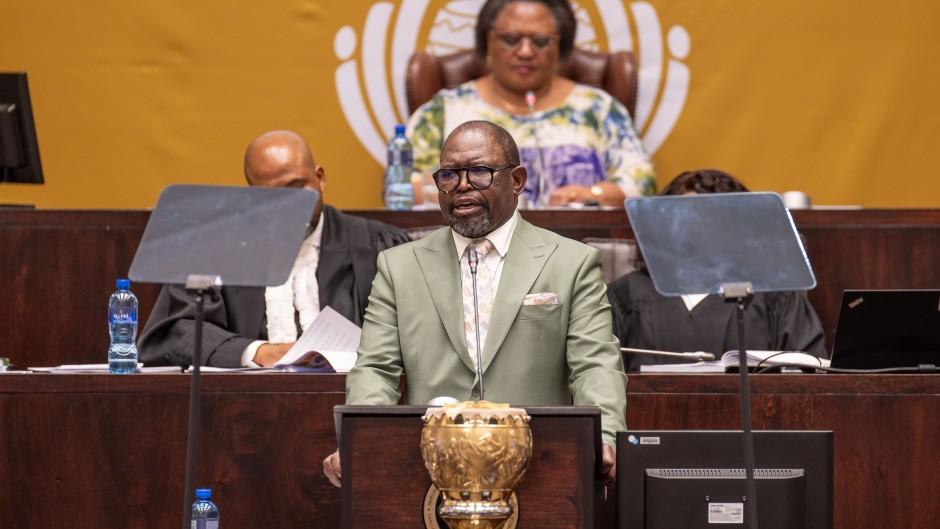
“South Africa’s upcoming Medium-Term Budget Policy Statement is attracting attention as investors seek clarity on public finances, government borrowing, debt sustainability and the outlook for economic growth. The policy announcement will be an important opportunity for the government to explain how it intends to balance fiscal pressures with the need to improve public services, infrastructure and employment.”
Government faces a critical test of fiscal priorities
South Africa’s upcoming Medium-Term Budget Policy Statement is emerging as a significant policy moment for the government, with public finances, economic recovery and investor confidence among the issues attracting attention. Finance Minister Enoch Godongwana is scheduled to present the 2026 statement to the National Assembly on Wednesday, 21 October, at 14:00, according to Parliament. The statement will update the government’s spending plans, economic forecasts and fiscal framework before the next national budget.
The announcement matters because government policy determines how public resources are raised, allocated and managed. Decisions about expenditure, borrowing and revenue influence the resources available for schools, hospitals, transport infrastructure, municipal services and social support. They also affect the government’s capacity to respond to economic shocks while maintaining financial stability.
Reuters reported on 15 October that the rand strengthened slightly during early trading as the United States dollar retreated from an 18-month high. Investors were also looking towards the forthcoming budget for clues about South Africa’s fiscal outlook and credit-rating prospects. The rand traded at approximately R16.5575 to the dollar at 06:38 GMT, about 0.3% stronger than its previous close.
Although exchange-rate movements are influenced by numerous international and domestic factors, the market response illustrates how economic policy announcements can affect investor expectations. The budget statement will therefore be assessed not only for its immediate financial measures but also for what it communicates about the government’s longer-term economic direction.
What the Medium-Term Budget Policy Statement does
The MTBPS is an important part of South Africa’s annual public finance process. Parliament explains that it provides updated economic projections, revised expenditure estimates and a framework for considering the government’s fiscal priorities. It also allows lawmakers to scrutinise departmental spending and assess whether public resources are being used effectively.
Unlike the main national budget, which establishes the principal financial framework for the coming financial year, the medium-term statement offers an interim assessment of economic and fiscal conditions. It gives the government an opportunity to update its projections, explain changes in the economic environment and indicate whether adjustments to spending plans are necessary.
The statement is especially important when economic conditions differ from those anticipated during the previous budget cycle. Revenue may be affected by economic activity, commodity prices, employment levels and tax collection. Meanwhile, expenditure pressures can increase when public services require additional funding or when government obligations become more expensive.
Parliament’s finance and appropriations committees play a role in examining departmental performance and expenditure. Their scrutiny provides an opportunity to identify discrepancies between approved budgets and actual implementation. The process also creates a mechanism through which legislators and the public can question government priorities.
Parliament has invited stakeholders to submit written comments on the revised fiscal framework and revenue proposals associated with the 2026 MTBPS. The relevant committees have scheduled virtual public hearings for 28 October, while written submissions are due by midday on 26 October. These arrangements provide a formal opportunity for interested parties to contribute to the discussion.
Debt management remains central to fiscal policy
One of the main questions surrounding the forthcoming statement is how the government intends to manage public debt while preserving funding for essential services and economic development.
Borrowing enables governments to finance expenditure when current revenue is insufficient, but sustained borrowing can increase interest costs and reduce future budget flexibility. When debt servicing consumes a growing share of revenue, fewer resources may remain available for infrastructure, education, healthcare and other priorities.
Consequently, investors will be watching for evidence that the government can manage its financing requirements while maintaining credible medium-term projections. Reuters identified the fiscal outlook and potential credit-rating implications as important considerations ahead of the announcement.
Credit ratings matter because they provide assessments of a borrower’s ability and willingness to meet financial obligations. Changes in a sovereign rating or outlook can influence how investors evaluate risk and the returns they require to lend money. However, ratings are only one element of the broader economic picture and do not independently determine borrowing costs or investment outcomes.
The government must also consider the composition of its expenditure. Cutting spending indiscriminately could weaken essential services or delay investments needed to support economic activity. Conversely, increasing expenditure without a sustainable financing plan could place additional pressure on public finances.
The policy challenge is therefore to establish a credible balance between fiscal discipline and development needs. Clear explanations of spending assumptions, revenue expectations and debt projections would help Parliament and the public evaluate the choices presented in the statement.
Economic growth and revenue collection
Government revenue depends substantially on economic performance and the effectiveness of tax administration. Stronger economic activity can support revenue collection through increased business activity, wages, consumption and profits. When growth remains weak, revenue may fall short of projections, complicating the task of funding public services.
South Africa’s fiscal policy must therefore be considered alongside the country’s wider economic performance. Businesses need dependable infrastructure, reliable logistics and predictable regulation to expand production and invest. Households need employment opportunities and sufficient purchasing power to participate in the economy.
The Financial Times reported on 14 October that South Africa’s recovery continued to face obstacles, including delays to planned investments, infrastructure problems and regulatory bottlenecks. The report highlighted concerns about port performance, energy costs and investment commitments that had not yet translated into completed projects.
These challenges are relevant to the budget debate because sustainable revenue growth is difficult to achieve without stronger economic activity. Fiscal policy alone cannot resolve every structural obstacle, but spending decisions can support or undermine efforts to improve infrastructure, administrative capacity and the business environment.
The medium-term statement will be an opportunity to explain how fiscal planning relates to these broader objectives. Parliament and the public will need to distinguish between policy commitments, funded programmes and outcomes that remain dependent on future implementation.
Infrastructure and service delivery
Infrastructure investment is a major consideration in any discussion about South Africa’s economic development. Roads, railways, ports, electricity networks, water systems and municipal facilities support businesses and connect communities to economic opportunities.
When infrastructure deteriorates or projects are delayed, the consequences can extend beyond the immediate cost of repairs. Businesses may face higher transport expenses, households may experience unreliable services, and communities may lose opportunities for employment and development.
However, infrastructure spending must be supported by effective planning, procurement and project management. Allocating money in a budget does not guarantee that a project will be completed on time or deliver the intended benefits. Public institutions must also demonstrate that spending is properly monitored and that procurement processes protect public resources.
The government’s fiscal choices will consequently be assessed in terms of both affordability and implementation. Greater spending may be justified where projects have clear economic or social benefits, but weak execution can undermine the value of additional funding.
Municipal finances are particularly relevant because local authorities deliver many services that residents experience directly. Parliament’s recent reporting on local government and municipal financial challenges highlights the importance of accountability and effective financial management at this level.
A credible medium-term fiscal approach should connect national financial planning with the practical capacity of departments and municipalities to deliver results. Transparent performance reporting can help establish whether public spending is improving services or simply increasing expenditure.
The relationship between fiscal policy and employment
Employment remains an important consideration when evaluating South Africa’s economic policy choices. Although government expenditure can support jobs through infrastructure projects, public services and targeted programmes, lasting employment growth also depends on productive businesses, investment and economic expansion.
The budget statement can influence these conditions by clarifying spending priorities and providing a more predictable framework for public finances. Businesses making long-term investment decisions often consider the reliability of infrastructure, the cost of financing, tax arrangements and the stability of government policy.
Nevertheless, fiscal policy cannot guarantee that additional spending will automatically produce jobs. The effects depend on how programmes are designed, which sectors receive investment, whether projects are implemented efficiently and whether economic activity generates sustainable demand for workers.
The government therefore faces the challenge of supporting development while ensuring that spending decisions remain financially responsible. Policies that improve infrastructure and administrative efficiency may support private-sector activity, while poorly executed projects can impose costs without producing comparable benefits.
Public accountability will be important in assessing whether the announced priorities translate into measurable outcomes. Employment targets, implementation schedules and transparent reporting can help Parliament evaluate whether funded programmes are delivering their intended results.
Investor confidence and the rand
The currency’s movement on 15 October illustrates the interaction between international financial conditions and domestic policy expectations. Reuters reported that the rand strengthened modestly as the dollar weakened, while government bonds also gained during early trading. Investors were awaiting further information from the forthcoming budget.
These developments should not be interpreted as proof that the budget has already improved confidence. Currency values respond to many influences, including international interest-rate expectations, geopolitical developments, commodity prices and global demand for emerging-market assets.
Instead, the market reaction demonstrates that investors are considering both external conditions and South Africa’s fiscal outlook. The budget statement could influence their assessment by clarifying the government’s revenue assumptions, expenditure plans and financing requirements.
A transparent fiscal framework may help reduce uncertainty, although confidence will ultimately depend on the credibility of projections and the government’s ability to implement its plans. Investors will also consider economic growth, institutional effectiveness and infrastructure performance.
For households, exchange-rate movements can affect imported goods, fuel-related costs and other expenses, although the extent and timing of these effects vary. The broader significance of the budget therefore extends beyond financial markets to the economy’s ability to provide stable conditions for businesses and consumers.
What Parliament and the public should examine
The parliamentary process gives lawmakers and members of the public an opportunity to examine the government’s fiscal decisions rather than relying solely on headline announcements.
Several issues deserve attention: whether revenue projections are realistic, whether expenditure adjustments are adequately explained, how debt servicing affects available resources, and whether departments can demonstrate measurable progress against their objectives.
Public submissions can also help identify concerns that may not be fully reflected in official projections. Businesses may focus on investment conditions, workers on employment and living costs, and community organisations on access to services. These perspectives can contribute to scrutiny of the proposed fiscal framework.
Parliament has confirmed that the finance committees will receive submissions on the revised fiscal framework and revenue proposals, with public hearings scheduled after the statement is tabled.
The process does not remove the need for difficult policy choices. Instead, it provides a mechanism for explaining those choices, questioning their assumptions and examining their likely consequences.
Conclusion: Fiscal credibility must translate into public outcomes
South Africa’s 2026 Medium-Term Budget Policy Statement arrives at a consequential point for economic policy. The announcement is expected to update the country’s fiscal projections and provide insight into how the government intends to manage public resources amid competing demands.
As Reuters reported on 15 October, investors are watching the statement for indications of the fiscal outlook and possible credit-rating implications. Parliament’s published timetable confirms that the Finance Minister is scheduled to present the MTBPS on 21 October 2026.
The statement’s significance will ultimately depend on more than its immediate reception by financial markets. Its value will also be measured by whether government plans support reliable public services, productive infrastructure, sustainable public finances and conditions for broader economic participation.
For citizens, businesses and policymakers, the central issue is whether fiscal commitments can be translated into practical results. Clear projections, credible expenditure plans and effective oversight can strengthen public understanding of the choices involved. Equally important, transparent reporting after the announcement will help establish whether the government delivers on its stated priorities.
The coming statement will provide an updated picture of the government’s intentions, but it will not settle every question about South Africa’s economic future. Implementation, economic conditions and subsequent policy decisions will continue to shape the results.
Source note: This article is an original, integrated analysis based on Reuters reporting and official South African parliamentary information available on 15 October 2026. The MTBPS has not yet been delivered, so its final measures and outcomes should not be treated as confirmed. The article does not reproduce Reuters’ report verbatim.



