




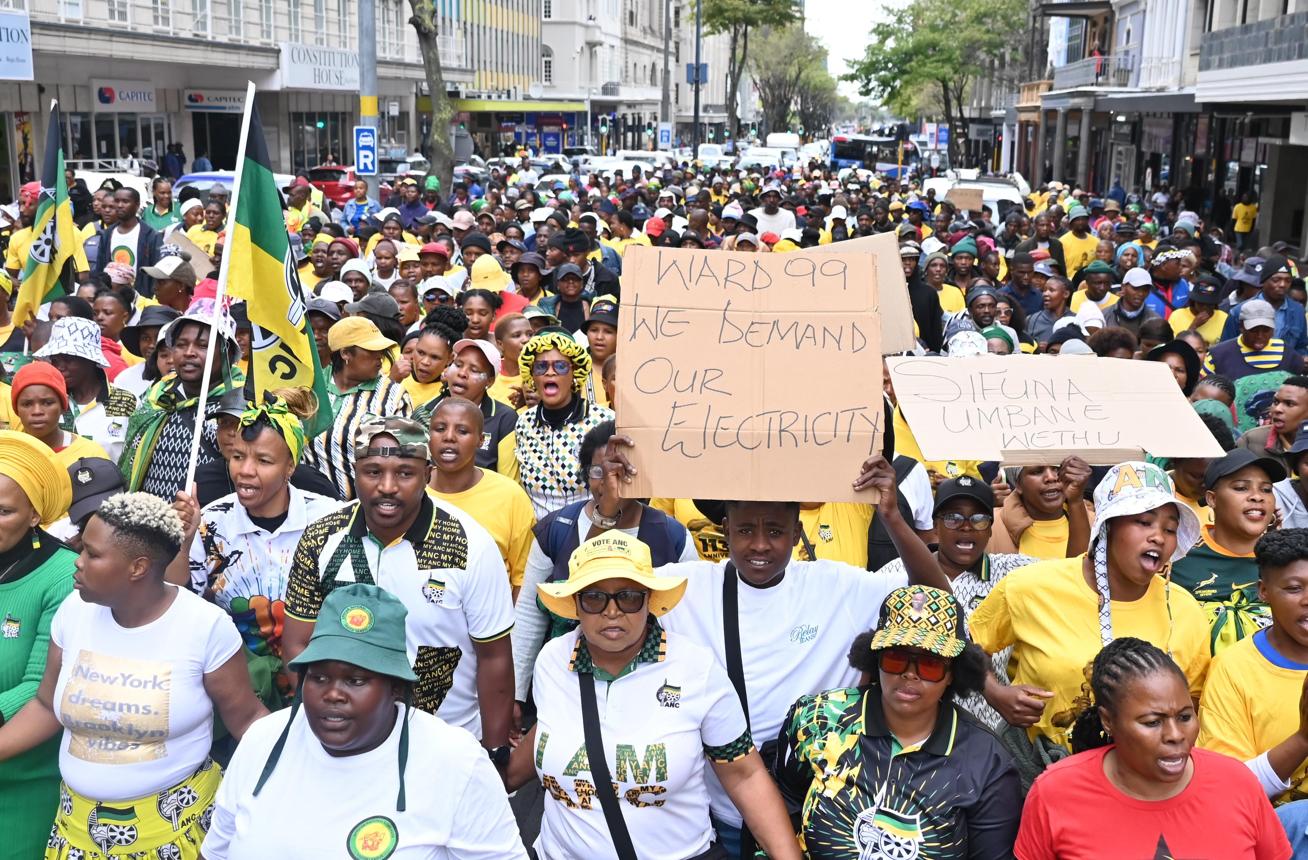
About 100 Khayelitsha residents, organised by Cry of the Xcluded and Amadoda Qotho, marched to Eskom and City of Cape Town offices to demand reliable electricity, faster repairs, functioning streetlights and urgent action against sewage spills. The organisers set deadlines for responses and threatened further demonstrations and complaints to oversight institutions, while Eskom said it had reduced its outstanding repair work orders from approximately 6,000 in July to about 500.
Khayelitsha Residents Demand Action on Electricity Outages and Sewage Spills
Residents of Khayelitsha, a large township on the outskirts of Cape Town, have taken their complaints about electricity failures and poor sanitation directly to the institutions responsible for essential services. On Tuesday, about 100 people marched first to Eskom offices and then to municipal offices, carrying banners demanding affordable, reliable electricity and improved service delivery. The demonstration was organised by civic groups Cry of the Xcluded and Amadoda Qotho. Their action brought everyday frustrations into the public arena and set deadlines for officials to respond.
The protest focused on problems that residents say have continued despite repeated reports to service providers. Demonstrators described power outages, faulty prepaid meters, exposed electrical infrastructure and repairs that take too long. They also demanded that damaged drains be fixed, streetlights installed, potholes repaired and young people given access to skills training. These concerns are closely connected: electricity is necessary for cooking, lighting, communication and household safety, while broken drains and sewage spills affect public health, mobility and the dignity of people using the streets.
Cry of the Xcluded member Thandokazi Manisi said some households had been without electricity for weeks or months. Residents, she said, often collect reference numbers after reporting faults but see no technicians arrive. Others phone the call centre and remain on hold until their airtime is exhausted. For people with limited income, repeated calls and trips to offices can become an additional cost without delivering a solution. The complaints illustrate how a system may record requests without giving residents a clear timetable or an effective way to escalate unresolved cases.
Manisi said residents had hired private fixers to repair transformers when official help did not arrive. She described a neighbour who uses crutches and visits Eskom daily. Because his electricity box does not work, she said, he relies on neighbours and spends about R20 a day for electricity. The case highlights the burden on people with disabilities and households unable to afford alternatives. Repeated office visits and informal fixes add costs without resolving the underlying infrastructure problem.
Another resident, Bongeka Moshani, said people had cut the wires supplying electricity to her home in Makhaza about two weeks before the march. She had resorted to paraffin for cooking and boiling water while waiting for assistance. Moshani also raised concerns about live wires posing a danger to children. Her account shows that an electricity fault is not merely an inconvenience: exposed or damaged wiring can create serious safety risks, while households without reliable power may have to use other fuels and equipment that introduce different hazards.
Eskom officials acknowledged that the utility had faced difficulties but said progress was being made. Mohale Makeke, Eskom’s Khayelitsha sector manager, said staff had previously encountered security problems while repairing faults, including robberies when workers went into affected areas without escorts. He said additional security arrangements had been introduced. Makeke also reported that Eskom had reduced its outstanding work orders from about 6,000 in July to nearly 500. That figure suggests a substantial reduction in the backlog, although it does not by itself establish how quickly the remaining individual complaints will be resolved or whether every resident’s experience has improved.
The organisers have demanded that Eskom repair reported faults within 48 hours and secure exposed transformers within seven days. They said that if there was no adequate response by 21 October, they would march to Eskom’s Bellville office and the Khayelitsha depot. They also planned to submit complaints to the National Energy Regulator and the Public Protector. These proposed steps move the campaign beyond a single demonstration: they create a timetable against which the utility’s response can be assessed and identify institutions that may be asked to investigate unresolved complaints.
Sanitation was the other major focus of the march. After visiting Eskom, protesters went to the City of Cape Town’s Subcouncil 10 offices to demand repairs to damaged drains, including on Dongo Street and Folokwe Street. Manisi said sewage flowed out of drains, attracting flies and leaving a persistent unpleasant smell. Such conditions can make ordinary movement through a neighbourhood difficult and can expose residents to unhygienic surroundings. The protest placed sanitation alongside electricity as a basic public service, rather than treating it as a secondary concern.
Siyabulela Magwaca drew attention to the particular difficulties faced by people with disabilities. He said wheelchair users sometimes had to touch sewage as they pushed themselves along streets contaminated by wastewater. The description makes clear that deteriorating infrastructure can restrict freedom of movement and make everyday tasks humiliating or unsafe. A street that is technically open may still be inaccessible in practice when drains overflow, surfaces are damaged or pedestrians must navigate around waste. Inclusive service delivery therefore requires officials to consider how infrastructure works for residents with different mobility needs.
The memorandum delivered by protesters also called for streetlights in Makhaza and other areas, arguing that better lighting could help deter crime. Residents requested repairs to potholes and skills training for young people at the Khayelitsha Training Centre. These demands broaden the issue from emergency maintenance to the conditions needed for safer and more sustainable neighbourhoods. Street lighting affects how people move after dark; road repairs affect pedestrians and vehicles; and training can help young people improve their prospects. The marchers presented these issues as connected responsibilities for public institutions.
The City’s response, as reported by GroundUp, was that councillor Delmaine Cottee, chairperson of Subcouncil 10, would forward the memorandum to relevant municipal departments. The subcouncil would then discuss the departments’ responses with the protesters. This provides a channel for engagement, but the crucial test will be whether it produces specific commitments, deadlines and visible repairs. Residents who have already spent time reporting faults may reasonably expect the next stage to include clear communication about who is responsible, what will be done and when work is scheduled.
The organisers said that if the City had not responded by 31 October, they would march to the Civic Centre and approach the South African Human Rights Commission and the Public Protector. Their plan reflects a familiar pattern in community activism: residents document local problems, approach the responsible agency, set a deadline and escalate the matter when they believe ordinary channels have failed. Peaceful protest can help make neglected concerns visible, particularly when individual complaints have not led to action. It can also give residents a shared platform from which to demand accountability and communicate clearly about realistic repair schedules.
For residents, priorities are safe connections, functioning meters, prompt repairs, clean streets and accessible routes. Authorities must turn complaints into tracked cases and completed work. The demonstration shows how activism connects household hardship to public accountability. Service delivery is tangible: people need to cook safely, move through streets without sewage and receive meaningful answers when reporting faults.
The organisers’ deadlines—21 October for Eskom and 31 October for the City—will give residents points at which to assess progress. Until then, the demands remain unresolved. The Khayelitsha protest shows that democratic participation continues between elections: residents organise, present grievances and seek answers. Whether this campaign produces lasting improvements will depend on follow-through by the utility, municipal departments and the residents monitoring their commitments.



