




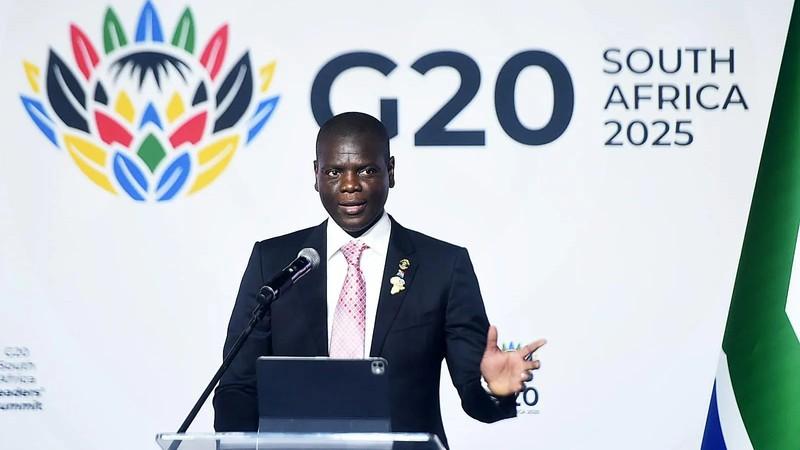
“South Africa’s International Relations and Cooperation Minister Ronald Lamola has warned that growing international competition for Africa’s critical minerals could reproduce exploitative patterns associated with the continent’s colonial past. Speaking at a conference on Africa–Europe relations in Pretoria, he called for partnerships that support local mineral processing, industrialization, job creation and stronger African influence over global economic and political decisions.”
South Africa warns against a new scramble for Africa as critical minerals reshape international relations
South Africa has issued a renewed warning about the risks facing Africa as international powers compete for critical minerals essential to renewable energy, advanced manufacturing and emerging technologies. International Relations and Cooperation Minister Ronald Lamola delivered the warning in Pretoria on 12 October 2026, arguing that Africa must ensure its natural resources contribute to industrial development, employment and prosperity on the continent rather than primarily benefiting economies elsewhere. His remarks, reported by The Citizen on 13 October, place resource competition at the centre of South Africa’s diplomatic agenda.
The warning comes as governments worldwide seek secure supplies of minerals needed for electric vehicles, batteries, electricity networks and other technologies associated with the transition to cleaner energy. Africa possesses substantial mineral resources, making it an important destination for investment and international commercial partnerships. However, Lamola’s argument is that the continent must negotiate from a position of collective strength and insist that partnerships generate measurable economic benefits for African societies.
Critical minerals and the changing global balance of power
Critical minerals have become increasingly important to international relations because they connect economic security, technological competition, energy policy and national development. Countries seeking to expand renewable electricity generation and manufacture advanced technologies require reliable access to the materials used in these industries.
This demand creates opportunities for African countries to attract investment, develop infrastructure and strengthen export earnings. Nevertheless, the distribution of benefits depends significantly on how mineral agreements are negotiated, where processing takes place and whether producing countries develop their own manufacturing capabilities.
For Lamola, the danger is that international competition could create a new version of the historical extraction model in which African territories supplied valuable resources while much of the resulting wealth accumulated elsewhere. His warning about a new “scramble for Africa” draws attention to the possibility that strategic competition could intensify existing inequalities if governments prioritise the immediate sale of raw materials over long-term economic transformation.
The issue is not whether African countries should cooperate with international partners. Instead, it concerns the terms of that cooperation. Foreign investment can contribute to development, but its benefits depend on transparent agreements, effective public institutions, responsible environmental management and opportunities for domestic businesses to participate in supply chains.
Consequently, mineral diplomacy is becoming a test of whether African governments can convert international demand into lasting economic advantages.
From exporting raw materials to building industries
A central concern in Lamola’s address was the need for African countries to process more of their mineral wealth domestically and develop industries that create employment.
Exporting unprocessed materials can generate revenue, but it may leave producing countries dependent on international commodity prices and external manufacturers.
Domestic beneficiation offers an alternative. Through processing, refining and manufacturing, countries can capture additional value before products enter international markets. Such activities can also create demand for technical skills, transport services, engineering, maintenance and supporting industries.
For South Africa, the argument is particularly relevant because its industrial base and mineral resources could support stronger links between extraction, manufacturing and technology development. The wider African opportunity, however, requires cooperation across national borders. No individual country can efficiently develop every stage of every mineral supply chain.
Governments therefore need to identify areas where their resources, infrastructure, technical expertise and markets complement one another. Regional production networks could help countries share investment costs, develop specialised industries and improve their bargaining power with international companies.
This approach would also require dependable electricity, modern transport infrastructure, access to finance, skilled workers and predictable regulatory frameworks. Without these foundations, ambitious industrialisation policies could struggle to attract sustained investment or compete with established manufacturing centres.
Lamola’s warning therefore points towards a broader development challenge: Africa needs more than mineral deposits to benefit from the global energy transition. It needs the industrial capacity to turn those resources into higher-value products and sustainable economic opportunities.
Europe–Africa relations face a defining test
The minister’s remarks formed part of a wider discussion about the future of relations between Africa and Europe. In his keynote address at the Pretoria conference, Lamola argued that the two regions should translate diplomatic commitments into practical cooperation that benefits their populations.
Europe remains an important potential partner for African countries seeking investment, advanced technology, infrastructure and access to international markets. European companies, meanwhile, have interests in resilient supply chains and access to resources needed for industrial production and the energy transition.
These interests could create mutually beneficial partnerships if European capital and technical expertise help establish processing and manufacturing capabilities within Africa. Such cooperation would differ from arrangements that principally move raw materials abroad while leaving producing countries with limited industrial development.
However, the relationship also contains tensions. African governments have raised concerns about unequal economic relationships, borrowing costs, market access and environmental measures that could affect their exports. Lamola highlighted the importance of recognising Africa’s development needs when designing policies that influence international trade.
These disagreements demonstrate why diplomacy must extend beyond summit declarations and broad statements of friendship. Governments need to negotiate specific arrangements covering investment, technology transfer, infrastructure, local employment and market access.
A credible partnership would also require both sides to acknowledge their respective obligations. African governments must strengthen governance, reduce uncertainty for responsible investors and ensure public resources are managed transparently. European partners must consider whether their commercial and regulatory policies support the industrial development they publicly endorse.
The outcome will help determine whether the relationship becomes more balanced or continues to reproduce patterns that leave African economies concentrated in lower-value activities.
Debt and infrastructure remain obstacles
Industrialisation requires substantial investment, and many African countries face constraints in financing the infrastructure needed to expand production. Lamola highlighted the burden of debt and the disadvantages developing economies face within international financial arrangements.
High borrowing costs can limit governments’ ability to finance electricity generation, railways, ports, roads, water systems and technical education. These investments are essential for mineral processing and manufacturing, which generally require dependable infrastructure and reliable access to markets.
Debt pressures can also narrow the resources available for healthcare, education and other public priorities. Governments must therefore balance investment needs against fiscal sustainability, ensuring that borrowing supports productive projects capable of delivering long-term public benefits.
International development finance can help address these constraints, but financing arrangements must be appropriate to local circumstances. Transparent contracts, realistic project assessments and fair risk-sharing can reduce the likelihood that infrastructure investments become expensive liabilities.
Regional integration offers another possible response. Better connections between neighbouring countries could create larger markets, improve transport efficiency and make cross-border industrial projects more commercially viable.
The African Continental Free Trade Area provides an important framework for advancing this ambition. However, its potential depends on practical implementation, including streamlined customs procedures, compatible standards and infrastructure that allows goods to move efficiently between countries.
South Africa’s diplomatic position suggests that resource policy, infrastructure investment and regional economic integration should be treated as connected priorities rather than separate discussions.
Africa’s voice in international institutions
Beyond trade and investment, Lamola’s address raised a fundamental question about Africa’s influence over the international rules governing the global economy. He argued that the continent needs a stronger voice in institutions responsible for international peace, security, trade and finance.
This concern reflects a longstanding debate about whether existing global institutions adequately represent contemporary political and economic realities. African countries frequently argue that decisions affecting their economies and security are made through systems in which their collective influence remains limited.
Greater representation could help African governments advocate for financing arrangements that support development, stronger international responses to conflicts and more equitable participation in decisions about global trade.
However, increasing influence requires coordination. African governments do not always share identical priorities, and differences between national interests can weaken collective negotiating positions. Regional organisations and the African Union can help build common positions, although translating agreement into coordinated action remains challenging.
Mineral diplomacy illustrates why unity matters. Countries negotiating individually may have limited leverage when dealing with powerful economies or multinational corporations. Cooperation on standards, taxation, infrastructure and industrial development could improve their ability to negotiate mutually beneficial arrangements.
Nevertheless, collective bargaining must respect national sovereignty and differences in economic circumstances. Effective coordination should help countries pursue shared interests without preventing them from establishing partnerships suited to their particular development priorities.
Geopolitical competition and African strategic autonomy
The competition for critical minerals also raises questions about Africa’s relationships with major international powers. Countries across the continent maintain commercial, diplomatic and security relationships with partners in Europe, Asia, North America and elsewhere.
South Africa’s position, as presented by Lamola, emphasises the importance of retaining the freedom to pursue partnerships according to African interests rather than being compelled to align exclusively with competing international blocs.
Strategic autonomy does not mean rejecting international cooperation. Rather, it involves preserving the capacity to make independent decisions, assess competing proposals and select arrangements that support national and continental development.
For mineral-producing countries, this requires evaluating investment proposals according to their economic value, environmental consequences and contribution to local capabilities. Governments must also consider whether agreements create excessive dependence on a single buyer, financier or technology provider.
Diversifying commercial relationships can reduce exposure to political disputes and disruptions in international markets. At the same time, diversification should not become an excuse for weak oversight or opaque agreements.
Ultimately, the value of strategic autonomy depends on the quality of domestic institutions and the ability of governments to negotiate effectively. Without those foundations, the existence of several potential international partners may not necessarily translate into better outcomes for citizens.
What the warning means for South Africa
South Africa has an opportunity to connect its diplomatic priorities with domestic industrial development. The country can use its existing industrial capabilities, mineral resources and regional economic relationships to support more sophisticated production networks.
Achieving this objective will require collaboration among government departments, businesses, universities, research institutions and regional partners. Skills development and technological innovation are particularly important because mineral processing and advanced manufacturing require specialised expertise.
The government must also ensure that industrial policies produce tangible benefits for communities. Employment opportunities, support for local suppliers and investment in technical training can help distribute the gains from resource development more widely.
Environmental considerations will remain important. Mining and mineral processing can place pressure on water resources, land and ecosystems. Responsible investment must therefore include credible environmental safeguards, community consultation and appropriate rehabilitation arrangements.
South Africa must also maintain predictable regulations and transparent procurement processes. Investors need clarity about their obligations, while citizens need confidence that public decisions serve the wider interest.
The diplomatic message will carry greater weight if it is matched by effective domestic implementation. Calling for fairer international economic relationships is important, but building competitive industries and accountable institutions is equally necessary.
The path from diplomatic statements to practical results
The significance of Lamola’s warning will ultimately depend on whether governments translate it into concrete agreements and measurable outcomes. International conferences provide opportunities to establish shared priorities, but implementation requires sustained negotiations and cooperation.
African governments could focus on identifying mineral supply chains where domestic processing is commercially viable, improving regional transport links and expanding technical training. They could also strengthen transparency requirements for major investment agreements and improve coordination on cross-border infrastructure.
European partners could contribute through long-term investment, technology partnerships and support for manufacturing capacity. Such cooperation would need to demonstrate benefits for both sides while respecting the development priorities and sovereignty of African countries.
Progress should be assessed through practical indicators, including jobs created, local procurement, investment in processing facilities, technology transfer and the growth of exports containing greater domestic value.
These measures would help distinguish meaningful industrial cooperation from arrangements that primarily expand raw-material exports.
Lamola’s intervention places South Africa within a broader continental debate about how African countries should respond to a changing international order. The central question is whether competition for strategic resources will deepen existing inequalities or create opportunities for economic transformation.
Africa’s mineral wealth gives its governments an important negotiating asset, but resources alone cannot guarantee prosperity. Strong institutions, regional cooperation, sound infrastructure and long-term industrial planning are also necessary.
For South Africa and its neighbours, the challenge is to turn international demand into sustainable development without sacrificing economic independence. The coming years will show whether diplomatic warnings about a new scramble for Africa lead to stronger partnerships, greater local production and a more influential continental voice in global affairs.



