




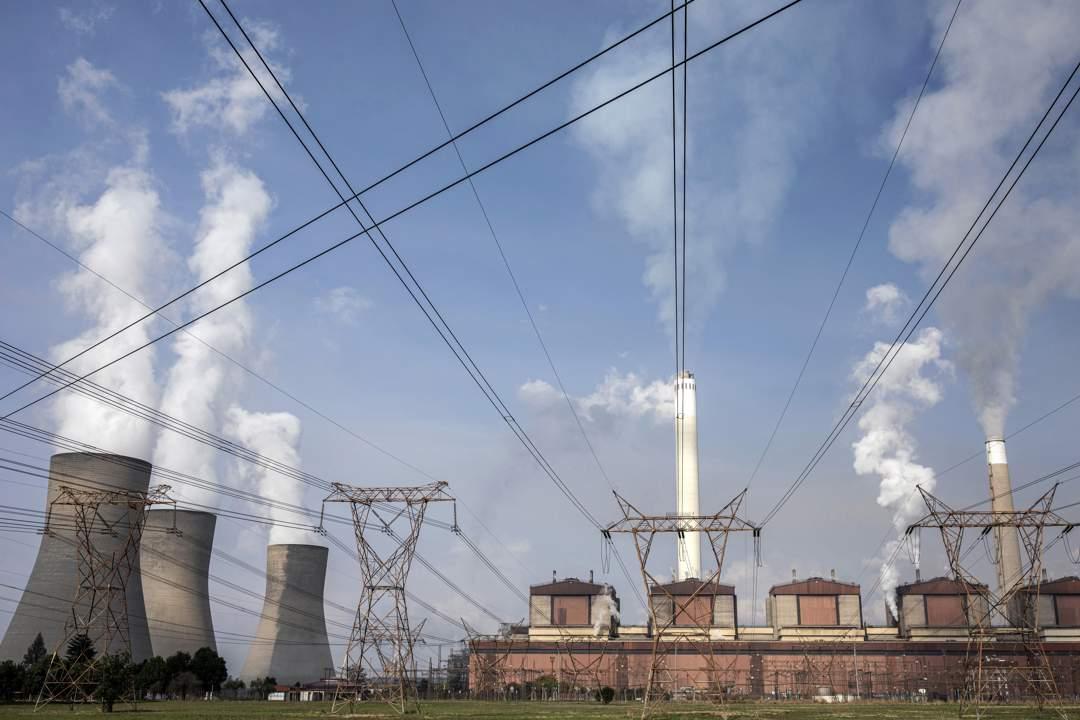
“South Africa’s proposed electricity tariff restructuring has drawn objections from civil society groups, local government representatives and political figures who warn that higher electricity costs could deepen financial pressure on low-income households and undermine economic participation. Eskom argues that its proposed tariff changes include adjustments to fixed service charges and corresponding reductions in per-unit energy rates, while the National Energy Regulator of South Africa (NERSA) must assess the application within the applicable legal and regulatory framework.”
South Africa’s electricity pricing debate has intensified as Eskom’s proposed tariff restructuring faces criticism from consumer advocates, civil society organisations, political representatives and local government. At the centre of the debate is a policy question with consequences for millions of people: how can the country maintain a financially sustainable electricity system without making essential power increasingly difficult for households and businesses to afford?
A report published by The Star on 13 October describes objections raised by stakeholders during proceedings involving the National Energy Regulator of South Africa (NERSA). The debate concerns not only the prospect of additional electricity costs but also the way those costs are distributed between fixed service charges and consumption-based charges. The final regulatory decision will determine how the proposal proceeds, subject to the applicable legal framework.
A dispute over the structure of electricity bills
Eskom’s proposal forms part of a broader discussion about how electricity should be priced as South Africa’s power sector changes. The utility has defended adjustments involving fixed service charges for its Home Power and Home Flex tariffs. According to the report, Eskom representative Kgabo Rathogo said the changes include corresponding reductions in per-unit energy rates intended to offset adjustments to service charges.
The distinction matters because customers experience electricity costs through their complete bills, rather than through a single tariff figure. A customer may consume relatively little electricity but still face fixed charges associated with maintaining a connection or providing services. Another household with higher consumption may experience a different balance between fixed and variable costs.
Consequently, assessing a tariff proposal requires examining how its different components interact. A reduction in the price charged for each unit of electricity does not necessarily mean every customer will pay less overall if fixed charges increase. Equally, the effect will depend on consumption patterns, the applicable tariff category and the details of the final approved structure.
For households managing limited incomes, understanding these calculations is essential. Electricity competes with food, transport, housing, healthcare and education for a share of household spending. Even relatively small changes can require families to adjust their budgets, especially when other living costs are also rising.
Affordability concerns from civil society and municipalities
The objections reported by The Star reflect concerns that electricity pricing should be assessed against its social and economic consequences. Sabelo Chalufu, founder and director of the Better Governance Initiative, called on NERSA to reject Eskom’s application. The organisation cited a petition containing 18,206 signatures and a survey of 83 respondents in which electricity accounted for approximately 45% of income among households earning below R5,000 per month.
Those figures should be interpreted carefully. The survey involved a limited number of respondents and cannot, on its own, establish the electricity expenditure of every low-income South African household. Nevertheless, the concerns highlight why the regulator must examine affordability impacts and the distribution of costs, rather than treating aggregate revenue requirements as the only consideration.
The City of Cape Town also raised concerns about the implications for vulnerable residents and economic growth. Its representative, Chelsea van Schalkwyk, argued that electricity affordability should remain central to the regulator’s determination.
These concerns illustrate the difficult balance facing policymakers. Electricity providers need sufficient revenue to maintain infrastructure, purchase or generate power, invest in networks and meet operating obligations. However, prices that exceed consumers’ ability to pay may contribute to arrears, reduced consumption, disconnections and greater reliance on alternative energy sources.
Municipalities face additional challenges because they distribute electricity to residents and businesses while managing their own operating expenses and revenue collection. Changes in wholesale electricity costs and tariff structures can affect municipal budgets, retail prices and the resources available for other services.
Why the national pricing policy matters
The current controversy comes amid a review of South Africa’s overarching Electricity Pricing Policy. In August 2026, the Department of Electricity and Energy announced a revised policy for public consultation, explaining that the existing framework had been approved in 2008 and that significant changes had since occurred in the electricity sector. These include private-sector generation, distributed electricity generation, electricity trading and reforms under the Electricity Regulation Amendment Act of 2024.
The department says the revised framework seeks to balance financial sustainability, efficient cost recovery, consumer affordability, economic competitiveness, transparent pricing, non-discrimination and protection for vulnerable households. These objectives can conflict when the cost of supplying electricity rises while household incomes remain constrained.
A cost-reflective tariff aims to ensure that prices reflect the legitimate costs of providing electricity. This can support maintenance, investment and reliable service. However, the policy question is how those costs should be allocated, which consumers require support and how regulators can ensure that charges are justified and understandable.
A transparent tariff system should enable customers to distinguish energy charges from network costs, service charges and other authorised components. Clear billing can help consumers compare tariffs, identify errors and understand why their total payments change.
The revised policy is therefore significant beyond the immediate Eskom application. It could shape how pricing principles are applied as South Africa moves towards a more competitive electricity market.
Parliamentary scrutiny and public participation
Parliament is also examining electricity pricing and related financial questions. Its published schedule identifies a Standing Committee on Appropriations briefing by Eskom on 13 October concerning proposed tariff adjustments, reforms to the tariff framework, municipal debt owed to Eskom and a proposal to allocate indigent budget funding directly to Eskom rather than municipalities.
This parliamentary work is important because tariff decisions are connected to wider questions about public finance and service delivery. Municipal debt can affect Eskom’s revenue, while changes to how support for indigent households is funded may influence the relationship between national government, local authorities and the electricity supplier.
Directing funds to a utility rather than through a municipality could potentially strengthen the connection between public support and electricity payments. However, the practical consequences would depend on the design of the arrangement, eligibility rules, administrative capacity and safeguards to ensure that qualifying households receive the intended assistance.
Municipalities also have responsibilities beyond electricity distribution. They must finance water services, sanitation, roads, waste management and other local functions. Any change to funding arrangements therefore requires consideration of municipal financial stability as well as the need to protect vulnerable electricity consumers.
Public consultation provides another avenue for scrutiny. The Department of Electricity and Energy announced on 23 September that the submission deadline for comments on both the Revised Electricity Pricing Policy and the Electricity Sector Market Transformation Position Paper had been extended to 28 October 2026.
That extension gives interested parties additional time to submit evidence and recommendations. Household representatives, businesses, municipalities, labour organisations and civil society can use the process to explain how proposed arrangements may affect different groups and to suggest practical alternatives.
NERSA’s regulatory responsibility
NERSA occupies a central position in the dispute because tariff decisions must be considered within the applicable legislation, regulatory rules and approved policy framework. Its responsibility involves evaluating applications against relevant requirements rather than simply accepting or rejecting claims based on political pressure.
During the proceedings described by The Star, NERSA representative Muzi Mkhize cautioned that decisions extending beyond existing policies and laws could expose the regulator to legal challenges. This underscores the importance of balancing affordability concerns with the regulator’s statutory obligations.
The regulator must also consider whether the evidence supports the proposed charges and whether the structure distributes costs fairly. Relevant questions include the effects on low-consumption customers, the justification for fixed charges, the treatment of different customer categories and the relationship between service costs and retail prices.
A credible assessment should distinguish between costs that are necessary to operate and maintain the electricity system and choices about how those costs are recovered. Even where a cost is legitimate, its allocation among consumers remains a matter of policy and regulation.
The process also needs to be understandable to the public. Technical tariff calculations can be difficult to follow, but accessible explanations of expected monthly bills would help households assess the likely consequences before implementation.
Potential consequences for households and businesses
Electricity prices influence much more than domestic lighting and cooking. Small businesses rely on power for refrigeration, equipment, communications and daily operations. Workshops, farms, shops and manufacturers may face increased operating expenses when tariffs rise or billing structures change.
Businesses may respond by raising prices, reducing other spending, investing in energy efficiency or seeking alternative sources of electricity. The options available depend on their financial position and the cost of installing and maintaining alternatives. Larger companies may have more flexibility to invest in solar generation or storage than small enterprises and low-income households.
For poorer households, the choices are often narrower. Higher electricity expenses may leave less money for food and transport. Some consumers may reduce usage, delay payments or turn to other fuels. These responses can create additional financial and safety concerns, particularly where alternative energy sources are expensive or unsuitable.
At the same time, underfunding the electricity system can also impose costs. Insufficient revenue for maintenance and investment can weaken infrastructure and make reliable supply more difficult to sustain. Policymakers must therefore consider both immediate affordability and the long-term requirements of the power sector.
The challenge is to establish a framework that supports necessary investment without placing disproportionate burdens on those least able to absorb higher costs.
The road ahead for electricity policy
According to The Star’s report, the proposed tariff adjustments would take effect from 1 April 2027 for customers supplied directly by Eskom and from 1 July 2027 for municipal customers if approved by NERSA. These are proposed dates, not confirmation that the adjustments have received final approval.
The immediate priorities are clear: transparent regulatory assessment, accessible explanations of tariff impacts, meaningful public participation and effective protection for vulnerable consumers. Policymakers must also consider how electricity pricing interacts with municipal finances, investment needs and the development of a more competitive electricity market.
The consultation deadline of 28 October creates an opportunity for stakeholders to provide evidence on the proposed national pricing framework. Those submissions can help identify practical problems, clarify distributional effects and inform decisions about consumer protections and implementation.
Ultimately, the dispute is about more than the amount shown on an electricity bill. It concerns how South Africa finances an essential service while pursuing affordability, economic participation and reliable supply. The outcome will depend on the evidence presented, the regulator’s assessment, the final policy framework and the arrangements established to support consumers who struggle to meet the cost of electricity.



