




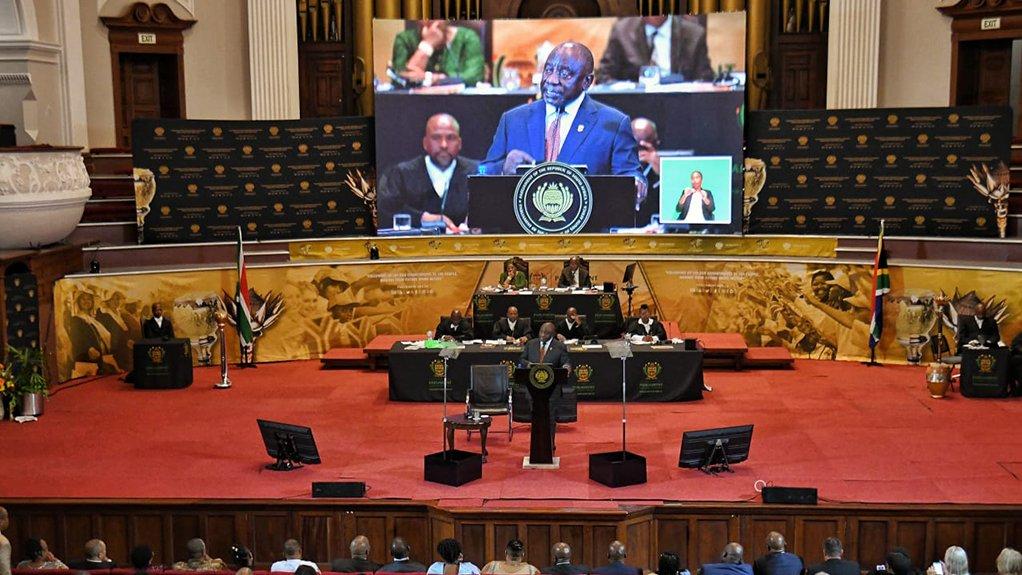
“South Africa’s Parliament has scheduled committee work for the week of 12 October, with the National Assembly focusing on Budgetary Review and Recommendations Reports that assess departmental spending, performance and delivery against government commitments. On 13 October, parliamentary business includes consideration of Eskom’s proposed electricity tariff adjustments and municipal debt, alongside petitions concerning roads, electricity, healthcare, housing and environmental concerns.”
South Africa’s governance system faces renewed scrutiny as Parliament undertakes a series of committee meetings examining departmental performance, public expenditure and the delivery of essential services. The parliamentary programme for the week beginning 12 October 2026 places particular emphasis on Budgetary Review and Recommendations Reports, which provide a mechanism for assessing whether government departments have used public resources effectively and fulfilled their responsibilities to citizens.
The oversight programme comes at an important time for South Africa, as communities continue to raise concerns about infrastructure, municipal finances, electricity costs, housing, healthcare and the responsiveness of public institutions. These issues place accountability at the centre of governance discussions, particularly ahead of the scheduled local government elections on 4 November 2026.
Parliament’s work is significant because public accountability involves more than approving budgets or receiving annual reports. It also requires elected representatives to examine whether government decisions produce measurable improvements in people’s lives. The effectiveness of these processes will depend on the quality of scrutiny, the clarity of recommendations and the extent to which departments act on identified weaknesses.
Parliament examines departmental performance
According to Parliament’s announcement on 11 October, the National Assembly is concentrating on Budgetary Review and Recommendations Reports during the week. Committees examine departmental annual reports, identify areas of underperformance and recommend improvements that may influence future budget allocations.
This process connects government expenditure with public service outcomes. A department may spend a substantial proportion of its allocated budget, yet still struggle to achieve its objectives. Consequently, oversight requires parliamentarians to consider not only how much money was spent but also whether expenditure delivered the intended results.
For example, a department responsible for infrastructure must demonstrate whether allocated funds supported completed projects, improved facilities or expanded access to services. Similarly, departments responsible for social development must explain whether programmes reached their intended beneficiaries and whether performance targets were achieved.
Annual reports and financial statements provide important evidence, but they do not automatically demonstrate that services are satisfactory. Parliamentary committees therefore have a responsibility to ask detailed questions, assess explanations and request corrective measures when performance falls short.
The process also helps identify recurring administrative problems. Weak planning, poor procurement, inadequate monitoring and unclear responsibility can undermine public programmes even when funding has been approved. Identifying these weaknesses early may help departments improve implementation and prevent repeated failures.
Eskom and municipal electricity finances
One of the scheduled parliamentary engagements for Tuesday, 13 October, concerns Eskom and proposed electricity tariff adjustments. The Standing Committee on Appropriations is also expected to consider reforms to the tariff framework, municipal debt owed to Eskom and a proposal concerning direct allocations for indigent electricity support.
These questions bring together national energy policy, municipal financial management and the protection of vulnerable households.
Electricity tariffs affect household budgets and business operating costs. At the same time, electricity providers must maintain infrastructure, purchase energy and finance reliable operations. Decisions about tariff structures therefore involve competing considerations that require transparent explanations and evidence.
Municipal debt owed to Eskom adds another layer of complexity. When municipalities struggle to collect revenue or manage their finances, unpaid electricity bills can contribute to financial pressure across the energy supply chain. However, measures designed to improve collections or recover debts must also consider the consequences for residents who cannot afford basic services.
The proposal to allocate indigent support directly to Eskom rather than through municipalities raises questions about implementation, accountability and eligibility. Any such arrangement would need clear rules governing which households qualify, how beneficiaries are identified and how funds are monitored.
Parliamentary scrutiny can help establish whether proposed arrangements have appropriate safeguards and whether they would improve assistance to eligible households. It can also clarify how responsibilities would be divided between national government, municipalities and electricity providers.
The available parliamentary announcement confirms that these matters are on the committee agenda. It does not establish the final outcome of the briefing or indicate that particular tariff changes have been approved. Those distinctions are important when reporting on public policy.
Community petitions bring local problems into Parliament
The parliamentary programme also includes three petitions concerning concerns raised by communities. These relate to service delivery in Mgwalana Village, exposure to hazardous chemicals allegedly associated with an unlawful chemical plant near Paarl, and equitable access to opportunities and benefits connected with coastal public property in Mossel Bay.
Petitions provide a formal route through which residents can bring grievances to the attention of national representatives. They can be particularly important when individuals believe that local authorities have not adequately addressed their concerns.
The Mgwalana Village petition raises several interconnected service delivery issues, including road conditions, electricity, the state of a primary school, healthcare access and housing. Such concerns demonstrate how municipal and public service challenges can affect multiple aspects of community life simultaneously.
Road conditions, for example, can influence access to schools, clinics, employment and markets. Inadequate electricity infrastructure can affect households, local enterprises and public facilities. Meanwhile, insufficient healthcare and housing provision can place additional pressure on families already experiencing economic difficulties.
The Paarl petition raises environmental and public health concerns about alleged chemical exposure. In such cases, effective governance requires the relevant authorities to establish the facts, assess potential risks, enforce applicable laws and communicate findings transparently. Allegations should be investigated carefully rather than treated as proven findings before the appropriate processes have been completed.
The Mossel Bay petition concerns access to the opportunities and benefits associated with coastal public property. This highlights the importance of transparent decision-making when public resources support economic activity. Authorities must be able to explain how access is regulated, which rules apply and how competing interests are considered.
The tabling of these petitions does not itself resolve the complaints. Their significance lies in creating an opportunity for Parliament to consider the issues and determine what further action, if any, is appropriate.
Municipal governance and accountability
The parliamentary agenda also reflects the broader challenge of improving municipal administration. Local government is responsible for delivering or coordinating many services that directly affect daily life, including water, sanitation, local roads, refuse collection and aspects of electricity distribution.
Effective municipal governance requires sound financial controls, competent officials, transparent procurement and clear accountability for decisions. Where these systems fail, communities can experience deteriorating infrastructure and unreliable services even when public funding has been allocated.
A report published by Eyewitness News on 5 October described the government’s revised White Paper on Local Government and plans to strengthen municipal recruitment and accountability. Cooperative Governance and Traditional Affairs Minister Velenkosini Hlabisa identified appointments and the competence of political and administrative leadership as important issues in municipal performance.
These concerns are relevant to parliamentary oversight because financial problems often cannot be addressed through budget adjustments alone. Municipalities may also need stronger internal controls, improved revenue collection, better project management and credible disciplinary procedures.
Nevertheless, governance interventions should be evaluated through evidence rather than announcements alone. Progress might be demonstrated through improved audit findings, fewer abandoned projects, better collection of revenue, reduced procurement irregularities and more reliable essential services.
Oversight committees can contribute by requiring departments and relevant institutions to explain what corrective steps have been implemented and whether those steps have produced measurable improvements.
Transparency and public trust
Transparency is another important element of the parliamentary process. Public institutions are entrusted with resources collected through taxation, borrowing and other public revenue streams. Citizens therefore have a legitimate interest in understanding how money is spent and what results are achieved.
Accessible annual reports, clear performance indicators and timely explanations of shortcomings can help the public evaluate government performance. Conversely, unclear reporting and repeated commitments without visible progress can make it difficult for citizens to determine whether institutions are addressing problems.
Parliamentary committee meetings offer an opportunity to examine these matters in greater detail than broad political statements usually permit. Members can question officials, request supporting information and scrutinise discrepancies between financial expenditure and reported outcomes.
However, oversight is most effective when findings lead to action. Recommendations must be assigned to responsible institutions, supported by realistic deadlines and followed up through subsequent engagements. Where evidence indicates possible misconduct, appropriate investigative or disciplinary processes should be pursued in accordance with the law.
It is equally important that oversight remains evidence-based and fair. Officials should have opportunities to explain their decisions, while documented failures must receive appropriate attention. Accountability should focus on establishing facts, correcting deficiencies and applying consequences where justified.
Implications ahead of local government elections
South Africa’s scheduled local government elections on 4 November 2026 give governance and service delivery additional public significance. Residents will have an opportunity to evaluate candidates and municipal administrations in light of their experiences and the information available about performance.
The parliamentary programme does not determine electoral outcomes. Nevertheless, the issues being examined are relevant to public discussion about municipal responsibilities and the management of public resources.
Voters can assess governance using practical questions: Are services becoming more reliable? Are public projects completed as promised? Are municipal finances managed transparently? Do authorities respond to complaints? Are procurement decisions properly documented, and are allegations of misconduct investigated fairly?
These questions help distinguish policy promises from demonstrated performance. They also encourage public discussion to focus on verifiable records, practical proposals and institutional responsibilities.
Political parties and candidates may offer different approaches to municipal challenges. Citizens can compare those proposals while examining their feasibility, funding arrangements and accountability mechanisms. Reliable information from Parliament, municipal reports and independent oversight institutions can support informed civic participation.
What happens next?
The scheduled committee engagements form part of a wider oversight programme involving 44 parliamentary committee meetings from Tuesday to Friday. Other meetings during the week include consideration of corporate plans for the South African Post Office and Postbank, according to Parliament’s published schedule.
The immediate significance of the programme lies in its potential to clarify the relationship between government spending, institutional performance and public needs. The electricity briefing may provide information relevant to energy costs and municipal debt, while the petitions create formal opportunities to examine concerns raised by affected communities.
The longer-term impact will depend on the decisions and follow-up actions that emerge from these processes. Recommendations need to translate into clearer responsibilities, practical corrective measures and demonstrable progress.
Parliament, government departments, municipalities and other oversight institutions each have distinct responsibilities. Effective governance requires these institutions to cooperate where necessary while maintaining appropriate independence and accountability.
Conclusion
South Africa’s parliamentary oversight programme for the week of 12 October 2026 places public expenditure, electricity finances and community service delivery concerns under scrutiny. The agenda demonstrates how parliamentary committees can connect financial accountability with practical questions about infrastructure, public services and the protection of vulnerable residents.
The petitions concerning Mgwalana Village, Paarl and Mossel Bay also underline the importance of giving communities formal channels through which to raise concerns. Meanwhile, the scheduled Eskom briefing highlights the need to examine energy costs, municipal debt and support for households facing financial hardship.
These engagements are important steps in the oversight process, but their ultimate value will depend on what follows. Transparent reporting, evidence-based decisions, clearly assigned responsibilities and consistent follow-up are essential if parliamentary scrutiny is to contribute to better governance.
As South Africa approaches its local government elections, citizens will continue to look for evidence that public institutions can manage resources responsibly and respond effectively to community needs. The central test is not simply whether meetings take place or reports are presented, but whether accountable decision-making produces measurable improvements in public services and strengthens confidence in democratic institutions.



