




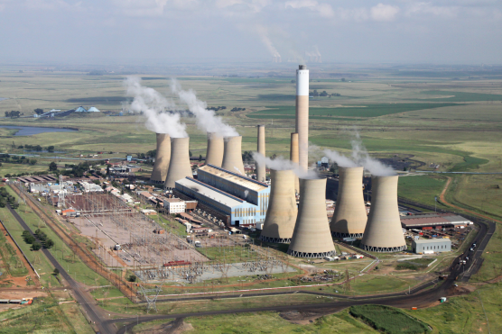
“South Africa has entered a load shedding-free winter thanks to improved Eskom reliability and surplus generation capacity, but renewable producers are being forced offline, creating a R2-billion backlog in compensation. The BLSA Reform Tracker shows electricity reforms losing momentum, threatening investment confidence and delaying the creation of a competitive power market.”
South Africa’s energy landscape has shifted dramatically in mid-2026. For the first time in years, Eskom forecasts a winter without load shedding, a milestone that many citizens and businesses have long awaited. Yet beneath this achievement lies a troubling reality: structural reforms in the electricity sector are faltering, renewable producers are being curtailed, and investor confidence is wavering. The paradox of abundance—surplus electricity undermining reform momentum—has created what analysts are calling South Africa’s “new energy crisis.”
Eskom’s Stability and Surplus Generation
Eskom’s improved plant reliability and reduced demand have resulted in surpluses exceeding 5GW, a stark contrast to the rolling blackouts that plagued the country for over a decade. This stability is partly due to better maintenance schedules and reduced industrial demand, but it has also come at a cost. Renewable independent power producers (IPPs), particularly wind and solar farms, have been instructed to curtail output when the grid does not require their electricity.
The Curtailment Problem
Curtailment has left IPPs with revenue shortfalls of around 9% and a R2-billion backlog in compensation payments. This undermines the very investment case that enabled South Africa to expand renewable capacity in the first place. Investors who once saw opportunity in South Africa’s liberalizing energy market are now questioning whether the regulatory framework can support long-term growth.
Reform Tracker Decline
The BLSA Reform Tracker, developed by consultancy Krutham, monitors 247 reform deliverables across economic, governance, and criminal justice sectors. For the first time since its inception, the tracker recorded more setbacks than gains in Q2 2026. The electricity sector’s reform score fell 2.2% to 67.5, reflecting missed deadlines for virtual wheeling protocols and delays in establishing an independent transmission system operator.
Transmission and Market Liberalization Challenges
Transmission line rollout has badly missed targets, delivering only 270.8 km against a planned 423 km for 2025/2026. Without adequate transmission infrastructure, renewable projects cannot connect efficiently to the grid. Moreover, Eskom’s attempt to keep transmission within its corporate structure clashed with legislation requiring an independent grid operator, forcing presidential intervention. This tug-of-war between Eskom and policymakers highlights the difficulty of balancing legacy utility interests with reform imperatives.
Tariff Pressures and Consumer Impact
Compounding the reform slowdown, the National Energy Regulator of South Africa (NERSA) approved a 9.01% average tariff increase for municipal customers effective July 1, 2026. Direct Eskom customers already faced an 8.76% hike in April. These increases, driven by court-ordered recalculations of Eskom’s regulated asset base, risk further straining households and businesses. Energy experts warn that continuous tariff escalation undermines affordability and economic competitiveness.
Investor Confidence and Economic Implications
South Africa’s reform slowdown is being closely watched by investors, who see electricity, rail, and port logistics as critical bottlenecks to economic growth. The failure to advance electricity reforms threatens to erode confidence in the broader reform agenda. With renewable producers curtailed and tariff hikes burdening consumers, the investment case for South Africa’s energy transition is weakening.
Public and Political Reactions
Business Leadership South Africa CEO Busisiwe Mavuso described the delays as “concerning,” noting that without an independent transmission operator, “a competitive market becomes impossible.” Civil society groups have echoed these concerns, warning that the government risks losing momentum in its energy transition just as Eskom stabilizes. Political opposition parties have seized on the issue, arguing that the government’s inability to deliver reforms undermines South Africa’s long-term energy security.
Conclusion
South Africa’s energy sector stands at a crossroads. The end of load shedding marks a historic achievement, but the failure to advance structural reforms threatens to undo progress. Curtailment of renewables, tariff hikes, and stalled liberalization risk creating a new energy crisis—one defined not by scarcity, but by mismanagement of abundance. Unless policymakers act decisively to restore reform momentum, South Africa may find itself with stable electricity today but an unstable investment climate tomorrow.



