




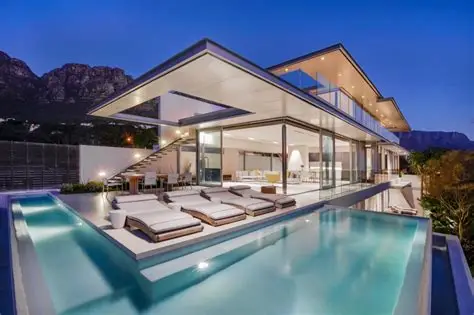
“South Africa’s luxury housing market is expanding rapidly, with homes priced above R4.5 million increasing their share of transactions and overall market value. The Western Cape leads this growth, reflecting strong demand among affluent buyers despite broader economic uncertainty.”
The South African property market is experiencing a striking divergence in September 2026. While affordability challenges weigh heavily on entry-level buyers, the luxury segment is thriving, with homes above R4.5 million gaining traction among wealthy investors and international buyers. This trend underscores the resilience of high-end real estate in times of economic uncertainty, positioning luxury property as both a lifestyle choice and a wealth-preservation strategy.
National Trends
Recent data from the Absa Homeowner Sentiment Index (HSI) reveals that luxury homes priced above R4.5 million have increased their share of transactions from 4% to 5.2% year-on-year. More strikingly, luxury homes now represent 27.6% of total market value, up from 22.2% a year ago. This growth highlights the disproportionate influence of high-value properties on the broader housing market.
Legal entities such as trusts and companies account for 27% of property activity, signaling a shift toward wealth-planning strategies. This suggests that luxury real estate is not only a lifestyle purchase but also a financial instrument for asset protection and generational wealth transfer.
Western Cape Dominance
The Western Cape continues to dominate South Africa’s luxury real estate sector. Properties in Cape Town, Stellenbosch, and the Atlantic Seaboard are commanding premium prices, with the province recording 9.9% of transactions above R4.5 million. This dominance reflects the region’s appeal to both local elites and international buyers seeking scenic coastal living, robust infrastructure, and cultural vibrancy.
Buyer Sentiment and Market Dynamics
Despite a slight dip in overall homeowner sentiment (from 88% to 87%), appetite for premium properties remains robust. Affluent buyers are less sensitive to interest rate fluctuations, with many purchasing homes outright or leveraging wealth-planning vehicles.
The South African Reserve Bank’s prime lending rate of 10.50% has created challenges for mid-market buyers, but luxury investors remain largely unaffected. Their purchasing decisions are driven more by lifestyle aspirations, portfolio diversification, and long-term capital appreciation.
International Influence
South Africa’s luxury market is increasingly global. Buyers from Europe, the Middle East, and Asia are investing in Cape Town and Johannesburg, drawn by favorable exchange rates and the comparative affordability of South African luxury property relative to global hubs like London or Dubai.
Risks and Challenges
While the luxury segment thrives, risks remain. Political uncertainty, infrastructure strain, and global economic volatility could temper growth. Additionally, the widening gap between entry-level affordability and luxury expansion raises concerns about inequality in housing access.
Outlook
Analysts predict continued growth in the luxury segment through late 2026, particularly in the Western Cape. With legal entities driving purchases and international buyers entering the market, luxury real estate is poised to remain a cornerstone of South Africa’s property landscape.



