




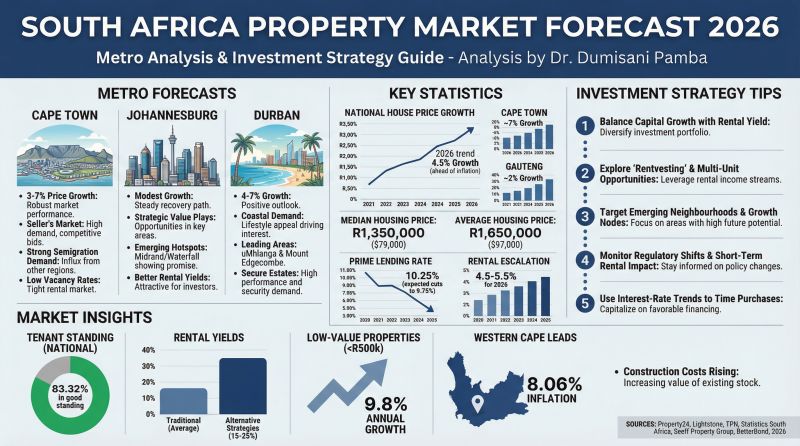
“South Africa’s real estate market in September 2026 is being reshaped by first-time buyers, who now represent the majority of mortgage applications. Stable interest rates, government subsidies, and affordability thresholds are fueling demand in urban and suburban land markets, creating both opportunities and challenges for investors and developers.”
The South African property market has entered September 2026 with a remarkable transformation: first-time buyers (FTBs) now dominate the landscape, accounting for 54.5% of all home loan applications. This shift is not only redefining the dynamics of land acquisition and housing demand but also signaling broader socio-economic changes in the country.
Interest Rate Stability and Buyer Confidence
The South African Reserve Bank (SARB) has maintained the repo rate at 7.00%, translating into a prime lending rate of 10.50%. While these rates remain elevated compared to pre-pandemic levels, they have stabilized enough to restore buyer confidence. This stability has allowed households to recalibrate affordability, encouraging entry into the property market.
Government Subsidies and Transfer Duty Thresholds
A critical driver of this surge is the transfer duty exemption up to R1.2 million, alongside subsidies like FLISP (Finance Linked Individual Subsidy Program). These incentives have concentrated demand in the R1.2–R1.6 million range, particularly in urban and suburban hotspots where infrastructure and municipal performance are strong.
Regional Hotspots
- Gauteng: High-density nodes continue to attract FTBs due to affordability and employment opportunities.
- Western Cape: Lifestyle appeal and municipal efficiency make it a magnet for young professionals.
- KwaZulu-Natal: Coastal developments are seeing renewed interest, especially in mid-market housing.
Market Trends
- National property price inflation stands at +4.2% year-on-year, reflecting moderate growth.
- Average purchase price for FTBs is R1.41 million, aligning with affordability thresholds.
- Household debt-to-disposable income ratio remains high at 61.8%, underscoring financial strain despite renewed confidence.
Impact on Land and Real Estate Development
The dominance of FTBs is reshaping land demand. Developers are pivoting toward entry-level and mid-market housing projects, prioritizing affordability and municipal service delivery. This trend is expected to accelerate urban densification, with mixed-use developments gaining traction.
Risks and Challenges
- High household debt continues to limit credit uptake.
- Inflationary pressures pose risks to affordability.
- Municipal instability in certain regions undermines investor confidence.
Long-Term Outlook
Analysts predict that the structural dominance of FTBs will persist, reshaping the property market into a more sustainable, rental-yield-driven environment. Land under real estate will increasingly be valued not just for speculative capital appreciation but for long-term stability and service delivery quality.
✅ Conclusion
The September 2026 property market in South Africa highlights a historic shift toward first-time buyers, supported by stable interest rates and government incentives. This transformation is redefining land use, housing development, and investment strategies, positioning the market for cautious but sustained growth.



