




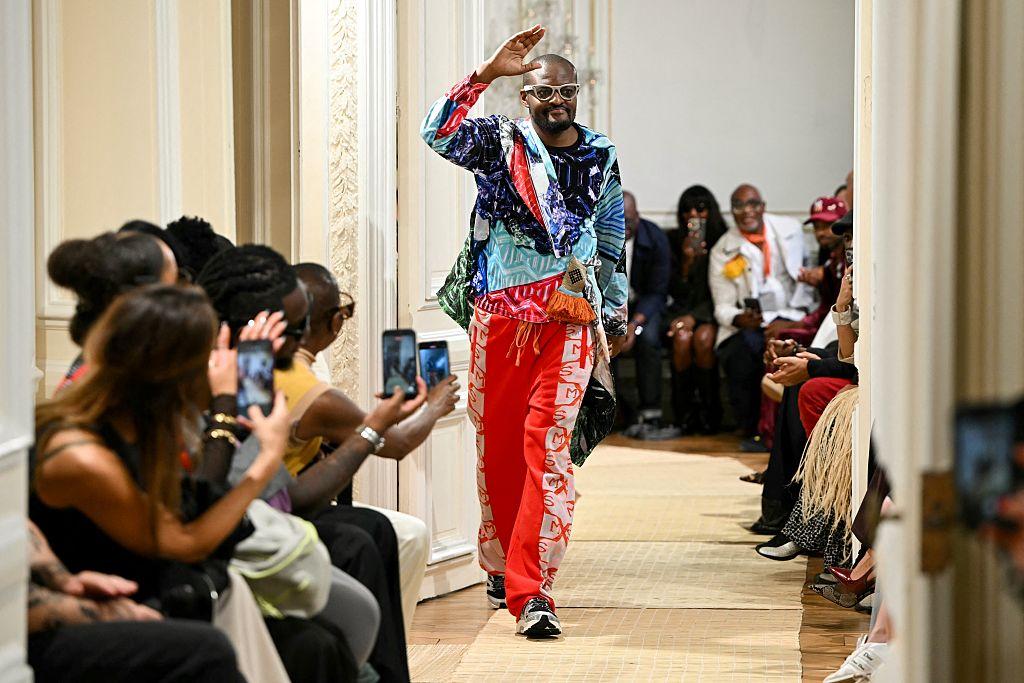
“South African luxury fashion house MaXhosa Africa, founded by designer Laduma Ngxokolo, has reached a major international milestone with its first full runway show on the official Paris Fashion Week calendar, presenting a collection that combines contemporary luxury with Xhosa cultural heritage. The achievement highlights the growing international visibility of African designers and the potential for South African craftsmanship, locally produced textiles and distinctive cultural storytelling to compete in the global luxury market.”
MaXhosa Africa’s Paris Fashion Week Breakthrough Signals a New Chapter for South African Luxury Fashion
A historic moment for African luxury
South African luxury fashion is receiving renewed international attention following a landmark achievement by MaXhosa Africa, the fashion house founded by designer Laduma Ngxokolo. The brand presented its first full runway show on the official Paris Fashion Week calendar, marking an important milestone in its development from a South African design business into an internationally recognised luxury label. The presentation demonstrated how African cultural heritage, skilled craftsmanship and contemporary fashion design can combine to create a distinctive luxury identity for international audiences.
The achievement represents more than a successful fashion presentation. It reflects years of work to establish a brand that draws inspiration from Xhosa cultural traditions while developing products for a global market. For South African designers, the milestone also illustrates the possibilities of building internationally competitive fashion businesses without abandoning the cultural influences that make their work distinctive.
Paris remains an important meeting point for luxury designers, buyers, journalists and fashion industry professionals. Appearing on its official fashion calendar provides visibility in an environment where established international houses and emerging labels compete for attention. For MaXhosa Africa, this opportunity places South African design within a broader conversation about luxury, craftsmanship, identity and the future direction of global fashion.
Sixteen years of building a distinctive luxury identity
Founded by Ngxokolo approximately 16 years before the 2026 milestone, MaXhosa Africa developed its identity around knitwear, geometric patterns, colour and visual references associated with Xhosa cultural heritage. These elements helped distinguish the label in a competitive fashion industry where brands frequently rely on recognisable silhouettes, signature materials and consistent visual identities.
The brand’s approach demonstrates how cultural heritage can become a foundation for contemporary product development. Rather than treating traditional visual references as decorative additions, MaXhosa incorporates them into the design language of its garments. Knitwear, pattern construction and colour combinations become ways of communicating identity through fashion.
This approach is significant because luxury is not defined exclusively by expensive materials or high retail prices. A successful luxury label also needs a recognisable creative vision, careful construction, consistent quality and a compelling story behind its products. MaXhosa’s identity connects these elements to a particular cultural history while allowing the brand to evolve through changing collections.
The label’s international development has also required patience. Its Paris presentation followed earlier appearances and presentations in the city, including a collection shown in 2024 and subsequent seasons of engagement with the Paris fashion scene. The 2026 runway debut therefore represented a progression rather than an overnight breakthrough.
For designers building businesses in South Africa, this journey offers an important lesson: international recognition often depends on sustained creative development, business infrastructure and the ability to communicate a consistent identity over many years.
The Spring/Summer 2027 collection: heritage meets modern luxury
The collection presented in Paris, titled Izihlwele Zivumile, formed the creative centrepiece of MaXhosa Africa’s milestone. The title was explained as meaning that the ancestors have agreed or given their approval. According to the designer’s account reported by TimesLIVE, the collection reflected the company’s 16-year journey through persistence, rejection, growth and eventual international recognition.
Its significance extended beyond the clothes themselves. The collection offered a way to interpret the brand’s development through fashion, connecting personal determination and cultural continuity with a major professional achievement.
Visually, the presentation adopted a cleaner and more contemporary direction, with a strong monochrome emphasis that placed attention on silhouette, textiles, construction and artistry. This represented an opportunity to explore the brand’s established design language through a more restrained aesthetic while preserving the importance of knitwear and African creative influences.
Such a balance is important for luxury fashion houses. A recognisable identity helps customers understand what a brand represents, but repeating the same visual formula indefinitely can restrict its development. Successful labels must therefore preserve their distinctive characteristics while experimenting with proportions, materials, styling and construction.
For MaXhosa, knitwear remains central to its identity. The Paris collection continued that foundation while presenting it in a more refined and considered manner. This approach suggests that a luxury brand can innovate without abandoning the techniques and materials that established its reputation.
The result positioned the collection as both a reflection on the past and an expression of the brand’s future ambitions.
African cultural identity on a global runway
One of the most important aspects of the Paris presentation was its emphasis on African identity without treating that identity as a narrow fashion category. Ngxokolo explained that the intention was to present MaXhosa as a global luxury house originating in Africa, rather than simply as an African label participating in an international event.
This distinction matters in an industry where designers from outside traditional European fashion centres have often had to explain their work through assumptions about their origins. MaXhosa’s positioning challenges the idea that African fashion must be understood primarily through cultural novelty.
Instead, the brand places its work within the broader luxury conversation. Its garments can be evaluated through the same questions applied to other luxury houses: How distinctive is the design? How carefully are the pieces constructed? Is the quality consistent? Does the collection communicate a compelling point of view? Can the business sustain its creative standards as it grows?
Cultural identity remains essential, but it does not prevent a brand from participating in global fashion on its own terms.
The collection also incorporated broader pan-African references. Reuters reported that the Paris presentation included designs carrying the names of African countries and pieces influenced by traditional Xhosa geometric patterns. The event expressed a vision of African creativity that recognised the continent’s diversity and potential.
This wider perspective creates opportunities for African luxury brands to communicate with audiences interested in cultural authenticity, contemporary design and meaningful creative narratives. Nevertheless, a brand’s success ultimately depends on the quality of its products and its ability to serve customers consistently, rather than on cultural symbolism alone.
A multidisciplinary South African creative presentation
The runway show brought together fashion, music, photography and set design, reinforcing the idea that luxury experiences can extend beyond clothing. South African musician Sjava contributed a musical performance, while Xander Ferreira developed the set design and photographer Chris Saunders documented the presentation.
These creative contributions helped establish a broader atmosphere around the collection. In luxury fashion, the runway is not merely a place to display garments. Lighting, music, staging, casting and photography all influence how audiences experience a brand.
When these elements work together, a presentation can communicate a coherent identity that remains memorable after the event. For MaXhosa, the participation of South African creative professionals also reinforced the local cultural foundation of an international showcase.
The involvement of artists from different disciplines demonstrates how fashion can support collaboration across the creative economy. Designers, musicians, photographers, set builders, models and production teams contribute different skills to a single presentation.
Such collaborations can generate opportunities for emerging professionals and strengthen the visibility of South African creative talent. However, their long-term value depends on whether exposure translates into sustainable work, fair compensation and stronger professional networks.
A successful international fashion event can therefore create benefits beyond the designer’s immediate commercial interests, provided the opportunities are supported by lasting business relationships.
Local manufacturing and the economic opportunity
MaXhosa Africa’s achievement also draws attention to the importance of developing South Africa’s fashion production capabilities. Reuters reported that garments for the brand are produced at its factories in Johannesburg and East London, with locally sourced wool forming part of its manufacturing approach.
Local production can help luxury brands maintain closer oversight of materials, garment construction and finishing. It can also create opportunities for specialised workers and strengthen connections between designers, suppliers and manufacturers.
However, establishing a sustainable production model requires more than creative talent. Fashion businesses must manage sourcing, labour, quality control, inventory, distribution and the financial demands of producing collections. International expansion adds further complexity because brands must coordinate logistics and meet the expectations of customers in different markets.
For South Africa, the opportunity lies in building a stronger relationship between design excellence and manufacturing capacity. If local brands can develop reliable supply chains and retain specialised production skills, international attention may contribute to a more resilient domestic fashion sector.
There are practical challenges. Smaller businesses may struggle to finance production before receiving orders, while access to specialised equipment and skilled labour can influence their ability to scale. International visibility alone does not resolve these difficulties.
Nevertheless, MaXhosa’s development demonstrates the value of investing in a recognisable product identity and building the infrastructure needed to support it. The wider industry can learn from this example by encouraging collaboration between designers, textile producers, educational institutions and manufacturing businesses.
Changing expectations in the luxury market
The Paris milestone arrives as South African retail spaces are exploring new ways to present premium African fashion to consumers. An October 2026 report by Wanted described plans for an African-inspired designer retail concept at Johannesburg’s Winifred Mandela Precinct in Bryanston, including a boutique from designer Gert-Johan Coetzee. The initiative reflects an effort to give African luxury labels more prominent representation in premium shopping environments.
This development is relevant because international recognition must eventually connect with accessible customer experiences. Luxury consumers may discover a designer through a runway presentation, celebrity styling, social media or fashion journalism, but they also need practical ways to explore and purchase products.
A well-designed retail environment can help communicate craftsmanship, brand history and product quality. Private appointments, knowledgeable staff and carefully curated collections may further distinguish independent luxury labels from conventional mass-market retailers.
At the same time, consumers increasingly have access to information about manufacturing, design origins and product value. For South African brands, this creates an opportunity to demonstrate why their products deserve consideration alongside international competitors.
Price alone cannot establish luxury positioning. Brands must explain the value of their materials, workmanship, design and customer service while maintaining standards that justify their positioning.
Digital channels also provide opportunities to reach customers beyond a physical boutique. E-commerce, social media and editorial storytelling can introduce designers to international audiences, although successful expansion requires dependable fulfilment, customer support and clear product information.
The challenge is to turn recognition into lasting customer relationships rather than relying on a single high-profile event.
What the breakthrough means for emerging designers
MaXhosa Africa’s Paris Fashion Week debut provides an encouraging example for emerging designers across South Africa and the wider African continent. It shows that a business can build a distinctive identity from its cultural and creative foundations while pursuing opportunities in established international fashion markets.
However, the lesson is not that every designer must reach Paris Fashion Week to succeed. Different businesses can build sustainable careers through local retail, made-to-order production, specialist collections, collaborations and carefully selected international partnerships.
Emerging designers can learn from MaXhosa’s emphasis on consistency. A recognisable design language makes it easier for customers to understand a brand, while sustained investment in quality helps build trust. Equally important is developing a viable business model that supports production costs, marketing and growth.
Education and mentorship can also play a significant role. South African Fashion Week’s announced Autumn/Winter 2027 programme places emphasis on craftsmanship and skills development, illustrating the industry’s continuing interest in strengthening the foundations of designer-led fashion.
For young creatives, access to experienced mentors, production facilities and commercial knowledge can be as important as access to a runway. Creative ambition must be matched with practical skills in budgeting, sourcing, merchandising, distribution and customer relationships.
Industry organisations, retailers and established designers can help by creating opportunities for collaboration and professional development. Such support would allow more designers to develop commercially viable businesses without losing their creative independence.
The road ahead for MaXhosa Africa
Although the Paris debut marks a major achievement, its lasting significance will depend on what follows. The brand must continue developing collections, maintaining quality and building relationships with customers, retailers and international industry partners.
It will also need to balance expansion with the creative consistency that distinguishes its work. Growing too quickly can put pressure on production and quality control, while remaining too small may limit the ability to meet international demand.
The next stage will involve converting visibility into durable commercial opportunities. Potential measures of progress include customer demand, repeat purchases, appropriate retail partnerships, production capacity and the brand’s ability to maintain its identity across different product categories.
Equally important is the continued development of the people and systems behind the collections. A successful luxury house depends on designers, artisans, production teams, commercial specialists and reliable suppliers working together.
For South African fashion more broadly, MaXhosa’s achievement raises an important question: how can the industry build on international attention to create more opportunities for local talent?
The answer will require sustained investment, stronger manufacturing networks, effective business education and access to markets. It will also require the industry to recognise African designers as contributors to global fashion in their own right, rather than judging their work exclusively through the lens of cultural representation.
Conclusion: A defining moment for African luxury
MaXhosa Africa’s official Paris Fashion Week runway debut represents a significant milestone for Laduma Ngxokolo, his team and South African luxury fashion. The Izihlwele Zivumile collection connected the brand’s long development with a contemporary creative vision, presenting Xhosa-inspired design, refined knitwear and African cultural influences within a major international fashion setting.
The achievement also highlights the importance of persistence, craftsmanship and a clear brand identity. International recognition can open doors, but sustainable success depends on quality products, strong operations and lasting relationships with customers.
For South Africa, the opportunity extends beyond one designer or one runway show. The country’s fashion sector can use this visibility to strengthen local production, develop emerging talent and build businesses that compete internationally while contributing to the domestic creative economy.
Ultimately, MaXhosa’s story demonstrates that African heritage and contemporary luxury are not opposing ideas. They can work together to create a distinctive fashion language with international relevance.
The next challenge is to ensure that this recognition becomes part of a wider, sustained movement supporting South African designers, skilled artisans and locally developed fashion businesses.



