




“Moody’s Ratings assessed South Africa’s latest Medium-Term Budget Policy Statement as positive for the country’s credit profile, citing fiscal consolidation and tighter monetary policy despite higher oil prices. However, weaker-than-expected nominal GDP growth remains a concern, highlighting the challenge of converting improved public finances into stronger economic growth and employment.”
South Africa’s fiscal reforms win positive credit assessment as growth remains a challenge
A critical moment for economic policy
South Africa’s approach to public finances has received an encouraging assessment from Moody’s Ratings, bringing renewed attention to the relationship between government spending, economic stability, investment and job creation. In a report published on 26 October 2026, the ratings agency described the country’s latest Medium-Term Budget Policy Statement (MTBPS) as positive for its credit profile.
The assessment comes at a time when policymakers are attempting to strengthen the public finances while addressing slow economic growth, unemployment, infrastructure weaknesses and the cost-of-living pressures affecting households and businesses. Although fiscal consolidation can help improve investor confidence, its ultimate value will depend on whether the government can translate financial stability into productive investment and better economic outcomes.
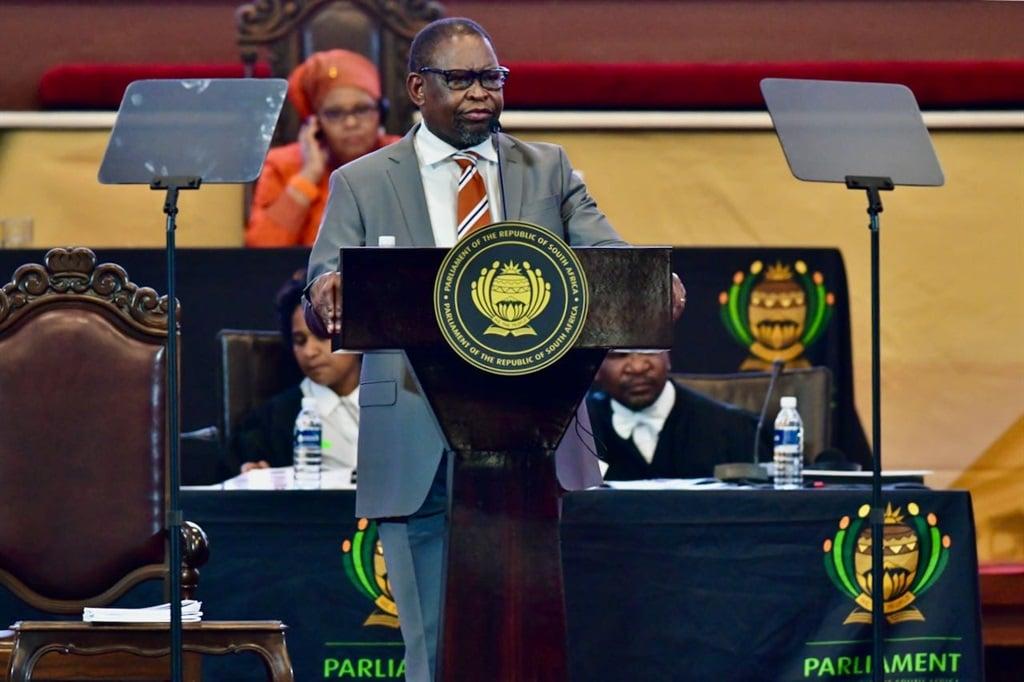
Finance Minister Enoch Godongwana presented the MTBPS to Parliament on 21 October 2026. The statement updated the government’s economic projections, spending plans and fiscal framework for the coming years. It also outlined measures intended to improve public-sector efficiency, contain debt-related costs and support investment.
Moody’s assessment signals progress on fiscal management
Credit ratings agencies assess governments’ ability to meet their financial obligations. Their evaluations consider public debt, revenue collection, economic growth, policy credibility and the government’s capacity to respond to economic shocks.
Moody’s positive assessment of South Africa’s budget update suggests that the direction of fiscal policy has become more supportive of creditworthiness. The agency highlighted continued fiscal consolidation and tighter monetary policy, while also noting the pressure created by higher oil prices and weaker nominal economic growth than previously projected.
The distinction between a positive assessment of a budget and an improvement in a sovereign credit rating is important. A favourable assessment of policy does not automatically mean that a country’s rating has been upgraded. Instead, it indicates that some developments in the government’s fiscal position may help support the credit profile.
For South Africa, maintaining credibility requires consistent implementation. Investors will want to see whether revenue forecasts prove realistic, expenditure remains controlled and government borrowing declines in line with its plans.
The government must also demonstrate that fiscal discipline can be sustained without undermining essential public services or limiting investment that could improve long-term economic performance.
The Medium-Term Budget Policy Statement sets the direction
The MTBPS is an important part of South Africa’s annual budget process. It updates the government’s economic outlook and establishes the broad financial framework that will inform the following national budget.
The 2026 statement places particular emphasis on sustainable public finances, productive infrastructure spending, better value for money and more effective financial management.
According to the government’s statement, the debt-to-GDP ratio stabilised at 78.4% in the 2025/26 financial year. The government also reported that the budget deficit was projected to narrow to 3.9% of GDP in 2026/27, compared with the 4.0% forecast in February.
Furthermore, the government aims to reduce the deficit to 2.5% of GDP by 2030. These are projections and policy objectives, rather than guaranteed outcomes. Their achievement will depend on economic conditions, revenue performance, expenditure pressures and the implementation of proposed reforms.
The policy direction is significant because a government that spends a large share of its revenue servicing debt has less room to fund infrastructure, education, healthcare and other development priorities.
Lower borrowing requirements could eventually release resources for productive expenditure. However, this benefit will emerge only if fiscal targets are achieved and spending is managed effectively.
Economic growth remains the central challenge
Despite the encouraging assessment of fiscal policy, South Africa continues to face the challenge of generating faster economic growth.
The government’s October budget statement reduced its forecast for real economic growth in 2026 to 1.2%, from the 1.6% projection made in February. The weaker outlook reflects an economy operating under domestic structural constraints and exposure to international economic uncertainty.
Slow growth affects businesses through weaker demand, limited opportunities for expansion and uncertainty about future investment returns. It also limits the pace at which the economy can create jobs and broaden the tax base.
When businesses delay investment, the consequences can extend beyond individual companies. Fewer new factories, commercial developments and service-sector ventures can mean fewer employment opportunities and less demand for suppliers.
Government policy therefore faces a difficult balancing act. It must contain spending that does not produce sufficient value while protecting the investments and services needed to increase the economy’s productive capacity.
Fiscal discipline alone cannot guarantee economic expansion. The broader policy environment must also encourage investment, improve infrastructure reliability, strengthen skills development and reduce unnecessary barriers to business activity.
Infrastructure investment and public-private partnerships
Infrastructure is one of the most important links between government policy and economic growth.
Reliable electricity, water, transport networks and logistics systems help companies manage costs, serve customers and compete in domestic and international markets. When infrastructure fails, businesses may face production interruptions, higher operating expenses and reduced competitiveness.
The MTBPS identifies infrastructure investment as a central government priority. It also emphasises the role of private-sector capital and expertise in delivering projects more efficiently.
The Infrastructure Finance and Implementation Support Agency began operating in April 2026. According to the finance minister’s statement, the agency was supporting projects across government with a potential investment value exceeding R217 billion.
The government also reported a pipeline of 68 public-private partnership projects, including 31 municipal projects. Proposed changes to municipal partnership regulations are intended to simplify processes and reduce transaction costs.
These initiatives could improve the preparation and implementation of infrastructure projects. However, project values and proposed partnerships should not be confused with money already invested or completed infrastructure.
The decisive test will be whether projects progress from planning to construction and, ultimately, deliver functioning services. Strong procurement procedures, transparent contracts and competent project management will be necessary to protect public resources.
Better spending must produce measurable results
Another important element of the government’s fiscal strategy is improving the quality of public expenditure.
In the MTBPS, the government identified a further R38.1 billion in potential savings over the 2027 medium-term expenditure framework period, in addition to R12 billion identified in the 2026 budget.
The proposed savings include reducing duplication, addressing administrative inefficiencies and restructuring or ending programmes considered ineffective or no longer fit for purpose.
Government departments can spend their allocated budgets without necessarily delivering the intended results. Projects may be delayed, infrastructure may remain incomplete, and programmes may fail to reach the people they were designed to support.
Consequently, improving expenditure requires more than reducing allocations. It requires clear objectives, effective monitoring, transparent reporting and accountability when public money is misused.
The government has also proposed modernising the Public Finance Management Act and the Municipal Finance Management Act. These reforms are intended to strengthen financial accountability, clarify responsibilities and improve oversight of public entities and municipalities.
If implemented effectively, these measures could help ensure that limited public resources are directed towards programmes with demonstrable economic and social benefits.
Nevertheless, savings targets must be evaluated carefully. Cutting a poorly performing programme may be justified, but indiscriminate reductions could weaken services or delay investments that support future growth.
The impact on businesses and investors
Fiscal policy influences the environment in which businesses operate. Government borrowing, taxation, infrastructure spending and regulatory decisions can affect investment costs and expectations about future demand.
A more credible fiscal framework may support investor confidence by reducing uncertainty about the government’s ability to manage its financial obligations.
For companies considering long-term investments, greater confidence in economic policy can be valuable. However, investment decisions also depend on market demand, electricity availability, logistics costs, labour productivity and regulatory certainty.
Small and medium-sized businesses are particularly sensitive to these factors because they often have fewer financial resources to absorb unexpected costs or disruptions.
Improvements in public infrastructure and municipal services could therefore be as important to many businesses as the government’s debt targets.
Municipal financial management is especially relevant. Businesses depend on reliable water, electricity, waste collection, road maintenance and predictable administrative processes. Poor municipal performance can raise costs and discourage expansion, even when national fiscal indicators improve.
The government’s stated objective of strengthening municipal financial management is consequently an important part of its wider economic policy agenda.
Inflation, oil prices and monetary policy
Moody’s also highlighted tighter monetary policy as a supportive factor in its assessment. Monetary policy and fiscal policy are separate, but they influence one another through inflation, borrowing costs, demand and financial-market expectations.
Higher oil prices can place pressure on South Africa because the country relies heavily on imported petroleum products. Rising fuel costs can increase transport and production expenses, affecting households, manufacturers, retailers and logistics companies.
The October budget statement announced temporary fuel-levy reductions intended to provide relief from these pressures. The measures are scheduled to begin on 4 November 2026, with different reductions applying over the period ending on 5 January 2027. The government estimated the intervention at R10 billion.
Such measures may ease immediate cost pressures, but they also have fiscal implications because reduced levies mean less revenue collected through those charges.
The policy challenge is to provide appropriate short-term relief while preserving the government’s longer-term fiscal objectives. Persistent increases in energy costs could make this balance more difficult.
Public services and inclusive growth
Fiscal consolidation must ultimately be assessed against its effects on citizens.
The government’s budget framework continues to allocate substantial resources to health, education, social development and basic services. The finance minister stated that social-wage spending accounts for 60% of non-interest expenditure.
These allocations support households directly while also contributing to the economy’s longer-term productive capacity. Education develops skills, healthcare supports participation in the workforce, and reliable basic services help communities and businesses function.
At the same time, the quality of spending matters as much as the amount allocated. A budget may provide funding for schools or clinics, but communities benefit only when facilities are properly staffed, maintained and supplied.
The same principle applies to infrastructure grants transferred to provinces and municipalities. The government has acknowledged that projects can be delayed or fail to deliver their intended benefits despite substantial funding.
Improved monitoring and accountability will therefore be essential if fiscal stability is to produce visible improvements in living conditions.
What businesses should watch next
The coming months will provide important evidence of whether South Africa’s policy direction is translating into tangible economic progress.
Businesses and investors should pay attention to several developments:
-
Fiscal performance: Whether revenue collections and spending remain consistent with the government’s revised projections.
-
Infrastructure delivery: Whether announced projects progress into construction and completed assets.
-
Municipal reforms: Whether improvements in financial management lead to more reliable services and clearer administrative processes.
-
Economic growth: Whether investment, production and employment begin to strengthen.
-
Energy and transport costs: Whether external pressures continue to raise operating expenses.
-
Policy implementation: Whether proposed legislation and regulatory reforms are adopted and applied consistently.
Parliamentary scrutiny will also matter. The revised fiscal framework and revenue proposals are scheduled for public hearings on 28 October 2026, providing an opportunity for stakeholders to comment on the government’s plans.
Conclusion: Credibility must lead to economic opportunity
Moody’s positive assessment of South Africa’s budget update provides an encouraging signal about the direction of fiscal management. Nevertheless, it does not remove the country’s structural economic challenges or guarantee a stronger credit rating.
The government must maintain credible spending plans while improving infrastructure, strengthening public institutions and creating conditions in which businesses can invest and expand.
For the private sector, the most meaningful outcome will not simply be improved fiscal indicators. It will be a more predictable operating environment, better public services, stronger infrastructure and greater opportunities for sustainable growth.
For households, the test will be whether economic stability contributes to employment, affordable services and improved living standards.
South Africa’s fiscal strategy has established important objectives. The next stage is implementation: ensuring that the gains from improved financial management are converted into productive investment, stronger economic performance and tangible benefits for the public.



