




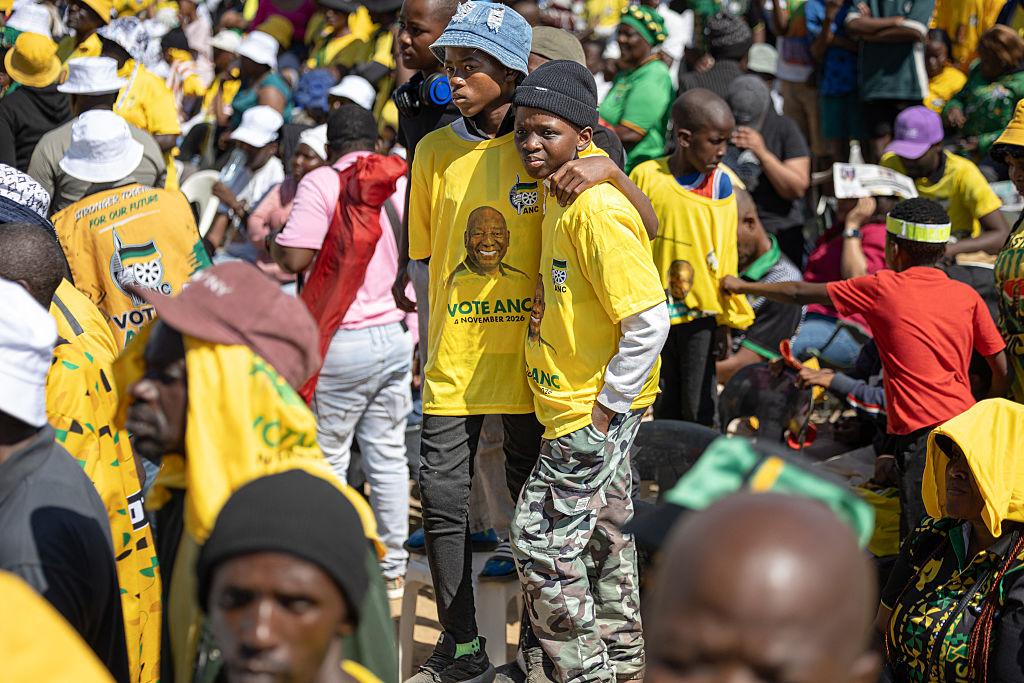
“South Africa is approaching its 4 November municipal elections amid heightened political competition, voter frustration over local government performance and uncertainty about the balance of power in major metropolitan areas. The final campaign period is also testing the IEC’s ability to manage candidate-list disputes, prepare ballot papers, counter disinformation and maintain public confidence in a free and fair electoral process.”
South Africa’s local government elections are entering a decisive period as political parties intensify their campaigns ahead of the nationwide vote scheduled for 4 November 2026. The elections will determine the composition of municipal councils across the country and provide an important indication of public confidence in the governing African National Congress (ANC), opposition parties and the increasingly competitive political environment. With service delivery, unemployment, infrastructure, municipal finances and coalition governance dominating political debate, the outcome could reshape local leadership and influence the country’s broader political direction.
Voters prepare to judge municipal performance
Municipal elections have a direct impact on residents because local governments are responsible for essential services, including water provision, sanitation, refuse collection, local roads, electricity distribution where applicable, spatial planning and community infrastructure.
For many voters, the election is therefore less about national political speeches and more about everyday experiences. Residents want reliable water supplies, functioning streetlights, clean neighbourhoods, effective waste collection and municipalities that respond promptly to service complaints.
These practical concerns are likely to shape voting decisions in communities where residents believe local authorities have failed to deliver on their responsibilities. Political parties are attempting to convince voters that their candidates can improve municipal management and provide more accountable leadership.
The election also presents an opportunity for communities to assess whether promises made during previous campaigns have translated into measurable improvements. Where progress has been limited, incumbents may face pressure to explain their performance and demonstrate why voters should give them another term.
Opposition parties, meanwhile, are seeking to turn dissatisfaction into electoral support. Their challenge will be to show that their proposed policies, management approaches and candidates offer credible alternatives rather than relying solely on criticism of their competitors.
Major metropolitan areas emerge as important battlegrounds
The contest in South Africa’s metropolitan municipalities is attracting particular attention because these urban centres have substantial populations, significant economic activity and complex governance challenges.
Reuters identified Johannesburg, Tshwane, Cape Town, eThekwini and Ekurhuleni among the important areas to watch in the upcoming elections. The political balance in these municipalities could influence coalition negotiations, local policy priorities and the allocation of resources.
Johannesburg is an especially important contest because the city has experienced repeated changes in mayoral leadership since the previous municipal elections. Such instability has raised questions about political cooperation, the durability of governing arrangements and the ability of administrations to implement long-term development programmes.
Campaigns focused on infrastructure, service delivery and administrative stability could resonate with residents who want consistent municipal leadership. However, electoral support for individual parties does not automatically translate into a governing majority, making negotiations between political organisations a potentially decisive factor.
Tshwane also illustrates the challenges of coalition politics. When no party wins enough council seats to govern independently, smaller parties may gain considerable influence over the selection of leadership and the formation of governing agreements.
In eThekwini, the emergence of the uMkhonto weSizwe Party as a serious competitor adds another dimension to the contest. The party’s performance could affect the ANC’s position and change the negotiations required to establish a governing coalition.
Cape Town and Ekurhuleni present different political circumstances, but both remain important to the national picture. Their outcomes will help determine whether established patterns of support remain intact or whether changing voter preferences produce a more fragmented political landscape.
The ANC faces a test of public confidence
The elections are significant for the ANC because municipal contests provide voters with an opportunity to evaluate the party’s leadership and performance in government.
Although local elections are not a direct referendum on national government, the results can reveal broader political trends. Strong or weak performances in major cities may influence perceptions of the party’s organisational strength, its ability to retain traditional support and its prospects in future national elections.
President Cyril Ramaphosa has been campaigning for the ANC and expressing confidence in its electoral prospects. At the same time, the SABC’s election coverage has highlighted competition in metropolitan areas where polling and political assessments suggest that the party faces substantial challenges.
The ANC’s challenge is to persuade voters that it can address local governance problems while demonstrating that its candidates have the capacity to improve municipal administration. Campaign promises will need to be supported by credible plans for financial management, infrastructure maintenance and effective public services.
Other parties are attempting to benefit from dissatisfaction with existing administrations. Their success will depend not only on their ability to attract votes but also on whether they can present candidates with strong local reputations and practical plans for governing municipalities.
Opposition parties compete for influence
South Africa’s political environment has become more competitive, with established parties and newer political organisations seeking support across different communities.
The growing number of political parties participating in the electoral process illustrates the breadth of political choice available to voters. However, a crowded ballot does not necessarily mean that every party has an equal chance of winning representation or influencing municipal decisions.
SABC reporting has highlighted the unusually large field of political organisations contesting the 2026 elections. The challenge for voters is to distinguish parties with credible policies and organisational capacity from those whose campaigns may have limited practical detail.
Smaller parties may also become important coalition partners where larger organisations fail to secure outright majorities. Their negotiating power could enable them to influence mayoral appointments, budget priorities and agreements on service delivery.
Nevertheless, coalition arrangements carry risks. Parties with different policy positions must establish workable agreements and maintain cooperation over time. If partners withdraw support or fail to resolve disagreements, municipalities can experience political instability that interferes with administrative planning.
Consequently, voters will need to assess not only individual parties but also their willingness and ability to cooperate responsibly when election results require coalition government.
Candidate-list disputes put electoral administration under scrutiny
One of the most important institutional issues surrounding the elections has involved disputes over candidate nominations.
The Constitutional Court ruled in favour of the ANC in a dispute concerning candidate lists for six municipalities. The ruling required the IEC to accommodate 181 ANC candidates whose nominations had been contested because the party had not completed the final submission step on the commission’s electronic system before the deadline.
The commission subsequently faced additional logistical work, including the printing of ballot papers and arrangements relating to other parties affected by the process. Reporting by EWN and TimesLIVE described the pressure on the IEC to complete the necessary preparations before election day.
The dispute has raised important questions about how electoral rules should be applied, how digital nomination systems should operate and how authorities can balance procedural requirements with fair political participation.
For the IEC, the immediate priority is to implement court decisions while ensuring that all ballot papers and other election materials are prepared accurately.
The commission must also communicate clearly with political parties and voters about any relevant procedural changes. Confusion concerning candidate names, ballot papers or voting arrangements could undermine confidence, especially if voters believe that some organisations have received preferential treatment.
The broader lesson is that electoral rules must be transparent, consistently applied and sufficiently clear for parties to understand their obligations. Digital systems can improve efficiency, but their effectiveness depends on reliable technology, clear procedures and appropriate safeguards against administrative errors.
Election readiness and the IEC’s responsibilities
Government officials have expressed confidence in the preparations for the 4 November elections.
According to SABC News, Cooperative Governance and Traditional Affairs Minister Velenkosini Hlabisa said logistical, technical and security arrangements were progressing and described the country as ready to conduct the municipal polls. The IEC remains the principal institution responsible for managing the electoral process.
Readiness involves more than printing ballot papers. Election administrators must coordinate voting stations, recruit and train election personnel, manage voter information, organise special voting arrangements and establish procedures for counting and verifying ballots.
Security is another important consideration. Campaigning can intensify competition between political organisations, particularly in communities where local leadership positions are contested strongly.
Authorities therefore need to respond appropriately to threats, intimidation, political violence and disruptions to lawful campaigning. Voters must be able to participate without fear, while candidates should be able to campaign within the law.
The killing of Eastern Cape councillor Ernest Fipaza has also featured in recent election reporting, with political concerns raised about whether the incident could have been politically motivated. The circumstances and any established motive should be determined through appropriate investigation rather than assumption.
Maintaining public order while protecting democratic rights will be essential as the campaign enters its final days.
Disinformation presents another electoral challenge
Digital platforms have become important tools for political campaigning, but they also allow misleading information to spread quickly.
False claims about candidates, fabricated announcements, manipulated images and misleading voting instructions can confuse voters and damage the reputations of political organisations. These risks are particularly serious when information appears to come from official electoral authorities.
The IEC has introduced an electoral code addressing disinformation ahead of the 2026 local elections. The code seeks to protect electoral integrity while preserving legitimate criticism, commentary, satire, political opinion and public debate.
At the same time, parties and candidates have a responsibility to avoid knowingly distributing false information that could mislead voters or disrupt the electoral process.
Voters can protect themselves by checking claims against reliable reporting, consulting official IEC communications and verifying suspicious messages before sharing them. Political organisations should also ensure that campaign communications are accurate and that supporters are not encouraged to intimidate opponents or spread fabricated allegations.
Service delivery will remain central after election day
Regardless of which parties win individual municipalities, the election will create expectations that new and returning councillors must address.
Successful campaigning does not guarantee effective governance. Municipal administrations require competent personnel, sound financial controls, realistic budgets and the capacity to maintain infrastructure over time.
Water shortages, electricity interruptions, deteriorating roads, inadequate sanitation and ineffective waste collection cannot be resolved through campaign messaging alone. Improvements require coordinated planning, transparent procurement, reliable revenue collection and accountability for public expenditure.
Voters should therefore evaluate candidates on the feasibility of their proposals. Promises should be assessed against municipal responsibilities, available resources and the ability of local authorities to implement them.
Political parties that enter coalitions will face an additional challenge: converting election agreements into practical programmes that survive disagreements among governing partners.
Transparent reporting on budgets, projects and service outcomes could help residents judge whether their representatives are delivering on commitments.
What the election could mean for South Africa
The 4 November municipal elections will provide an important assessment of political competition at local level. Results in major metropolitan areas could influence the balance of power between the ANC, opposition parties and smaller organisations that may become coalition partners.
The elections will also test the credibility of electoral institutions, particularly their ability to apply the law fairly, manage administrative challenges and protect voters against intimidation and disinformation.
However, the results should not be interpreted as a definitive prediction of the next national election. Municipal voting is influenced by local candidates, community concerns, service delivery records and specific political alliances. National political trends matter, but they do not determine every municipal outcome.
For residents, the most important measure of success will ultimately be whether elected leaders improve local governance. Political parties may compete vigorously for votes, but they will be judged afterwards on their ability to provide reliable services, manage public money responsibly and respond to community needs.
As the final campaign period continues, South Africans have an opportunity to compare political programmes, verify election information and make informed decisions about their municipal representatives.
The immediate priority for the IEC is to deliver a credible and orderly election. For political parties, it is to persuade voters through lawful campaigning and realistic commitments. For citizens, it is to participate peacefully and hold elected officials accountable after the results are announced.



