




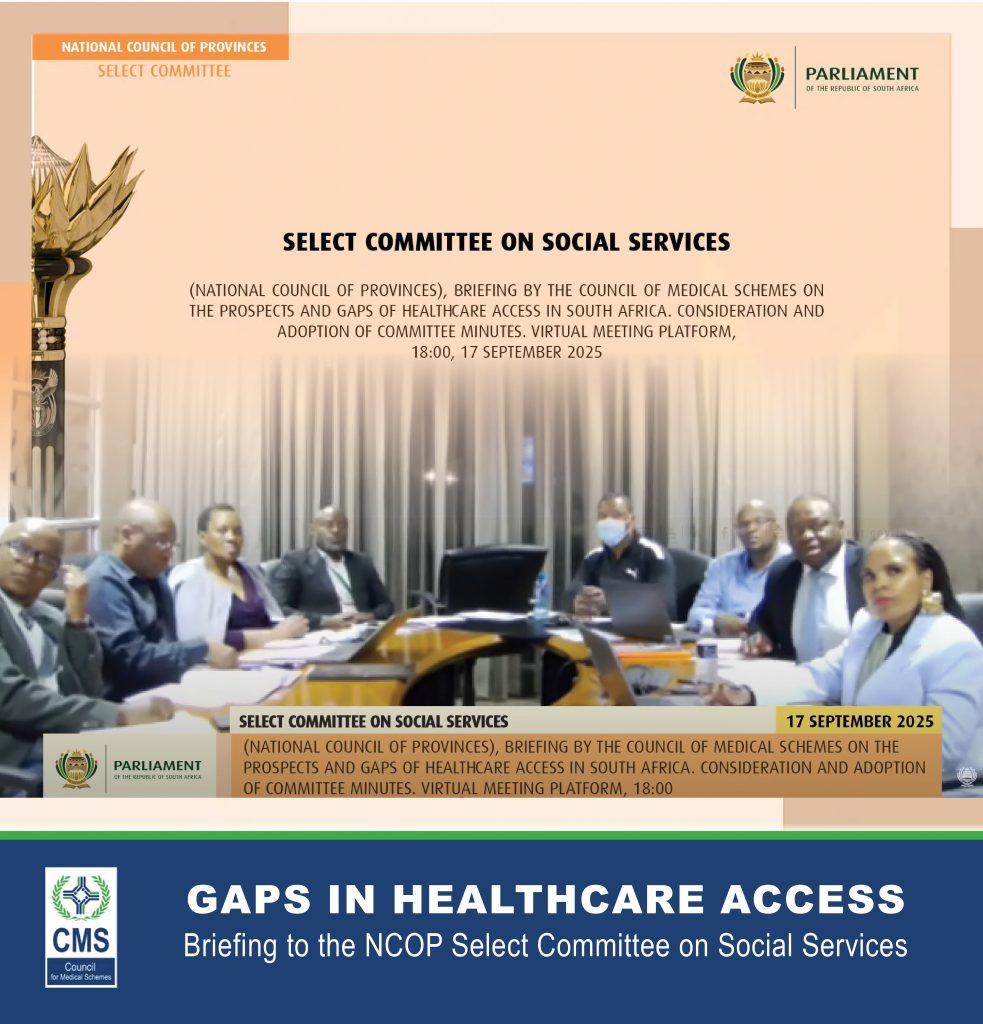
“South Africa’s parliamentary Portfolio Committee on Health is scheduled to engage the Council for Medical Schemes (CMS) and the Government Employees Medical Scheme (GEMS) on healthcare market reforms, governance and financial sustainability. The discussions are expected to examine implementation of Health Market Inquiry recommendations, including Section 59 reforms, evergreen contracts, private-sector market concentration and measures to strengthen transparency and accountability.”
South Africa’s Healthcare Reform Debate Turns to Medical Scheme Governance, Competition and Accountability
Introduction
South Africa’s healthcare policy debate is entering another important phase as Parliament examines reforms affecting the country’s private medical schemes industry. The Portfolio Committee on Health is scheduled to engage the Council for Medical Schemes (CMS) and the Government Employees Medical Scheme (GEMS) on Wednesday, 11 November 2026, focusing on governance, financial sustainability, competition and the implementation of recommendations arising from the Health Market Inquiry.
The parliamentary engagement comes at a significant moment for South Africa’s healthcare system, which continues to face questions about affordability, unequal access to healthcare services and the sustainability of public and private healthcare financing. Although the National Health Insurance (NHI) remains central to national healthcare reform discussions, improvements to existing healthcare institutions and regulatory arrangements continue to influence the country’s broader healthcare policy direction.
According to Parliament’s announcement, the engagement will examine the progress made by the CMS in implementing Health Market Inquiry recommendations. In addition, GEMS will provide information about its operations, governance framework, financial sustainability and services to its members.
Parliament examines healthcare market reforms
The Portfolio Committee on Health’s engagement with the CMS represents an important opportunity for parliamentary oversight of South Africa’s medical schemes regulatory environment.
The CMS is responsible for regulating medical schemes in accordance with the Medical Schemes Act. Its regulatory responsibilities include protecting beneficiaries, monitoring medical scheme compliance and supporting the sustainability and integrity of the medical schemes sector.
The Health Market Inquiry, which examined competition and structural challenges in South Africa’s private healthcare market, identified several issues requiring regulatory attention.
These concerns included market concentration, healthcare expenditure, competition between providers, medical scheme administration and the relationship between healthcare costs and patient outcomes.
Parliament’s latest engagement is expected to examine how recommendations from the inquiry are being implemented and whether regulatory interventions are producing meaningful improvements.
The discussion is particularly relevant because private healthcare remains expensive for many South African households. Medical scheme contributions can consume a substantial portion of household income, while people without medical scheme membership often depend on public healthcare facilities.
Consequently, improving competition, accountability and transparency in private healthcare could have wider implications for affordability and healthcare access.
Section 59 reforms and medical scheme accountability
One of the central issues identified in Parliament’s announcement is the implementation of Section 59 reforms.
Section 59 of the Medical Schemes Act concerns the payment of medical scheme benefits and the administration of claims. Its implementation and reform have attracted considerable attention because claims processes directly affect healthcare providers, medical schemes and patients.
The parliamentary announcement indicates that the CMS will brief the committee on developments relating to Section 59 reforms.
The reforms are important because effective claims administration supports trust between medical schemes and healthcare providers. Delays, disputes or inconsistent administrative practices can create financial pressure for providers and inconvenience for patients.
Improving claims transparency and accountability may also help strengthen confidence in medical scheme administration.
Nevertheless, successful reform requires clear procedures, effective oversight and communication between the regulator, medical schemes and healthcare professionals.
The parliamentary engagement provides an opportunity to examine whether the regulatory framework is responding adequately to these concerns.
Evergreen contracts and transparency
Evergreen contracts are another issue identified in the committee’s agenda.
Contractual arrangements within healthcare can influence how providers, administrators and other industry participants conduct business. Questions surrounding contract renewal, transparency and competitive fairness can therefore affect the wider healthcare market.
Parliament’s interest in evergreen contracts reflects broader concerns about accountability and competition in the private healthcare sector.
Regulatory scrutiny can help identify whether contractual practices create barriers to competition or disadvantage particular participants.
However, reforms must also provide sufficient certainty for healthcare organisations to plan investments, maintain services and establish sustainable relationships with suppliers and providers.
A balanced approach will therefore be necessary to improve fairness while preserving stability within the healthcare system.
Market concentration and competition in private healthcare
Market concentration remains a significant healthcare policy issue in South Africa.
The Health Market Inquiry examined structural features of the private healthcare sector, including the relationship between healthcare providers, medical schemes and other industry participants.
When markets become concentrated, concerns may arise about competition, pricing, consumer choice and the ability of smaller providers to participate effectively.
These questions are particularly important in a healthcare environment where consumers often face limited choices because of geographical circumstances, specialist availability or the structure of medical scheme benefits.
Stronger competition could encourage innovation, improve service delivery and create incentives for more efficient healthcare expenditure.
However, healthcare markets differ from ordinary consumer markets because patients frequently lack the information necessary to compare medical services, prices and outcomes.
Regulation therefore plays an important role in protecting patients while promoting competitive and sustainable healthcare provision.
The CMS briefing will provide Parliament with an opportunity to assess progress on these matters and identify areas requiring further attention.
GEMS governance and financial sustainability
The committee will also receive a briefing from GEMS, South Africa’s Government Employees Medical Scheme.
GEMS is an important institution within the medical schemes environment because it serves government employees and their dependants.
Its financial sustainability, governance arrangements and service delivery have implications for members who depend on the scheme to finance healthcare services.
Parliament has indicated that the briefing will provide a deeper understanding of GEMS operations, governance framework, financial sustainability and member services.
Governance is particularly important for medical schemes because they manage contributions intended to finance healthcare benefits.
Effective governance requires responsible financial management, appropriate oversight, transparent decision-making and measures to protect members’ interests.
Financial sustainability is equally important. Medical schemes must balance contributions, healthcare expenditure, administrative costs and reserves while maintaining appropriate benefits for members.
If financial pressures become excessive, members may experience higher contributions, benefit adjustments or reduced affordability.
The parliamentary engagement could therefore help clarify how GEMS manages these competing responsibilities and maintains its long-term financial position.
Healthcare affordability remains a national concern
The committee’s engagement takes place against the background of continuing healthcare affordability concerns.
South Africa operates a healthcare system characterised by substantial differences between public and private healthcare resources.
Private healthcare generally provides access to a wide range of specialist services, hospitals and diagnostic facilities, but financing these services often requires medical scheme membership or substantial personal expenditure.
Public healthcare serves the majority of the population and remains essential for achieving equitable access to healthcare services.
The affordability of private healthcare is therefore relevant not only to medical scheme members but also to the wider healthcare system.
When healthcare costs rise faster than household incomes, medical scheme membership can become increasingly difficult to maintain.
This can increase pressure on public healthcare facilities as individuals lose access to private healthcare financing.
Consequently, policies that improve efficiency, competition and cost transparency within the private sector may contribute to wider healthcare sustainability.
However, affordability improvements cannot be achieved through regulatory measures alone. They also depend on healthcare workforce availability, infrastructure, medicine procurement, technology, efficient administration and appropriate clinical practices.
Relationship with National Health Insurance
South Africa’s healthcare policy debate continues to include the National Health Insurance programme.
The NHI Act, adopted in 2024, proposes a framework intended to advance universal healthcare coverage and improve access to healthcare services.
However, implementation has encountered significant legal challenges.
Recent reporting indicates that NHI-specific interventions remain on hold pending a Constitutional Court judgment, following an agreement not to proclaim relevant provisions before the court determines the matter.
The legal uncertainty has intensified attention on healthcare system improvements that can proceed independently of the disputed implementation process.
Medical scheme regulation, healthcare quality, financial accountability and competition remain important areas of policy regardless of the final legal outcome surrounding NHI.
The CMS and GEMS engagement therefore represents an important part of the wider healthcare reform discussion.
It focuses on institutions and regulatory arrangements that already operate within South Africa’s healthcare system.
Strengthening parliamentary oversight
Parliamentary oversight is essential for evaluating whether healthcare institutions are fulfilling their responsibilities.
Through committee engagements, lawmakers can question regulators and institutions about operational performance, financial management, policy implementation and governance challenges.
The CMS and GEMS briefings offer an opportunity to examine these issues directly.
Effective oversight can also improve transparency by bringing institutional information into public discussion.
However, meaningful accountability depends on more than presentations and meetings.
It requires clear performance indicators, credible reporting, follow-up actions and evidence that recommendations are implemented.
The committee’s engagement could therefore contribute to identifying practical improvements in medical scheme regulation and administration.
The public interest will ultimately depend on whether the discussion produces measurable improvements for healthcare consumers.
Implications for healthcare consumers
The implications of medical scheme governance reforms extend directly to healthcare consumers.
Members depend on medical schemes to finance consultations, hospital admissions, medicines and other healthcare services in accordance with their benefits.
Clearer claims administration, responsible financial management and effective regulatory oversight can improve confidence in these arrangements.
Patients also benefit when healthcare providers operate within transparent and competitive environments.
However, improvements in private medical scheme regulation do not automatically resolve the challenges experienced by people who rely on public healthcare.
South Africa’s broader healthcare policy agenda must therefore continue addressing infrastructure shortages, staffing constraints, medicine availability and equitable access to services.
Private healthcare reforms should be understood as one component of a comprehensive healthcare improvement strategy.
Conclusion
South Africa’s parliamentary engagement with the Council for Medical Schemes and GEMS highlights the continuing importance of governance, competition, transparency and financial sustainability in healthcare policy.
The committee’s scheduled discussions on 11 November 2026 are expected to examine progress on Health Market Inquiry recommendations, Section 59 reforms, evergreen contracts and market concentration within the private healthcare sector.
The GEMS briefing will provide further insight into the operations, governance and financial sustainability of a major medical scheme serving government employees.
These issues are important because healthcare affordability, accountability and institutional performance influence the ability of South Africans to access reliable medical services.
As the country continues debating universal healthcare coverage and the future of NHI, strengthening existing healthcare institutions remains a significant policy priority.
The ultimate measure of success will be whether regulatory reforms translate into better value, stronger accountability, improved affordability and more dependable healthcare services for patients.
Original source: Parliament of South Africa, Media Alert: Committee on Health to Engage With CMS and GEMS on Health Market Inquiry Reforms and Governance Issues, published 10 November 2026.



