




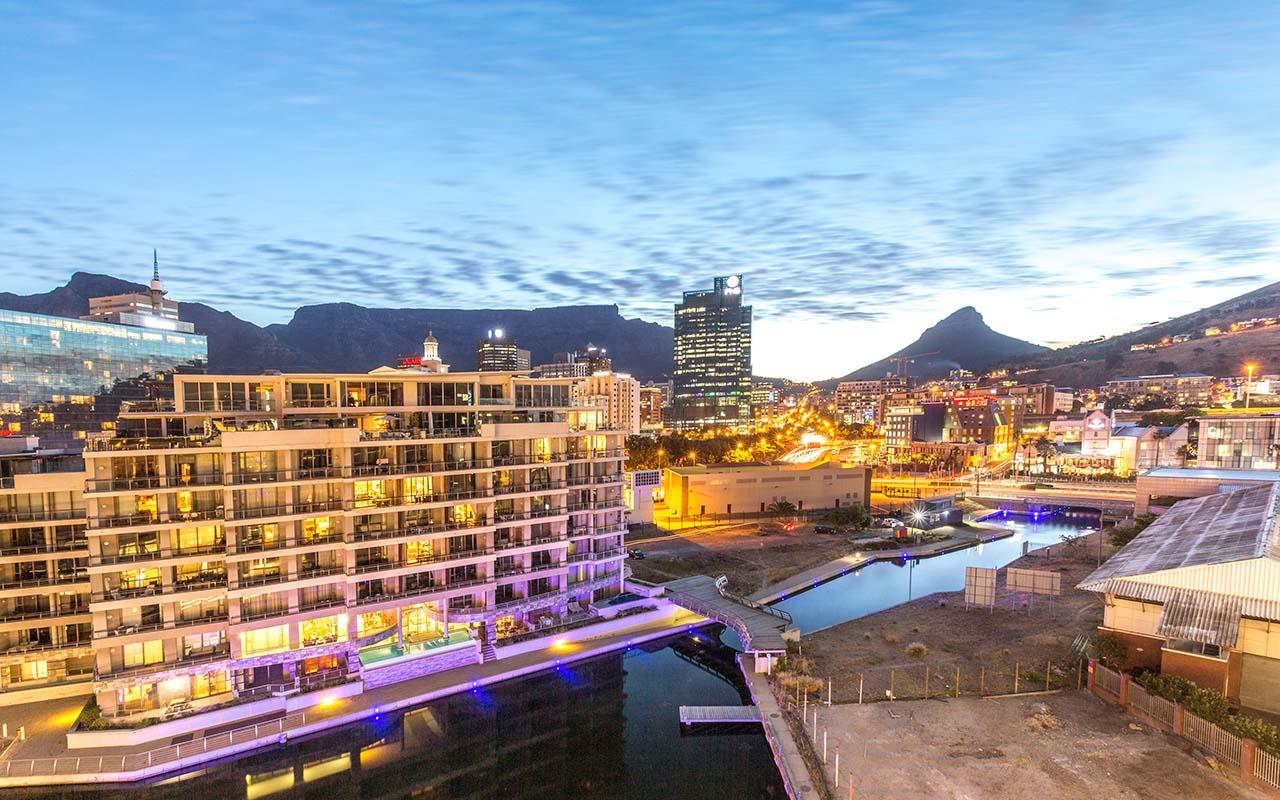
“Cape Town is preparing for a R2.5 billion residential development known as ThirtyFour18, a 35-storey tower planned above the Cape Town International Convention Centre (CTICC), with premium residences, hotel-style services and views of Table Mountain, the harbour and the V&A Waterfront. The project, developed in partnership with Afrirent Holdings and the City of Cape Town, is expected to create approximately 2,500 construction jobs and 400 permanent positions, reinforcing Cape Town’s position as an important destination for luxury property investment.”
Cape Town’s R2.5 Billion ThirtyFour18 Development Signals a New Era for South Africa’s Luxury Real Estate Market
A landmark residential investment strengthens Cape Town’s position as a premium property destination
CAPE TOWN, SOUTH AFRICA – 30 October 2026
Cape Town’s luxury real estate market is attracting renewed attention following the announcement of ThirtyFour18, a landmark R2.5 billion residential development planned for the city’s Foreshore district. The ambitious 35-storey project, involving Afrirent Holdings and the City of Cape Town, represents a significant investment in premium residential property and reflects growing confidence in the Western Cape’s urban property market.
The development is particularly important because it combines high-end residential accommodation with hotel-style services, commercial accessibility and proximity to some of Cape Town’s most recognisable attractions. Positioned directly above the Cape Town International Convention Centre (CTICC), ThirtyFour18 is expected to introduce a distinctive residential offering to the city’s growing collection of premium developments.
Beyond its architectural ambitions, the project highlights the increasing relationship between luxury property, tourism, business travel and long-term investment. It also demonstrates how private-sector investment can contribute to urban regeneration while creating opportunities for employment and economic development.
A R2.5 billion investment in premium residential property
ThirtyFour18 is expected to become one of the notable additions to Cape Town’s evolving luxury residential landscape. Its proposed 35-storey structure will occupy a strategic position in the Foreshore, offering residents views across the V&A Waterfront, the harbour and Table Mountain.
According to Business Day’s report by Khulekani Magubane, the City of Cape Town and Afrirent Holdings are scheduled to launch the development on 1 December 2026. The project carries an estimated investment value of R2.5 billion, making it a substantial addition to the city’s property development pipeline.
The development’s location is particularly significant. Rather than being positioned in a conventional suburban residential neighbourhood, ThirtyFour18 will form part of an established business, tourism and events precinct.
This location could appeal to professionals, international business travellers, investors and affluent residents seeking convenient access to commercial facilities, entertainment and lifestyle destinations.
Furthermore, the combination of private residences and hotel-style facilities introduces a hospitality-oriented approach to urban residential living. This approach is increasingly relevant in international property markets, where premium buyers often value convenience, security, professional services and access to lifestyle amenities.
However, the project’s final market positioning, residential pricing, ownership arrangements and detailed facilities will be important considerations for prospective purchasers and investors.
Cape Town strengthens its luxury property investment appeal
Cape Town has increasingly established itself as one of South Africa’s most attractive destinations for premium residential property investment.
Its combination of natural scenery, established tourism infrastructure, international connectivity, restaurants, beaches and commercial opportunities gives the city a competitive advantage in attracting affluent property buyers.
The ThirtyFour18 announcement comes against a background of encouraging investment figures for Cape Town’s central business district.
The State of Cape Town Central City Report 2025, published by the Cape Town Central City Improvement District, recorded a 41% increase in property investment in the CBD during 2025/26. The value of developments reportedly increased from R9 billion to R12.8 billion.
Additionally, 29 developments were completed, under construction, planned or proposed within the district’s 1.74-square-kilometre area. More than half of the projects in the pipeline involved residential property, representing approximately R6.2 billion in development value.
These figures demonstrate that residential investment is becoming an important component of the central city’s transformation.
For luxury property investors, this development activity may create opportunities to participate in neighbourhoods benefiting from infrastructure improvements, commercial investment and increased residential demand.
Nevertheless, investment performance will depend on individual property prices, financing conditions, rental demand, operating costs and the successful delivery of developments.
The importance of the Foreshore location
Location remains one of the most important considerations in luxury real estate.
The Foreshore offers a combination of business accessibility, tourism infrastructure, entertainment facilities and connections to Cape Town’s wider metropolitan area.
ThirtyFour18’s position above the CTICC places it within an established destination for international conferences, exhibitions, corporate gatherings and major events.
Consequently, the development could appeal to individuals who regularly travel for business and prefer residential accommodation close to professional activities.
Its proximity to the V&A Waterfront is another important consideration. The Waterfront is among Cape Town’s prominent tourism and lifestyle destinations, providing access to restaurants, shopping, leisure facilities, accommodation and harbour experiences.
Meanwhile, the views of Table Mountain and the surrounding coastline could strengthen the development’s appeal to buyers seeking a recognisable Cape Town residential experience.
For international purchasers, such features can contribute to the perceived attractiveness of a property. However, views alone do not guarantee investment returns. Buyers will also need to consider construction quality, management arrangements, security, ownership rights and the property’s long-term financial performance.
Hotel-style living becomes an important luxury property consideration
One of the most interesting features of ThirtyFour18 is its proposed combination of private residences with hotel services and facilities.
This reflects a broader international movement towards residential developments that provide hospitality-inspired convenience.
Affluent homeowners increasingly value more than the physical size or appearance of a property. They may also consider professional building management, maintenance arrangements, convenient services, lifestyle facilities and accessibility.
For people balancing demanding professional schedules with international travel, these services can make urban residential ownership more convenient.
Hotel-style residential developments can also attract buyers who want a permanent city residence without managing every aspect of a conventional standalone home.
However, the commercial structure of such arrangements matters. Investors should understand which services are included in ownership costs, whether additional charges apply and how management responsibilities are allocated.
The distinction between privately owned residences and hotel-managed accommodation must also be clearly communicated before any investment decision.
Although ThirtyFour18’s announced concept highlights hotel-style services, detailed information about its eventual operating arrangements and residential offering should be confirmed by the development team.
Employment opportunities and economic benefits
The development is expected to deliver benefits beyond the luxury property market.
Afrirent Holdings founder Senzo Tsabedze indicated that approximately 2,500 jobs could be created during construction, followed by around 400 permanent positions once the development is completed.
These projected employment opportunities are significant for Cape Town’s construction, professional services, hospitality and property management sectors.
Construction projects of this scale typically require collaboration among architects, engineers, quantity surveyors, construction contractors, suppliers and other specialist professionals.
Additionally, the development team has indicated that Cape Town-based professionals have deliberately been appointed, supporting the intention to retain more of the project’s economic benefits within the local economy.
Once operational, permanent employment opportunities could extend into facilities management, hospitality services, administration, maintenance and other supporting functions.
The project therefore illustrates how luxury property development can contribute to broader economic activity when investment is connected to local suppliers, professional services and employment.
Nevertheless, the projected figures represent anticipated opportunities rather than completed employment outcomes. Their actual delivery will depend on construction progress and the development’s eventual operational requirements.
Private-sector investment and the city’s development strategy
The partnership between the City of Cape Town and Afrirent Holdings highlights the importance of cooperation between public institutions and private investors.
Large residential developments require more than financial resources. They also depend on appropriate planning processes, infrastructure coordination, regulatory compliance and effective communication between developers and municipal authorities.
Cape Town’s economic growth leadership has positioned ThirtyFour18 as part of the city’s broader ambition to strengthen its inner city as a place to live, work, invest and visit.
This approach is important because successful urban centres require a balanced combination of residential accommodation, commercial activity, tourism facilities and public infrastructure.
A residential development situated within an established business district can potentially support surrounding restaurants, retail outlets, transport services and other businesses.
Moreover, increasing residential activity can help strengthen the relationship between daytime commercial activity and evening neighbourhood life.
However, sustained urban regeneration requires continued attention to public safety, transport accessibility, reliable municipal services, pedestrian infrastructure and the quality of surrounding public spaces.
Luxury developments are most successful when they contribute to an attractive and functional urban environment rather than operating independently of their surroundings.
Competition and opportunities in South Africa’s luxury property market
ThirtyFour18 enters a property market where Cape Town is already competing for high-value residential investment.
According to property industry commentary published by Business Day on 28 October 2026, Cape Town recorded a 9% increase in residential property prices during 2025. The Atlantic Seaboard also experienced strong sectional-title price growth, while the Cape Peninsula recorded particularly substantial increases.
The commentary highlighted luxury residential transactions reaching R50 million to R60 million and above in prime suburbs.
These developments demonstrate the importance of Cape Town’s premium residential market, although performance differs considerably between neighbourhoods and property categories.
Johannesburg, meanwhile, faces different property market conditions, with infrastructure challenges and weaker historical residential price growth affecting investor confidence.
This contrast reinforces the importance of location, municipal performance and long-term demand when evaluating luxury property investments.
For ThirtyFour18, Cape Town’s comparatively strong investment environment could provide a favourable foundation. Nevertheless, the development will need to compete with established luxury residential buildings, waterfront apartments and other premium accommodation offerings.
What investors should consider
For prospective investors, the announcement presents several important considerations.
First, the development’s location could provide long-term appeal because of its proximity to commercial, tourism and entertainment facilities.
Second, its residential and hospitality-oriented concept could attract buyers seeking convenience and professionally managed living arrangements.
Third, the wider investment activity in Cape Town’s central business district suggests that residential development is becoming increasingly important to the city’s urban property strategy.
However, prospective buyers should evaluate several factors before committing capital.
These include the final purchase prices, expected levies, property management fees, construction timelines, financing costs and potential rental income.
International buyers should also understand South African property ownership regulations, taxation requirements and applicable foreign exchange considerations.
Importantly, investors should not assume that a luxury development will automatically deliver strong capital appreciation or rental yields. Financial performance depends on actual market demand, affordability, competition and the quality of property management.
The future of luxury residential development in Cape Town
ThirtyFour18 represents an important example of how Cape Town’s residential property market is evolving.
The city’s premium property sector is increasingly connected to tourism, business travel, lifestyle services and international investment.
Developments that successfully combine these elements could help attract a wider range of residents and investors.
Furthermore, the growing residential pipeline in the central business district suggests that developers are recognising opportunities beyond traditional suburban luxury neighbourhoods.
The Foreshore could benefit from this transformation if investment is accompanied by improvements in accessibility, infrastructure, safety and public spaces.
For the city, the challenge will be ensuring that major private developments contribute meaningfully to sustainable economic growth and inclusive urban development.
For the property industry, the project provides an opportunity to demonstrate how premium residential investment can support construction activity, professional employment and the development of a more vibrant commercial district.
Conclusion: A significant milestone for South African luxury real estate
The proposed R2.5 billion ThirtyFour18 development represents a significant addition to Cape Town’s luxury residential investment landscape.
Its 35-storey design, strategic Foreshore location, hotel-style residential concept and views of the V&A Waterfront and Table Mountain distinguish it within the city’s development pipeline.
The projected creation of 2,500 construction jobs and 400 permanent positions also highlights its potential economic contribution.
More importantly, the announcement comes at a time when Cape Town is experiencing increased property investment and growing interest in central-city residential developments.
Although construction, pricing and eventual market performance will determine the project’s ultimate success, ThirtyFour18 demonstrates the continuing importance of private-sector investment in shaping South Africa’s premium property market.
For luxury property investors, developers and real estate professionals, the project will be worth watching as Cape Town continues to strengthen its position as a leading residential, tourism and investment destination in Africa.



