




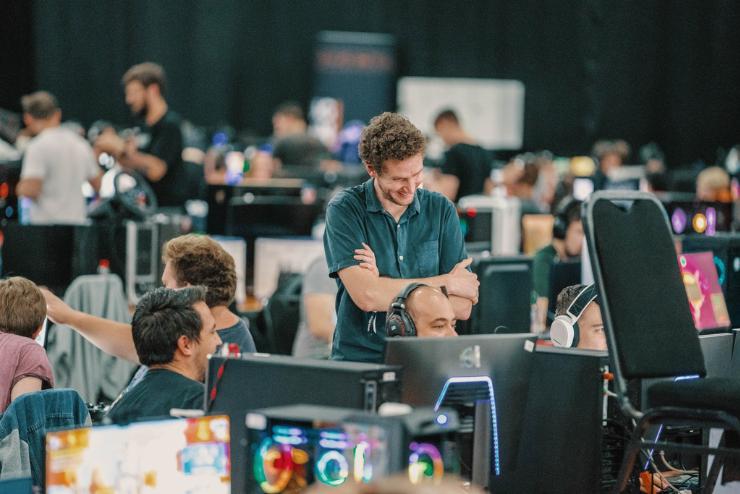
“South Africa’s rAge Nation is transforming its traditional gaming exhibition into a participatory gaming and esports festival through a partnership involving Mettlestate and Nedbank, bringing competitive tournaments, interactive attractions, technology and community initiatives to Fourways Mall from 27–29 November 2026. A major focus is improving access to gaming through the Kasi Play equipment donation initiative, which aims to help young people who cannot afford expensive computers, gaming consoles and other equipment participate in the growing esports industry.”
rAge Nation ushers in a new era for South African esports through community gaming, technology and major industry partnerships
Introduction: South African esports enters an important development phase
South Africa’s esports and gaming industry is preparing for an exciting weekend as rAge Nation opens its doors at Fourways Mall in Johannesburg from 27 to 29 November 2026. The event is taking a significant step beyond the traditional gaming exhibition format by introducing a more participatory experience that brings together competitive gaming, technology, entertainment, community development and opportunities for emerging esports players.
The transformation is being driven through a partnership involving rAge organisers, esports company Mettlestate and headline sponsor Nedbank. Their objective is to create an environment where professional competitors, university students, high-school learners, amateur gamers and ordinary gaming enthusiasts can participate in the country’s expanding digital entertainment ecosystem.
According to a report published by IOL on 27 November, the festival features interactive installations, a bring-your-own-computer (BYOC) LAN arena, competitive gaming experiences and a community equipment donation programme. These developments demonstrate an increasing recognition that esports requires more than tournaments and prize money. It also needs accessible equipment, supportive communities, organised competitions and sustainable investment.
A new direction for the traditional rAge exhibition
For many years, rAge has been an important gathering point for South African gaming enthusiasts. It has provided opportunities for people interested in video games, computer technology, cosplay, gaming equipment and digital entertainment to meet, discover new products and celebrate gaming culture.
However, the 2026 edition is adopting a broader approach.
Instead of concentrating primarily on exhibition stands and product demonstrations, organisers are creating an environment in which visitors can actively participate in gaming-related activities. This shift reflects the changing expectations of modern gaming audiences, who increasingly want opportunities to play, compete, interact and connect with other enthusiasts.
The Fourways Mall venue will feature giant climbable keyboards, oversized chess sets, reaction timers, conventional and human-sized claw machines, and a Doctor Doom throne. Visitors will also encounter the ORBIT BYOC LAN area, known as The Cage, alongside more than 30 food stalls.
These attractions are intended to make the event appealing to a wider audience, including families, casual gamers and visitors who may not necessarily participate in professional esports competitions.
The transformation also highlights how gaming festivals can combine sporting competition with entertainment, technology and popular culture.
Mettlestate and Nedbank strengthen the esports partnership
The involvement of Mettlestate and Nedbank is an important part of the festival’s development.
Mettlestate is responsible for esports-related activities and competition within the broader event, while Nedbank’s headline sponsorship provides commercial support for the festival’s expanded programme.
Barry Louzada, managing director of Mettlestate, has emphasised the importance of creating opportunities for different categories of gamers. The partnership is intended to accommodate university esports, high-school competitions and community-based gaming initiatives.
This approach is particularly significant because the esports industry depends on a broad participation base.
Professional players need competitive environments in which they can develop their abilities. Universities require suitable facilities for organised gaming programmes. Young learners need opportunities to discover their interests, while community players need affordable access to the equipment required to participate.
By bringing these different groups together, rAge Nation can help strengthen connections between the recreational, educational and professional sides of esports.
Commercial partnerships are also important because organising major gaming events requires substantial resources, including venues, technical infrastructure, tournament administration, equipment, marketing and production facilities.
The involvement of a major financial institution therefore illustrates the growing commercial interest in South African gaming and esports.
Kasi Play initiative targets financial barriers to gaming
One of the most important elements of this year’s festival is its focus on accessibility.
Although competitive gaming is becoming increasingly popular, the cost of entering the industry remains a significant challenge for many young South Africans.
High-performance gaming computers, monitors, gaming chairs, consoles, keyboards and other accessories can be expensive. Players who lack access to suitable equipment may struggle to practise consistently or compete against individuals with better resources.
This creates an unequal environment in which financial circumstances can influence opportunities to develop gaming skills.
The Kasi Play initiative is designed to address part of this challenge through community donations.
Organisers are encouraging visitors to donate spare gaming equipment, including chairs, monitors and consoles. The donated equipment is intended to support young players who cannot afford expensive gaming systems.
This initiative is important because it recognises that esports development must begin with access.
A talented young gamer may have the ability, commitment and competitive understanding necessary to succeed, but those qualities cannot always translate into professional opportunities without reliable equipment and sufficient practice time.
Providing access to donated technology could help community gaming environments become more inclusive.
Furthermore, the initiative creates an opportunity for established gamers and technology enthusiasts to contribute directly to the development of emerging players.
The programme also highlights the potential role of corporate partners, gaming organisations and individual supporters in reducing barriers to participation.
Interested supporters can find donation information through the Kasi Flare website, which provides access to the initiative’s donation section.
Bring-your-own-computer LAN gaming keeps competitive culture alive
Another major attraction is the BYOC LAN experience.
LAN gaming has historically played an important role in the development of competitive gaming communities. Before online multiplayer competitions became widely accessible, gamers frequently gathered in physical venues, connected their computers through local networks and competed against one another.
These gatherings created opportunities for friendships, teamwork, competition and the development of gaming communities.
The BYOC format continues that tradition by allowing participants to bring their own computers and compete locally.
At rAge Nation, the LAN environment gives visitors an opportunity to experience the social side of gaming rather than simply watching other people play.
It also provides an opportunity for gamers to interact directly, exchange knowledge, develop strategies and test their abilities against other participants.
The festival’s official website advertises a LAN experience with capacity for more than 1,000 players, alongside multiple tournaments and an extended programme of gaming activities.
This is particularly relevant for esports because regular practice and interaction with other competitors are important components of player development.
Physical gaming environments can also help emerging players discover teams, establish connections and become more familiar with organised competition.
University and school competitions create development pathways
The expansion of university and high-school esports is another important development associated with the 2026 festival.
Educational institutions can contribute significantly to the long-term growth of esports by providing structured environments in which students can participate in organised competitions.
University gaming programmes can help students develop teamwork, strategic thinking, communication, problem-solving and digital technology skills.
These capabilities are relevant beyond gaming itself.
The broader esports ecosystem includes opportunities involving broadcasting, event management, digital marketing, software development, content production, coaching, tournament administration and technical support.
Earlier coverage of the festival, published on 26 November, reported a R350,000 allocation towards university gaming infrastructure and R90,000 in varsity player prizes. It also identified a R100,000 League of Legends competition and a R50,000 Call of Duty prize allocation. These figures provide important financial context for the event, although the infrastructure allocation should not be confused with prize money paid directly to players.
The university infrastructure investment is particularly noteworthy because suitable facilities could benefit students beyond the immediate festival.
Gaming laboratories and properly equipped esports spaces may provide institutions with the foundation for regular competitions, training sessions and student-led gaming communities.
High-school esports can also introduce younger participants to organised competitive gaming before they reach university.
Together, these programmes could contribute to a more structured talent-development pathway.
Competitive tournaments increase the visibility of South African players
Competitive tournaments remain central to the development of esports.
The rAge Nation programme includes major gaming titles such as Counter-Strike 2, Valorant, League of Legends, FIFA and Rocket League, according to the event’s official website.
These titles attract different competitive communities and require different combinations of technical ability, strategic thinking, communication and teamwork.
League of Legends, for example, is a team-based competitive game in which players must coordinate their decisions, manage resources and execute strategies against opponents.
Similarly, competitive shooters require communication, precision, map awareness and effective team coordination.
Football simulation competitions provide opportunities for players interested in digital versions of traditional sport.
The inclusion of several genres allows the festival to appeal to different gaming communities rather than concentrating on a single competitive discipline.
One of the major attractions is the Nedbank Summoner Tournament, a League of Legends competition with a reported R100,000 prize pool. Its format includes online qualification stages followed by a live final at rAge Nation.
This combination of online and physical competition demonstrates how esports can connect geographically separated competitors with live audiences.
It also creates opportunities for players to demonstrate their abilities in a more visible competitive environment.
Gaming creates opportunities beyond professional competition
The development of esports also has implications for South Africa’s wider digital economy.
Although professional players receive considerable attention, the industry depends on many other occupations and businesses.
Gaming tournaments require commentators, presenters, referees, tournament organisers, technical specialists, photographers, videographers and marketing professionals.
Content creators and livestreamers can build audiences around competitive gaming, while developers and independent studios can use gaming festivals to introduce their products to potential customers.
The presence of technology exhibitors, creative businesses, food vendors and entertainment activities at rAge Nation demonstrates how gaming events can generate opportunities across multiple sectors.
For young South Africans interested in technology and entrepreneurship, these events can provide exposure to possible career pathways.
They can also encourage collaboration between educational institutions, technology companies, esports organisations and creative professionals.
This wider economic contribution is one reason why investment in gaming infrastructure and community development deserves attention beyond the immediate tournament results.
Accessibility remains essential to long-term esports growth
Despite the positive developments, the industry still faces important challenges.
The cost of computers and consoles remains a barrier for many aspiring competitors. Internet connectivity, electricity reliability and access to suitable gaming spaces can also influence participation.
Furthermore, building a sustainable professional esports environment requires regular competitions, transparent tournament administration, responsible sponsorship and opportunities for players to progress.
A successful festival can generate excitement, but long-term development depends on what happens after the event concludes.
Initiatives such as Kasi Play therefore deserve continued attention. Their potential impact will depend on how effectively donated equipment reaches communities, how facilities are maintained and whether young people receive ongoing opportunities to participate.
Similarly, university esports infrastructure investment will be more valuable when institutions establish sustainable programmes rather than treating gaming as a once-off activity.
Partnerships between businesses, educational institutions and esports organisations could help address these challenges.
Johannesburg becomes a meeting point for gaming communities
The decision to host rAge Nation at Fourways Mall provides Johannesburg with an opportunity to welcome gaming enthusiasts from different parts of South Africa.
The three-day programme, running from Friday 27 November to Sunday 29 November, brings together competitive gaming, technology, entertainment and community participation.
The involvement of 5FM also gives the festival additional media exposure, helping introduce gaming culture to audiences beyond dedicated esports communities.
Visitors can experience gaming competitions, interactive attractions, cosplay, food, technology exhibitions and the BYOC LAN environment.
The festival’s format demonstrates that esports can operate alongside other forms of entertainment while retaining its identity as an organised competitive activity.
For South African players, the event provides an opportunity to showcase their abilities and connect with other members of the gaming community.
For businesses, it creates opportunities to engage with audiences interested in technology and digital entertainment.
For young people, it offers exposure to an industry that increasingly combines sport, creativity and technology.
Conclusion: A significant opportunity for South African esports
The transformation of rAge into rAge Nation represents an important development for South Africa’s esports industry.
The partnership involving Mettlestate and Nedbank, the introduction of interactive gaming experiences, the BYOC LAN environment and the Kasi Play equipment donation initiative demonstrate a growing focus on participation and accessibility.
The reported investment in university gaming infrastructure and competitive prize opportunities further strengthens the event’s importance within the local esports landscape.
However, the most meaningful measure of success will be the long-term opportunities created for South African gamers.
More accessible equipment, stronger university programmes, community gaming facilities, consistent tournaments and responsible commercial partnerships could help establish a more inclusive and sustainable esports ecosystem.
As rAge Nation takes place at Fourways Mall from 27 to 29 November 2026, the festival offers an opportunity to demonstrate that competitive gaming is not simply a recreational activity.
It is an expanding sporting, technological and creative industry with the potential to support skills development, entrepreneurship, employment and international competition.
South Africa’s next generation of esports talent will need more than enthusiasm. It will need access, investment, training and opportunities to compete. Initiatives such as rAge Nation and Kasi Play represent meaningful steps towards creating that environment.



