




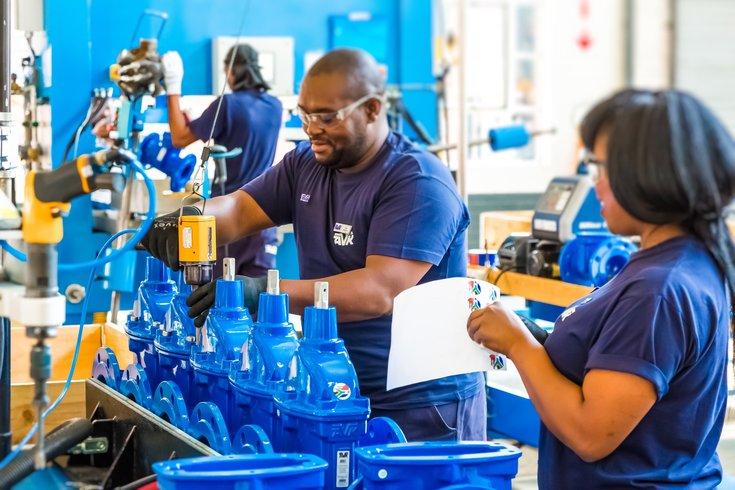
“South Africa’s annual producer price inflation increased from 6.2% to 8.1% in October 2026, following a 1.7% monthly increase in factory-gate prices, raising concerns about the cost of production and the possibility of further price increases for consumers. The latest figures have also drawn attention to the rand, inflation expectations, interest-rate policy and the country’s wider economic outlook.”
South Africa’s Producer Inflation Surges to 8.1% as Rising Fuel Costs Threaten Economic Stability
Introduction
South Africa’s economy is facing renewed inflationary pressure following a significant increase in producer prices, highlighting the continuing challenges confronting manufacturers, businesses, consumers and policymakers. The latest Statistics South Africa figures show that annual producer price inflation for final manufactured goods accelerated to 8.1% in October 2026, compared with 6.2% in September.
The increase represents an important development for the country’s macroeconomic outlook because producer inflation measures changes in prices received by manufacturers for their products. These changes provide an indication of the costs and pricing pressures moving through the production chain before goods reach retailers and consumers.
The October figures also demonstrate the influence of international energy markets on South Africa’s domestic economy. Higher petroleum, diesel and petrol prices have increased production and distribution expenses, placing additional pressure on companies already operating in a challenging economic environment.
According to Statistics South Africa, final manufactured goods producer prices increased by 1.7% between September and October. The annual increase was significantly influenced by the coke, petroleum, chemical, rubber and plastic products category.
This development has become an important economic concern because sustained increases in manufacturing costs can influence consumer inflation, business investment, employment, household purchasing power and monetary policy decisions.
Fuel prices emerge as the biggest contributor to rising production costs
Energy prices have become one of the most important influences on South Africa’s inflation environment.
The October producer inflation figures indicate that the coke, petroleum, chemical, rubber and plastic products category recorded annual inflation of 26.3%. This category contributed 5.6 percentage points to the overall annual producer inflation rate of 8.1%.
The increase reflects the significant impact of international energy prices on the domestic production sector.
Petrol prices increased by approximately R3.33 per litre during October, while diesel prices increased by approximately R2.84 per litre. These increases raised operating expenses for companies that depend on fuel for transportation, manufacturing, logistics, agricultural production and distribution.
South Africa’s dependence on imported petroleum products and international energy markets makes its economy vulnerable to developments beyond its borders.
When international oil prices increase, the consequences can extend beyond motorists filling their vehicles. Manufacturers may face higher electricity-generation expenses, transportation companies may increase their delivery charges, and agricultural businesses may experience additional costs associated with machinery and moving products to markets.
These expenses can eventually influence the prices of manufactured goods, food products and services.
The October figures therefore illustrate how international energy developments can affect the domestic inflation environment through several interconnected economic channels.
Although the government introduced temporary fuel levy relief in its October Medium-Term Budget Policy Statement, the latest producer price figures demonstrate that fuel-related pressures remain substantial.
Economists have also cautioned that temporary fuel levy relief cannot necessarily provide a permanent solution because the measures may eventually need to be reversed.
Manufacturing businesses face increasing financial pressure
The manufacturing sector plays an important role in South Africa’s economic development. It contributes to employment, industrial production, exports, technological development and the country’s overall gross domestic product.
However, increasing producer prices create additional difficulties for manufacturers, particularly businesses operating with limited profit margins.
Companies that manufacture industrial materials, chemicals, plastic products, machinery, packaging and other essential goods depend on reliable and affordable production inputs.
When these inputs become more expensive, businesses must decide whether to absorb the additional costs, increase selling prices, reduce operating expenses or change their production strategies.
For larger companies, some of these expenses may be managed through long-term supply agreements, financial reserves and economies of scale.
Smaller manufacturers, however, may have fewer opportunities to absorb rising costs. Their ability to negotiate favourable supply contracts or access affordable financing may also be limited.
Consequently, higher producer inflation could create different economic outcomes across industries and business sizes.
Some manufacturers may increase prices to protect profitability. Others may reduce production volumes, delay investment or postpone recruitment while waiting for greater certainty in the economic environment.
These decisions matter because manufacturing investment supports industrial capacity and employment.
If businesses become increasingly cautious, the wider economy could experience weaker investment growth and slower job creation.
South Africa therefore needs a stable operating environment that encourages companies to expand production, improve productivity and invest in modern industrial technologies.
The latest producer inflation figures reinforce the importance of reducing structural business costs, improving logistics and strengthening energy security.
Food production and agricultural costs remain important considerations
Food inflation is another important factor in the country’s macroeconomic outlook.
Statistics South Africa’s October figures show that food products, beverages and tobacco prices increased by 2.2% annually in the final manufactured goods index, contributing 0.7 percentage points to the overall producer inflation rate.
Although this increase was considerably lower than the petroleum-related component, food production remains particularly important because it directly affects household living expenses.
South African food manufacturers depend on agricultural inputs, electricity, packaging materials, transportation and distribution networks.
Consequently, higher fuel prices can increase the cost of moving agricultural products from farms to processing facilities and eventually to supermarkets.
There are also risks associated with weather conditions.
The possibility of an El Niño-related drought presents an additional concern for agricultural production and food supply. Poor rainfall could affect crop yields, agricultural productivity and food availability.
A reduction in agricultural production could increase the cost of certain food products, particularly if domestic supplies become insufficient to meet demand.
However, the agricultural picture is not entirely negative. Some agricultural products have experienced comparatively moderate price pressures, supported by favourable harvest conditions and improvements in supply.
The challenge for policymakers will be to maintain stable food supplies while addressing the structural costs that affect agricultural producers and food manufacturers.
Statistics South Africa+3
What the producer inflation increase means for consumers
Producer inflation and consumer inflation are closely connected, although they measure different stages of the economy.
Producer inflation measures changes in prices received by producers, whereas consumer inflation measures changes in the prices households pay for goods and services.
An increase in producer prices does not automatically result in an equivalent increase in consumer prices.
Businesses may absorb some additional expenses, negotiate lower input prices, improve operational efficiency or delay price adjustments.
Nevertheless, persistent increases in production expenses can eventually influence retail prices.
For example, a manufacturer experiencing higher fuel and packaging costs may eventually increase the wholesale price of its products.
Retailers purchasing those products could then face higher procurement expenses, potentially passing part of the increase on to consumers.
This possibility is particularly concerning for households already managing the cost of food, transport, electricity, housing and other essential expenses.
South Africa’s annual consumer inflation had already increased to 5.2% in October 2026, from 4.5% in September.
This means that the economy is experiencing pressure at both the producer and consumer levels.
For households, higher prices reduce the purchasing power of available income. Families may respond by reducing discretionary spending, changing shopping habits or postponing major purchases.
These adjustments can affect economic activity because household consumption is an important component of national demand.
If consumer spending weakens significantly, retailers and manufacturers could experience lower sales volumes.
The broader concern is therefore that persistent inflation may create pressure on both household finances and business performance.
South African Reserve Bank faces difficult monetary policy decisions
The latest producer inflation figures arrive at an important moment for South Africa’s monetary policy environment.
The South African Reserve Bank (SARB) is responsible for maintaining price stability and protecting the purchasing power of the currency through its monetary policy decisions.
At its November 2026 Monetary Policy Committee meeting, the central bank maintained the repo rate at 7.25%.
However, the decision reflected differing opinions among committee members. Four members supported keeping interest rates unchanged, while three preferred an increase of 25 basis points.
This division illustrates the difficult choices facing monetary policymakers.
Keeping interest rates unchanged can support households and businesses by avoiding additional borrowing costs. However, if inflation continues increasing, the central bank may need to consider tighter monetary policy to prevent inflation expectations from becoming entrenched.
Higher interest rates can reduce borrowing and spending, helping to moderate demand and inflation. Nevertheless, they can also increase mortgage repayments, business financing expenses and the cost of investment.
The Reserve Bank has also identified international oil prices, geopolitical developments, currency movements and potential food price increases as risks to the inflation outlook.
The October producer inflation figures could therefore become an important consideration in future monetary policy assessments.
Importantly, producer inflation alone does not determine whether interest rates will increase. Policymakers must also consider consumer inflation, economic growth, employment, exchange rates and expectations about future prices.
The rand and international financial markets add another dimension
South Africa’s inflation environment is also influenced by developments in international financial markets.
The rand is particularly sensitive to changes in global investor confidence, international interest rates, commodity prices and geopolitical uncertainty.
Market reporting on 27 November indicated that the rand was trading around R17.42 against the US dollar earlier in the morning.
The currency’s performance matters because a weaker rand can increase the domestic cost of imported products, including fuel, machinery, chemicals and industrial equipment.
When imported inputs become more expensive, businesses may experience additional cost pressures.
A stronger rand, by contrast, can help reduce the local-currency cost of imports, although the benefits depend on international prices and how quickly exchange-rate movements pass through to domestic markets.
The Johannesburg Stock Exchange also experienced positive movements during the preceding trading session, with resource shares supporting gains in the broader market.
These developments illustrate that South Africa’s economy is influenced by both domestic economic fundamentals and international investment conditions.
Investors will continue monitoring inflation, monetary policy decisions, government finances and the country’s ability to improve long-term economic growth.
Implications for economic growth and employment
One of South Africa’s most persistent economic challenges is the need to achieve stronger and more inclusive economic growth.
Higher production costs can complicate this objective.
Manufacturers need affordable inputs, reliable infrastructure, efficient transportation networks and access to financing to expand their businesses.
When operating expenses rise rapidly, companies may become reluctant to invest in new facilities, equipment and additional employees.
This can affect the country’s ability to create employment and increase industrial production.
The consequences may be particularly significant for small and medium-sized enterprises, which often have limited financial resources.
South Africa also needs to improve electricity reliability, port efficiency, railway infrastructure and regulatory conditions to reduce the structural costs of doing business.
These reforms are important because monetary policy cannot solve every inflation problem.
For example, increasing interest rates cannot directly reduce international petroleum prices or immediately repair inefficient transportation infrastructure.
Similarly, lowering interest rates cannot automatically improve agricultural productivity or eliminate supply-chain bottlenecks.
Addressing these challenges requires cooperation between government departments, businesses, financial institutions and industry organisations.
The International Monetary Fund has recently indicated that ambitious structural reforms could help South Africa raise its economic growth potential towards 4%.
Its recommendations include addressing infrastructure weaknesses, restrictive business regulations, labour-market barriers and governance challenges.
These reforms are particularly relevant in an environment where manufacturers need greater certainty and lower operating expenses.
Government intervention and the importance of fiscal stability
The government also faces important decisions regarding its response to rising production costs.
Temporary fuel levy relief can provide short-term assistance to businesses and consumers. However, policymakers must balance these interventions against the government’s revenue requirements and fiscal commitments.
South Africa needs sufficient public revenue to finance infrastructure development, education, healthcare, social protection and other essential services.
At the same time, excessive government borrowing can increase debt-servicing costs and create additional pressure on public finances.
The Medium-Term Budget Policy Statement therefore remains important in determining how government intends to balance expenditure, revenue collection and debt management.
A sustainable fiscal framework can strengthen investor confidence and support a more predictable economic environment.
Government should also prioritise infrastructure projects that reduce the cost of production, improve transportation efficiency and encourage private-sector investment.
Improving ports, railways, roads and electricity infrastructure could help manufacturers become more competitive.
These investments would also support South Africa’s ability to increase exports and strengthen its position in regional and international markets.
What businesses and investors should monitor
The October producer inflation figures provide an important warning for businesses and investors planning their activities over the coming months.
Manufacturers should closely monitor fuel prices, supplier contracts, production expenses and consumer demand.
Businesses may also need to review their pricing strategies and operational budgets to account for potential increases in input costs.
Investors, meanwhile, should monitor the relationship between producer inflation, consumer inflation and the Reserve Bank’s monetary policy decisions.
Companies operating in energy-intensive industries may face different financial pressures from businesses with lower exposure to fuel and imported production inputs.
Investors should therefore consider individual company performance rather than assuming that higher producer inflation will affect every sector equally.
Developments in international oil markets, exchange rates and domestic demand will also remain important indicators.
The next producer price release, covering November 2026, is scheduled for 17 December 2026, according to Statistics South Africa.
That release should provide additional evidence about whether October’s increase represents a temporary acceleration or the beginning of a more persistent inflationary trend.



