




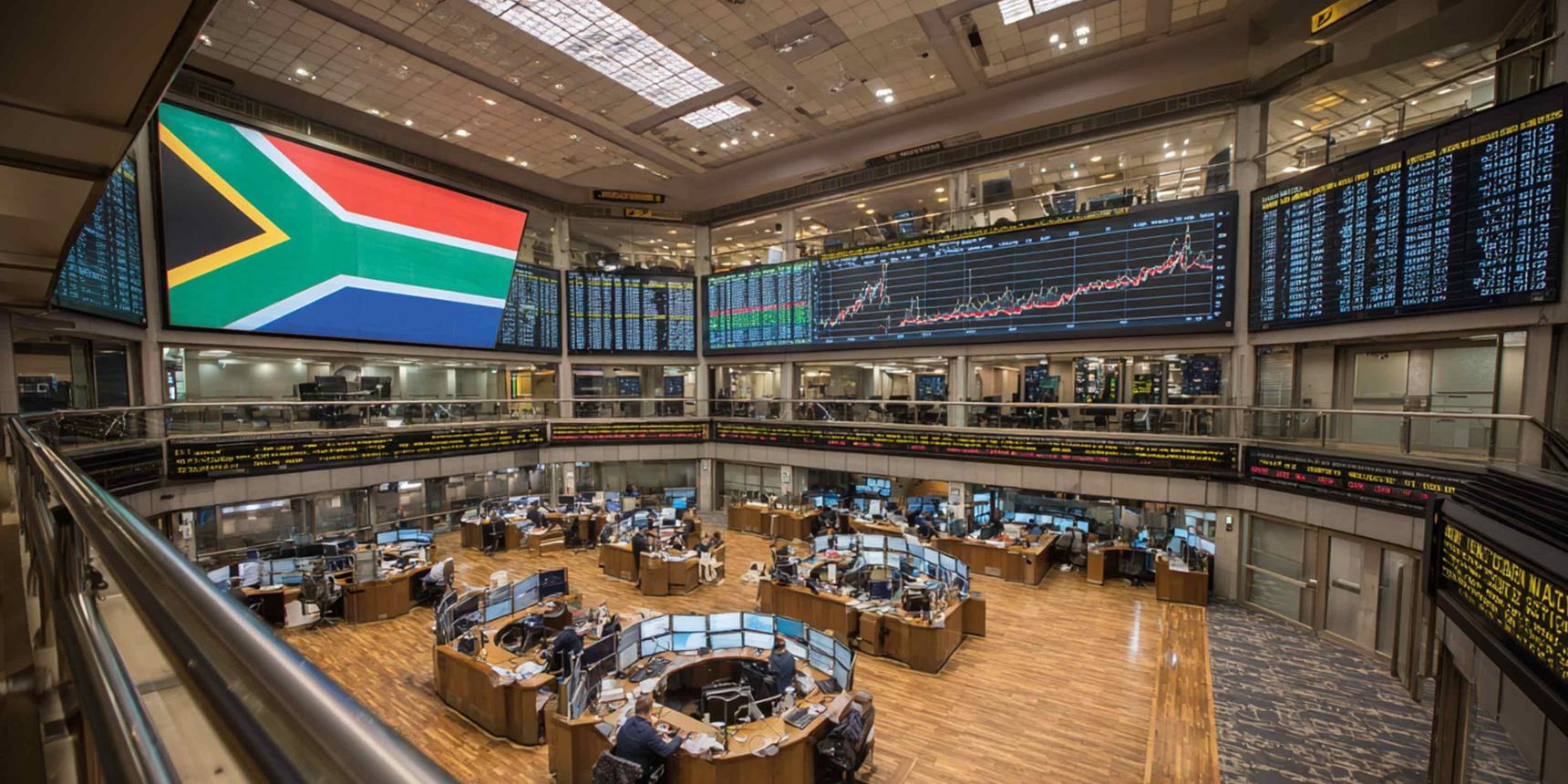
“The South African rand strengthened slightly in early trading on Monday as investors prepared for the government’s Medium-Term Budget Policy Statement and the release of September inflation and retail sales data. Markets are assessing the outlook for public finances, consumer demand, fuel-related inflation and interest rates, making the coming economic announcements important for the rand, government bonds and shares listed on the Johannesburg Stock Exchange (JSE).”
South African Rand Gains as Investors Await Budget Statement and Inflation Data
South Africa’s financial markets entered the new trading week with investors focused on a series of economic announcements expected to influence the direction of the rand, government bonds and equities. The rand strengthened modestly in early trading on Monday as market participants prepared for Finance Minister Enoch Godongwana’s Medium-Term Budget Policy Statement (MTBPS), alongside new inflation and retail sales figures expected later in the week.
The developments are significant because South Africa’s markets are balancing two competing considerations: the possibility of improving public finances and the continuing pressure created by elevated fuel costs, inflation risks and uncertain international conditions. Investors are looking for evidence that the country can maintain fiscal discipline while supporting economic growth and protecting households from rising living expenses.
According to Reuters, the rand traded at approximately R16.4475 against the US dollar at 05:48 GMT on Monday, representing a gain of around 0.2% from its previous closing level. Although the movement was relatively small, it reflected the cautious optimism surrounding the economic announcements expected during the week.
Budget statement becomes the centre of market attention
The Medium-Term Budget Policy Statement is expected to be a key event for South African financial markets. Investors will examine the government’s assessment of public finances, its borrowing requirements and its plans to manage expenditure and revenue over the medium term.
The statement matters because government borrowing and debt-servicing costs influence the wider economy. When investors believe that a government can manage its finances sustainably, they may become more willing to hold its bonds and invest in assets denominated in the national currency.
Conversely, concerns about rising debt, weak revenue collection or increasing expenditure can make investors demand higher returns to compensate for perceived risks. Such concerns can affect bond prices, increase government financing costs and place pressure on the rand.
Market participants are therefore looking for credible evidence that South Africa’s fiscal position is improving. Reuters reported that investors were considering the possibility of a better budget balance and a more favourable outlook for the country’s sovereign credit ratings.
However, expectations alone cannot guarantee a positive market response. Investors will need to assess the assumptions behind the government’s projections, including whether revenue estimates are realistic and whether spending commitments can be maintained within the available resources.
A budget that demonstrates credible progress towards fiscal sustainability could support confidence in South African assets. Nevertheless, a statement that disappoints expectations could produce renewed caution, even if it contains some positive announcements.
Inflation figures could influence interest-rate expectations
Inflation is another major concern for investors as the week begins. Statistics South Africa is expected to release September consumer inflation data, providing an updated assessment of changes in the cost of goods and services.
According to Reuters, Nedbank economists expected headline inflation to accelerate to 4.8% in September from 4.4% in August. This was a forecast ahead of the release, rather than a confirmed September result.
The anticipated increase highlights the importance of transport and energy costs in determining South Africa’s inflation outlook. Fuel prices influence household transport expenses, commercial deliveries, agricultural production and the distribution of consumer products.
When businesses experience higher transport costs, some may pass a portion of the increase to customers. This can make everyday goods more expensive and reduce the amount of money households have available for discretionary spending.
Inflation also matters to the financial markets because it influences expectations about monetary policy. If price increases become persistent, investors may expect interest rates to remain elevated for longer. Higher borrowing costs can affect company earnings, household credit demand and the valuations investors assign to shares.
On the other hand, if inflation remains contained, monetary policymakers may have greater flexibility when assessing future interest-rate decisions.
The relationship is not automatic. The South African Reserve Bank considers a range of economic indicators, including underlying inflation, inflation expectations, economic growth and risks to the currency. Consequently, a single monthly inflation figure would not determine the direction of monetary policy on its own.
For investors, the important question is whether the latest data point towards a temporary increase in prices or a more persistent inflation problem.
Fuel prices and international tensions remain important risks
South Africa’s domestic economic outlook is closely connected to international energy markets. Reuters reported that conflict in the Middle East was keeping fuel costs elevated, adding to concerns about inflation.
Higher international oil prices can affect South Africa through several channels. The country relies on imported crude oil and refined petroleum products, making local fuel costs sensitive to movements in global energy prices and the exchange rate.
A weaker rand can increase the domestic-currency cost of imported energy, even when international prices remain unchanged. If the currency strengthens, it can help moderate that pressure, although the extent of any benefit depends on the scale of the exchange-rate movement, oil prices, taxes and other components of retail fuel pricing.
For businesses, sustained increases in fuel costs can place pressure on operating margins. Transport operators may face higher expenses, retailers may pay more to distribute goods, and manufacturers may experience increased logistics costs.
Households can also feel the effects through commuting expenses and the prices of products delivered over long distances.
These pressures are particularly relevant when consumers are already managing borrowing costs and other household expenses. If fuel becomes more expensive, families may reduce spending elsewhere, potentially affecting retailers, restaurants and other consumer-facing businesses.
International uncertainty also influences investors’ willingness to hold emerging-market assets. During periods of heightened global risk, some investors move towards assets they consider safer or more liquid. That can affect emerging-market currencies, government bonds and stock markets, even when domestic economic developments are relatively encouraging.
South Africa’s market performance will therefore depend not only on government announcements but also on developments in global energy prices, international interest rates and investor risk appetite.
Retail sales will provide insight into consumer demand
Retail sales data, also expected on Wednesday, will offer another important indication of the state of South Africa’s economy.
Consumer spending is an important driver of economic activity. When households have sufficient disposable income and confidence to spend, retailers may record stronger sales, encouraging businesses to maintain investment, replenish inventories and consider expanding operations.
Weak sales growth can indicate that households are struggling with higher living costs, debt repayments or uncertainty about employment and income.
Reuters reported that Nedbank economists expected annual retail sales growth to slow to 2.5% in August from 3.4% in July. These figures were forecasts, not the subsequently confirmed official data.
The distinction between nominal and real spending is important when interpreting retail figures. Sales values can rise because prices have increased, even when the quantity of goods consumers purchase changes very little. Analysts therefore need to consider inflation and the composition of retail activity when evaluating the underlying strength of demand.
If retail sales prove more resilient than expected, investors may interpret the result as evidence that consumers are continuing to support economic activity despite financial pressures.
However, weaker-than-expected figures could reinforce concerns about the pace of domestic growth. That could affect the outlook for companies whose earnings depend heavily on local consumer demand.
Retail data can also provide context for inflation. Strong demand may allow businesses to raise prices more easily in certain sectors, while weak demand can limit their ability to pass on higher costs. Energy and supply-side shocks can complicate that relationship.
Together, inflation and retail sales figures should provide a more complete picture of the pressures facing South African households and businesses.
Government bonds reflect the balance between risk and return
The bond market is another area investors will monitor closely as the budget announcement approaches.
Reuters reported that South Africa’s benchmark 2035 government bond was little changed in early trading on Monday, while its yield increased by half a basis point to 8.7%.
Bond yields reflect several influences, including expectations for interest rates, inflation, government borrowing and the compensation investors require for taking risk.
When bond prices fall, yields generally rise. When prices increase, yields generally decline. Changes in yields can consequently reveal how investors are reassessing the economic outlook.
A credible fiscal statement could support government bonds if it improves confidence in debt sustainability and reduces concerns about future borrowing requirements. Lower perceived risk could encourage demand for existing government debt.
Nevertheless, domestic fiscal developments are only one part of the picture. International bond yields, exchange-rate expectations and inflation forecasts can also influence South African borrowing costs.
If inflation expectations rise or global yields increase, South African bonds may remain under pressure even when the government delivers encouraging fiscal news.
The reaction after the budget statement will therefore be important. Investors will compare the announced plans with existing expectations rather than assess the document in isolation.
What the rand’s movement means for businesses
The rand’s modest gain on Monday provides a reminder of how currency movements can affect businesses and consumers.
A stronger currency can reduce the rand cost of certain imported products, equipment and raw materials. Companies that depend on imported machinery or components may benefit if exchange-rate gains persist and are reflected in their purchasing costs.
Importers of fuel and other internationally priced goods may also benefit, although the impact depends on commodity prices and contractual arrangements.
However, currency appreciation does not automatically translate into immediate price reductions. Businesses may have purchased inventory at earlier exchange rates, and other costs may offset the benefits of a stronger rand.
Exporters face a different set of considerations. When foreign-currency earnings are converted into rand, a stronger local currency can reduce the amount received in domestic currency, all else being equal. The overall effect depends on the company’s cost structure, export prices and currency exposure.
For investors, the rand can influence returns from shares in companies with substantial foreign operations or foreign-currency revenues. Mining companies, for example, may receive revenues linked to international commodity prices while paying many operating expenses in rand.
The effect varies between companies, making it important to consider individual business fundamentals rather than assume that a stronger or weaker currency benefits the entire stock market equally.
Implications for the Johannesburg Stock Exchange
The Johannesburg Stock Exchange is likely to remain sensitive to developments in the currency, interest-rate expectations and the budget outlook.
Financial companies may be affected by changes in borrowing conditions, consumer credit demand and the performance of government bonds. Retailers may respond to signs of stronger or weaker household spending, while resource companies may be influenced by commodity prices and international demand.
A more favourable fiscal outlook could improve investor confidence in South African assets. However, a stronger market cannot be guaranteed by a positive budget announcement alone.
Investors will also consider corporate earnings, valuations, global market movements and the outlook for economic growth. Shares can fall even when economic data improve if investors had already anticipated better results.
Similarly, individual companies may perform well despite broader economic challenges if they demonstrate strong cash flow, competitive advantages or effective cost management.
This makes the upcoming data releases particularly relevant for investors attempting to distinguish temporary market movements from more durable changes in economic conditions.
What investors will watch next
Three developments stand out for the remainder of the week: the Medium-Term Budget Policy Statement, September inflation figures and the latest retail sales data.
The budget will help investors assess the government’s fiscal strategy. Inflation will indicate whether price pressures are accelerating, while retail sales will provide evidence of consumer demand.
The combination matters more than any single announcement. Improving public finances alongside contained inflation and resilient consumer spending would present a more encouraging picture than a positive budget accompanied by accelerating prices and weakening demand.
However, even that combination would not remove all risks. International energy prices, global monetary policy and geopolitical developments could continue to influence South African assets.
For businesses, the immediate priority is to monitor changes in financing costs, input prices and consumer demand. For investors, it is to evaluate new information against existing expectations and avoid drawing broad conclusions from small movements in the rand or government bonds.
The rand’s early gain on Monday indicates that the currency began the week with a modestly positive move. The more consequential question is whether the forthcoming announcements will provide enough evidence of fiscal improvement and economic stability to sustain investor confidence.
Conclusion
South Africa’s financial markets are entering an important week in which fiscal policy, inflation and consumer spending will shape the investment outlook. The rand’s slight appreciation offers a cautious starting point, but the sustainability of that movement will depend on the information investors receive and the wider international environment.
The Medium-Term Budget Policy Statement could provide a clearer picture of the government’s financial position, while inflation and retail sales figures will help establish whether households and businesses are facing increasing economic pressure.
Ultimately, a lasting improvement in market confidence will require more than a favourable day of currency trading. Investors will look for credible public finances, manageable inflation, sustainable economic growth and conditions that support investment and employment.



