




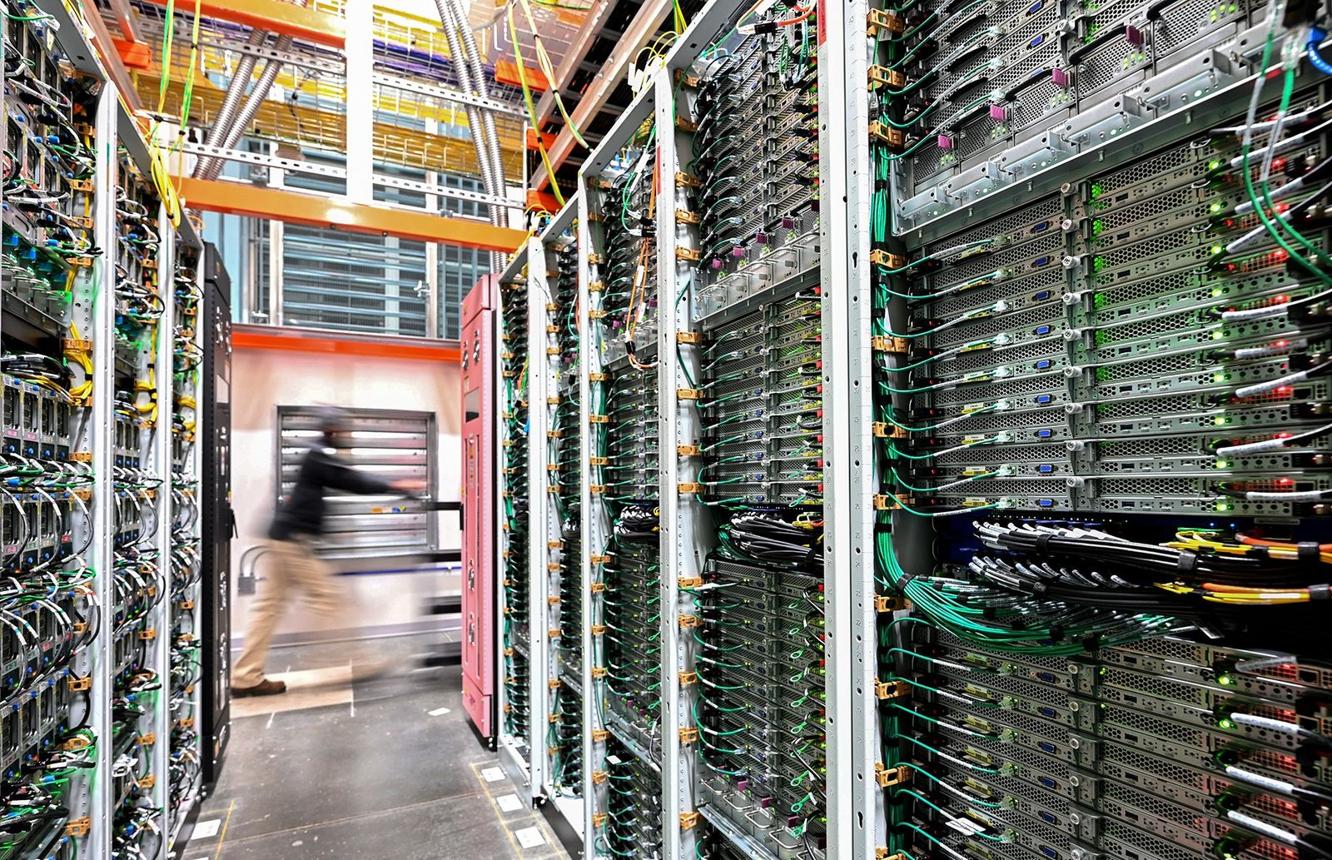
“Vodacom is pursuing a regional computing infrastructure strategy to support its transition towards an AI-first organisation, combining artificial intelligence applications with investments in specialised GPU computing capacity in Egypt, Kenya and South Africa. The strategy highlights the growing importance of cloud computing, data sovereignty, infrastructure costs and locally accessible processing power as African businesses seek to develop and deploy more advanced digital services.”
Vodacom’s AI Computing Strategy Signals a New Phase for South Africa’s Digital Infrastructure
Introduction: Computing moves to the centre of telecommunications
South Africa’s computing industry is entering a period in which digital infrastructure is becoming increasingly important to business competitiveness, telecommunications services and artificial intelligence development. On 19 October 2026, renewed attention focused on Vodacom’s plans to strengthen its regional data-centre capabilities as it works towards becoming an AI-first organisation.
The strategy, outlined by Vodacom Group chief technology officer Dejan Kastelic in reporting published by Business Day on 18 October and covered by WE NEWS on 19 October, reflects a wider shift in how telecommunications companies view computing resources. Rather than concentrating exclusively on mobile connectivity, operators are increasingly considering how servers, specialised processors, cloud platforms and AI services can become important parts of their business models.
For South Africa, the development matters because reliable computing infrastructure can support financial services, online commerce, healthcare technology, education, industrial automation and government services. However, realising these opportunities requires investment, technical skills, reliable electricity, cybersecurity and careful management of operating costs.
Vodacom’s plans therefore provide a useful indication of how a major African telecommunications group is approaching the next stage of digital transformation.
The transition towards an AI-first organisation
Artificial intelligence is becoming relevant to a growing range of everyday business activities. Telecommunications operators, in particular, manage extensive networks, large volumes of operational information and complex infrastructure that must function continuously.
According to Business Day, Vodacom intends to use AI to improve internal operations, including network optimisation and power management, while developing services for enterprise customers. Kastelic has emphasised that becoming an AI-first organisation involves changes to people, processes and tools rather than simply introducing new software.
Network optimisation is one potential application. Telecommunications networks must respond to changing demand as customers make calls, stream videos, browse websites and use mobile applications. AI-assisted analytical systems can help operators identify usage patterns, anticipate congestion and make more informed decisions about allocating network resources.
Power management is another important area. Network equipment and data centres consume electricity, meaning that better forecasting and equipment management could help operators reduce unnecessary consumption while maintaining service quality.
These potential benefits depend on implementation. AI systems must be evaluated against measurable operational outcomes, and automated decisions must be monitored to prevent errors or unexpected service disruptions.
Furthermore, introducing AI throughout an organisation requires employee training, suitable data systems and clear accountability. Companies must determine which activities benefit from automation and which still require human judgement.
Vodacom’s approach illustrates how computing technology is moving beyond experimental projects towards a more integrated role in telecommunications operations.
Why GPUs matter to modern computing
A central element of the strategy is the development of computing capacity using graphics processing units, commonly known as GPUs.
GPUs were originally associated with graphics rendering, but their ability to perform many calculations simultaneously has made them important for modern AI workloads. Training large AI models, processing complex data and operating certain machine-learning applications can require substantial parallel computing power.
Traditional central processing units, or CPUs, remain essential for general-purpose computing. However, GPUs can accelerate particular workloads that involve large numbers of similar mathematical operations.
As a result, organisations developing AI services must decide where to obtain the computing resources needed to operate their applications.
They can rent capacity from public cloud providers, use specialised data-centre operators, establish their own computing facilities or combine several approaches.
Vodacom is considering how its own GPU capabilities can complement cloud services and support its longer-term technology strategy. The company has also engaged with Nvidia and other partners as it plans its infrastructure approach.
This does not mean that every business needs to purchase expensive GPU hardware. For many organisations, renting computing capacity is more practical because it reduces upfront investment and provides access to specialised equipment without requiring the company to operate its own data centre.
For larger organisations with predictable workloads, however, owning some computing resources may offer advantages in cost management, control and operational flexibility.
The appropriate choice depends on workload size, utilisation, security requirements and the total cost of ownership.
Egypt, Kenya and South Africa form part of the regional plan
Vodacom’s reported strategy extends beyond a single national market. According to Business Day, the group plans to develop GPU computing capabilities across Egypt, Kenya and South Africa, with experience gained in these markets informing potential deployments elsewhere in its operating footprint.
Egypt is an important part of the initial infrastructure programme. Through Vodafone Business, the group has begun developing a large data-centre facility with Elsewedy Electric and Cassava Technologies under the Africa Data Centres Egypt initiative.
The first phase of that project is expected to attract approximately US$200 million in foreign direct investment, while total investment could reach US$1 billion when the facility reaches full capacity, according to the published report. These are reported project expectations, not confirmation that the entire amount has already been spent.
The planned facility is intended to accommodate computing capacity for internal operations as well as external customers.
Kenya is expected to become another node in the strategy, followed by South Africa. The regional model could allow the company to gain operational experience, understand customer demand and adapt its infrastructure to local market conditions.
Nevertheless, each country’s requirements differ. Electricity availability, connectivity, regulatory frameworks, business demand and the availability of skilled workers all influence where computing infrastructure can be developed successfully.
A regional strategy can create opportunities for cooperation, but it also requires careful coordination between facilities, cloud platforms, network systems and security policies.
What the strategy means for South Africa
South Africa already has an established telecommunications and data-centre ecosystem. Vodacom told Business Day that it operates 12 data centres in the country, providing an existing infrastructure base for its future computing ambitions.
The proposed expansion of GPU capabilities could help the company build on these facilities rather than treating AI computing as a completely separate business.
For South African enterprises, the availability of specialised computing resources could eventually provide additional options for running AI applications, analysing business data and developing digital products.
Financial institutions, retailers, manufacturers and logistics companies are among the organisations that may benefit from improved access to computing services. Potential applications include fraud detection, inventory forecasting, customer-service automation and predictive maintenance.
These are possible industry applications rather than confirmed outcomes of Vodacom’s specific investment.
Local infrastructure may also help organisations address latency, the delay between sending a request and receiving a response. Processing workloads closer to users can be valuable for applications that need rapid responses, although actual performance depends on network design, software architecture and the location of users and data.
Another consideration is data governance. Some organisations have requirements governing where information is stored, how it is processed and which parties can access it.
Infrastructure located within a particular jurisdiction can provide additional options for meeting such requirements. However, the physical location of a server alone does not guarantee data sovereignty; contractual arrangements, ownership, access controls and applicable laws also matter.
The cloud-versus-owned-infrastructure decision
One of the most important questions facing Vodacom and other large enterprises is whether to build computing capacity or continue relying primarily on third-party cloud services.
Public cloud platforms offer scalability and managed services. Businesses can increase or decrease their computing consumption according to demand without purchasing all the underlying hardware.
This can be particularly attractive for companies testing new products, running irregular workloads or lacking specialist infrastructure teams.
The disadvantage is that ongoing costs can become significant when computing demand is sustained. AI workloads may also involve expenses associated with data transfer, storage, networking and software services.
Building dedicated infrastructure offers a different set of advantages and challenges. It may provide greater control over hardware, scheduling, security configurations and certain long-term costs.
However, purchasing GPUs is only one part of the investment. Organisations must also provide power, cooling, network connectivity, physical security, maintenance and qualified technical personnel.
Hardware can become outdated, while demand may change faster than anticipated. A facility that is poorly utilised can therefore become an expensive asset.
Vodacom’s reported intention to begin with relatively limited GPU deployment for internal use reflects the importance of developing operational experience before committing to a much larger installation.
A gradual approach can help the company understand real workloads, estimate utilisation and assess whether expanding into commercial computing services is financially justified.
Competition and opportunities across the telecommunications sector
Vodacom is not the only telecommunications business exploring opportunities in advanced computing.
South Africa’s wider digital infrastructure market includes established data-centre operators, cloud providers and telecommunications companies seeking to extend their services beyond connectivity.
Business Day also highlighted Telkom’s potential to repurpose existing digital infrastructure for edge data centres, which place computing resources closer to customers and connected devices. The report noted investment by MTN and its partners in alternative infrastructure technologies as another indication of changing industry priorities.
This competitive environment could encourage companies to develop new services, improve infrastructure efficiency and create more options for businesses that need computing capacity.
For customers, competition may eventually lead to better service choices, although lower prices are not guaranteed. Providers must recover infrastructure costs and maintain reliable facilities, while customers must compare the complete cost and performance of competing offerings.
The market’s development will depend on how quickly enterprise demand grows and whether companies can turn investments into commercially sustainable services.
Electricity, cooling and environmental constraints
Computing infrastructure requires more than advanced processors. Data centres need dependable electricity, effective cooling and suitable physical facilities.
These requirements are especially important for AI systems because high-performance computing equipment can generate substantial heat and demand significant power.
South Africa’s electricity and water constraints therefore create practical challenges for infrastructure expansion. Additional facilities must be assessed against local grid capacity, backup-power requirements, cooling technology and environmental considerations.
The financial implications are equally important. Electricity and cooling contribute to operating expenses, while interruptions can affect service availability and customer confidence.
Operators may consider energy-efficient equipment, renewable-energy procurement, improved cooling systems and workload scheduling to manage these challenges. However, the effectiveness of any solution depends on the facility’s design, location and operating conditions.
For Vodacom, a phased investment approach could provide opportunities to evaluate these requirements before expanding GPU capacity. It does not remove the need for long-term planning or guarantee that future facilities will face no resource constraints.
South Africa’s ability to attract additional digital infrastructure investment will depend partly on whether operators can demonstrate that facilities are economically viable and environmentally responsible.
Cybersecurity and responsible AI deployment
As computing infrastructure becomes more important, cybersecurity must remain a central consideration.
AI systems depend on data, software platforms, networks and specialised hardware. Each component can introduce risks if access controls, system updates and monitoring procedures are inadequate.
A compromised computing environment could expose sensitive information, interrupt services or allow unauthorised access to business systems.
Companies operating their own infrastructure must therefore maintain security policies covering identity management, encryption, network segmentation, vulnerability management and incident response.
AI applications introduce further questions. Organisations need to consider whether training data is reliable, whether outputs are appropriate for their intended use and how automated decisions can be reviewed.
For telecommunications companies, these safeguards are particularly important because network reliability and customer trust are fundamental to their operations.
Commercial AI services must also offer customers clear information about service availability, data handling, performance limitations and responsibilities in the event of a security incident.
The growth of regional computing infrastructure could create opportunities to improve local expertise in these areas, provided companies invest in training and establish appropriate governance practices.
Skills development and the future of computing jobs
The expansion of AI infrastructure is likely to increase the importance of specialised technical skills.
Data-centre operations require expertise in networking, electrical systems, cooling, hardware maintenance and information security. GPU computing adds demand for professionals who understand parallel processing, machine learning, model deployment and performance optimisation.
South African universities, technical colleges and private training providers could play a role in preparing workers for these responsibilities.
Businesses can also develop internal training programmes to help existing employees adapt to new technologies. Telecommunications engineers, software developers, network administrators and data analysts may all need opportunities to deepen their understanding of AI-enabled systems.
However, investment in infrastructure does not automatically create widespread employment or ensure that local workers obtain the highest-skilled positions. The benefits will depend on procurement decisions, training opportunities and the development of domestic technology capabilities.
A stronger computing ecosystem could support local software companies and entrepreneurs, particularly if affordable access to infrastructure allows smaller firms to test and deploy products without building their own facilities.
Conclusion: Turning computing investment into practical value
Vodacom’s regional data-centre strategy reflects a broader change in the telecommunications industry as computing resources become increasingly important to AI development, business operations and digital services.
The group’s plans for GPU infrastructure in Egypt, Kenya and South Africa demonstrate an effort to balance the flexibility of public cloud platforms with the potential benefits of dedicated computing capacity. Its existing South African data centres provide an established foundation, although the scale and timing of future GPU deployments remain important considerations.
For South Africa, the opportunity extends beyond a single company’s technology strategy. Greater access to computing resources could support enterprise innovation, improve selected business processes and strengthen the country’s position in Africa’s digital economy.
Realising those benefits will require more than hardware investment. Reliable power, sustainable cooling, cybersecurity, skilled workers, sound data governance and commercially realistic business models will all influence the outcome.
The key measure of success will ultimately be whether computing investments deliver useful services at sustainable costs while creating opportunities for local businesses and technical talent.
As AI becomes more widely integrated into business operations, South Africa’s computing sector will need to demonstrate that advanced infrastructure can produce measurable economic value rather than simply follow a global technology trend.



