




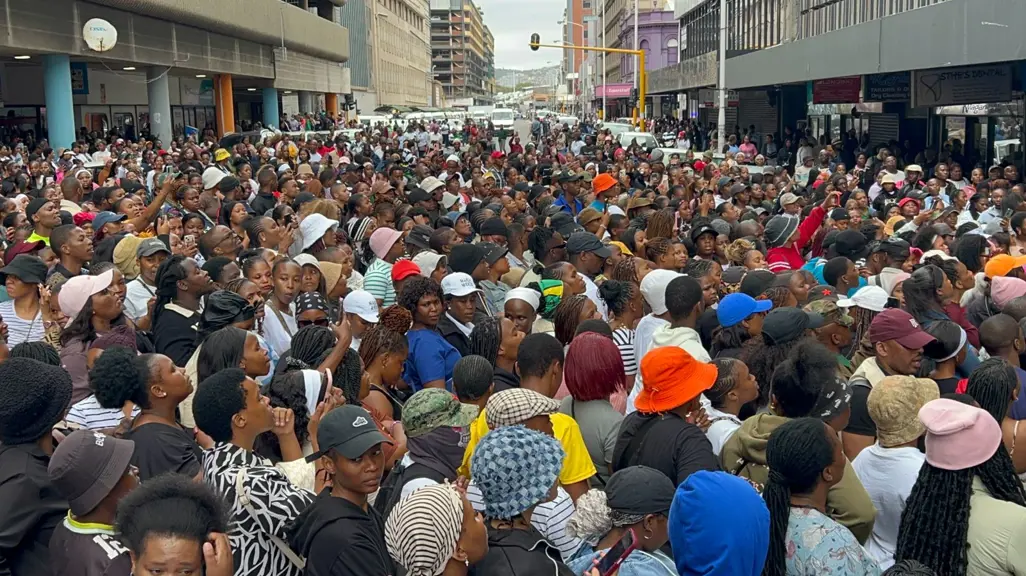
“Refugees and activists in Durban are bracing for possible violence as anti-immigrant groups demand undocumented migrants leave South Africa by September 30. Bishop Raphael Bahebwa, a Congolese refugee turned activist, is in hiding after receiving death threats for speaking out on migrant rights.”
Durban, South Africa, is once again at the center of a political and humanitarian storm. As the September 30 deadline set by anti-immigrant movements approaches, refugees and activists fear a resurgence of xenophobic violence. This crisis is not only a humanitarian emergency but also a political flashpoint ahead of South Africa’s November local elections.
Background: Rising Xenophobia
South Africa has long struggled with xenophobic tensions, particularly in urban centers like Durban and Johannesburg. Migrants from the Democratic Republic of Congo (DRC), Burundi, Uganda, Mozambique, and Tanzania have often faced hostility, with sporadic outbreaks of violence over the past two decades. Activists argue that economic hardship, unemployment, and political opportunism have fueled anti-immigrant sentiment.
The latest wave of hostility is driven by a movement called March and March, which has organized protests demanding undocumented migrants leave the country. Their ultimatum—September 30—has created widespread panic among migrant communities.
Activism Under Threat
At the heart of this crisis is Bishop Raphael Bahebwa, a refugee from the DRC who has lived in South Africa for 26 years. Bahebwa has become a vocal advocate for migrant rights, often speaking at rallies and engaging with civil society organizations. His activism, however, has made him a target. “I am in hiding now because they say they are going to kill me for speaking about the rights of foreigners,” Bahebwa told Al Jazeera.
Bahebwa’s plight underscores the dangers faced by activists who challenge xenophobia. Civil society groups have rallied around him, but the threats highlight the shrinking space for activism in South Africa’s polarized political climate.
Refugee Struggles in Durban
For months, hundreds of refugees camped outside the Durban Refugee Reception Centre on Che Guevara Road. Families slept on pavements, exposed to the elements, relying on volunteers for food and medicine. Conditions were dire: one man reportedly died of tuberculosis while living at the camp.
These scenes illustrate the failure of state institutions to provide adequate protection. Refugees sought safety at the Department of Home Affairs, but instead found themselves vulnerable to both the weather and hostile locals.
Political Context
South Africa’s local government elections are scheduled for November 4, 2026. Migration has become a central campaign issue, with opposition parties and grassroots movements exploiting anti-immigrant sentiment. Analysts warn that politicians may use xenophobia as a populist tool to gain votes, further endangering migrant communities.
President Cyril Ramaphosa recently reaffirmed constitutional values of equality and non-racialism, condemning xenophobia and gender-based violence. His remarks, delivered after Heritage Day, were a call for unity. However, activists argue that words must be matched with concrete action to protect vulnerable communities.
Civil Society Response
Civil society organizations, churches, and NGOs have mobilized to support refugees. Food drives, legal aid, and advocacy campaigns have been launched. Activists emphasize that South Africa’s liberation struggle was supported by neighboring African nations, making xenophobia a betrayal of solidarity.
Grassroots activism has also emerged, with local South Africans joining marches against xenophobia. Yet these voices are often drowned out by louder, more aggressive anti-immigrant protests.
Human Rights Dimension
The crisis has drawn international attention. Human rights groups warn that South Africa risks violating international refugee conventions if it fails to protect migrants. The United Nations High Commissioner for Refugees (UNHCR) has expressed concern, urging the government to uphold its obligations.
Activists argue that xenophobia is not only a social issue but a human rights violation. They call for stronger laws, better enforcement, and public education campaigns to combat intolerance.
Conclusion
As September 30 approaches, Durban’s refugees face an uncertain future. Activists like Bishop Bahebwa embody the struggle for dignity and rights, but their safety is precarious. The coming weeks will test South Africa’s commitment to constitutional values and human rights.
The activism surrounding this crisis highlights the power of civil society to challenge injustice, but also the risks activists face in hostile environments. Whether South Africa can rise above xenophobia and reaffirm its democratic ideals remains to be seen.



