




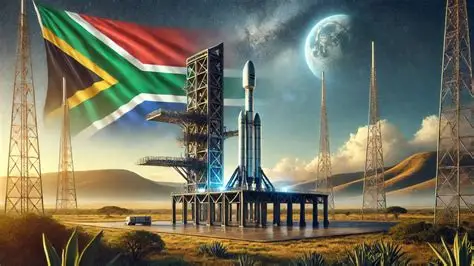
“South Africa has launched the Rooibos in Space programme, sending indigenous Rooibos seeds to the International Space Station to study their resilience in microgravity and radiation. The initiative, led by the South African Rooibos Council with SANSA and MaxIQ Space, engages learners in hands-on STEM research while exploring sustainable agriculture for future space missions.”
On July 16, 2026, South Africa unveiled a pioneering scientific initiative that bridges agriculture and space exploration: the Rooibos in Space programme. This project will send Rooibos seeds to the International Space Station (ISS) in October, marking the country’s first experiment in space-based plant biology. The initiative is a collaboration between the South African Rooibos Council (SARC), MaxIQ Space, and the South African National Space Agency (SANSA), with strong participation from schools and farms in the Cederberg region.
Background and Significance
Rooibos, a plant native to South Africa, is globally recognized for its health benefits and cultural importance. By sending Rooibos seeds into orbit, scientists aim to study how microgravity and cosmic radiation affect germination, growth, and yield. This research aligns with international efforts to develop sustainable agricultural systems for long-duration space missions, such as NASA’s Artemis programme.
Plant biology in space has become a critical field of study. Experiments with lettuce, peas, and soybeans aboard the ISS have shown that crops can adapt to altered gravity, providing insights into food production and life-support systems for astronauts. Rooibos now joins this growing body of research, offering unique genetic traits that may prove valuable in extraterrestrial agriculture.
Educational and Community Impact
The programme is not only a scientific experiment but also a major educational initiative. Learners from seven schools in the Cederberg region—the birthplace of Rooibos—will participate in comparative studies. Seeds exposed to space conditions will be planted alongside control seeds on Earth, allowing students to collect and analyze data on resilience and yield.
This hands-on involvement introduces young South Africans to cutting-edge STEM fields, fostering interest in space science, agriculture, and biotechnology. Parklands College in Cape Town will run a parallel experiment, ensuring broader participation and comparative datasets.
Scientific Goals
The experiment seeks to answer several key questions:
- How does microgravity affect Rooibos seed germination rates?
- What impact does space radiation have on plant resilience and yield?
- Can Rooibos contribute to future space-based food systems?
By addressing these questions, researchers hope to advance both space agriculture and Earth-based farming. Insights into stress tolerance and resilience could help improve crop yields in challenging environments, including drought-prone regions of South Africa.
Broader Context
Globally, space agencies are prioritizing plant research to support long-duration missions to the Moon and Mars. Self-sustaining life-support systems are essential for future exploration, and crops capable of producing food, oxygen, and psychological comfort are critical. Rooibos, with its unique properties, could play a role in these systems.
The project also highlights South Africa’s growing role in the international space economy. By integrating agriculture with space science, the country demonstrates innovation and leadership in multidisciplinary research.
Challenges and Opportunities
Conducting plant experiments in space presents challenges, including limited sample sizes, exposure to unpredictable radiation, and the need for precise control conditions. However, the potential rewards are immense. Successful cultivation of Rooibos in space could open new avenues for agricultural resilience, benefiting both astronauts and farmers on Earth.
Conclusion
The Rooibos in Space initiative represents a milestone for South Africa, combining cultural heritage with scientific innovation. It engages communities, inspires learners, and contributes to global research on sustainable agriculture in space. As Rooibos seeds journey to the ISS, they carry with them the hopes of a nation eager to explore new frontiers in science and education.



