




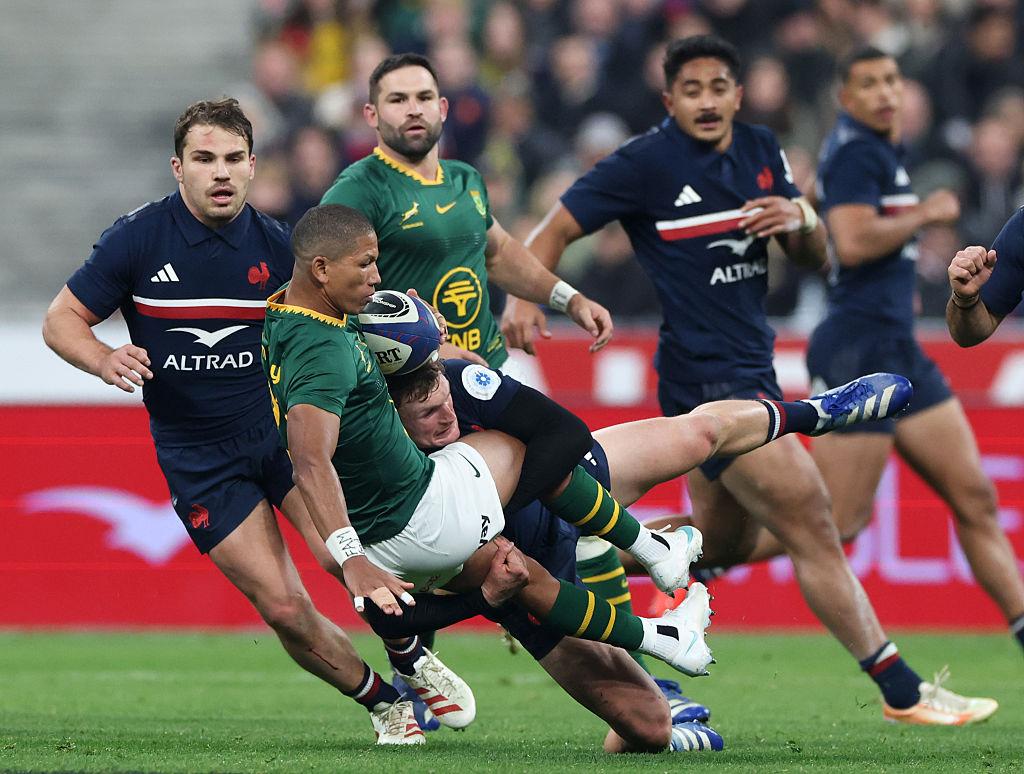
“Springbok assistant coach Mzwandile Stick has called on South Africa to rediscover its best rugby and defeat France in the Nations Championship final on 29 November 2026, following consecutive narrow defeats against France and Ireland. With seven changes to the starting team, Manie Libbok returning at flyhalf and Emmanuel Tshituka potentially making his Test debut, the Springboks are determined to restore national pride and finish the tournament with a trophy.”
Springboks face crucial test as Stick calls for national pride and redemption against France
South African rugby is approaching another important international moment as the Springboks prepare to face France in the inaugural Nations Championship final on Sunday, 29 November 2026. The upcoming encounter presents an opportunity for the world champions to recover from consecutive defeats, restore confidence among supporters and demonstrate why they remain one of the strongest national teams in international rugby.
Springbok assistant coach Mzwandile Stick has emphasised the importance of delivering a much-improved performance, explaining that rugby victories have a powerful emotional influence on South Africans. His comments highlight the responsibility carried by the national team, particularly during difficult periods when sporting success provides supporters with something positive to celebrate.
The Springboks reached the final despite losing 21–19 to France in Paris and subsequently suffering a 20–17 defeat against Ireland in Dublin. Although these results exposed weaknesses in the team’s performances, South Africa collected sufficient points during the tournament to qualify for the championship decider against France at Twickenham in London.
1. Stick challenges the Springboks to rediscover their winning standards
Stick believes that reaching the final is an achievement, but qualification alone cannot satisfy the expectations associated with the Springbok jersey.
South Africa has established a reputation for competing aggressively, maintaining physical dominance and performing under pressure in major international tournaments. Consequently, recent performances have raised questions about whether the team is consistently delivering the standards expected from the world champions.
Speaking during the team’s media engagements, Stick acknowledged that the Springboks had not performed at their best during their recent matches. He stressed that the players and coaching staff must identify practical solutions rather than become distracted by disappointment.
His message is particularly important because South Africa has another opportunity to compete for international silverware. Instead of allowing consecutive defeats to undermine confidence, the team must use those experiences to identify weaknesses and improve its preparation.
The assistant coach also recognised that winning rugby matches means more than securing points on a scoreboard. For millions of South Africans, the Springboks represent national unity, sporting ambition and an opportunity to celebrate together.
He explained that positive rugby results can lift people’s spirits during challenging circumstances. This connection between the national team and the public makes Sunday’s final especially significant.
2. Consecutive defeats increase pressure on South Africa
The Springboks enter the final following two disappointing results that exposed several areas requiring attention.
Their 21–19 defeat against France in Paris was particularly frustrating because South Africa remained competitive throughout the encounter. However, the narrow margin demonstrated how small mistakes and missed opportunities can determine the outcome of elite international matches.
The subsequent 20–17 defeat against Ireland in Dublin created further pressure. South Africa struggled to convert important attacking opportunities into points and allowed Ireland to establish an advantage.
The Springboks showed determination in attempting to recover during the second half, but Ireland successfully protected its lead.
These results have increased the importance of Sunday’s rematch. Another defeat would mean three consecutive losses, an outcome that would represent a disappointing conclusion to the team’s tournament campaign.
However, the championship final also gives South Africa an opportunity to demonstrate resilience. Successful international teams are judged not only by their victories but also by their ability to respond when performances fall below expectations.
3. Seven changes signal a fresh approach for the final
One of the most significant developments ahead of the final is the Springboks’ decision to make seven changes to their starting lineup.
The selection adjustments suggest that the coaching staff wants to introduce fresh energy, strengthen particular areas and improve the team’s attacking effectiveness.
Manie Libbok has been selected at flyhalf, while Sacha Feinberg-Mngomezulu moves to fullback following Damian Willemse’s injury setback.
Cobus Reinach returns at scrumhalf, providing experience and attacking options around the breakdown.
The forward pack also receives considerable attention. Jan-Hendrik Wessels, Gerhard Steenekamp and Thomas du Toit will form the starting front row.
Salmaan Moerat joins Lood de Jager in the second row, while the back row remains unchanged.
Captain Siya Kolisi will continue leading the team alongside Pieter-Steph du Toit and Cameron Hanekom.
The changes reflect the coaching staff’s intention to maintain continuity in certain combinations while introducing new personnel where necessary.
Importantly, the team will still have experienced international players available from the bench.
Manie Libbok receives another opportunity to lead the attack
Libbok’s return to the starting flyhalf position is among the most closely watched selection decisions.
The flyhalf position is particularly important because the player wearing the number 10 jersey influences attacking organisation, territorial strategy, communication and decision-making.
South Africa needs a more consistent attacking performance after struggling to capitalise on opportunities during the matches against France and Ireland.
Libbok offers a different attacking approach, with his distribution, kicking ability and willingness to challenge defensive structures.
His selection provides an opportunity to improve the connection between the forwards and backs.
However, the challenge will be maintaining composure under pressure. France are likely to apply defensive pressure and attempt to disrupt South Africa’s attacking rhythm.
Libbok will therefore need support from Reinach, the midfield and the forward pack.
Feinberg-Mngomezulu’s movement to fullback also introduces an interesting tactical dimension. His ability to contribute to attacking movements from deeper positions could give South Africa additional options.
The success of this combination will depend on communication, accurate passing and intelligent decision-making.
5. Emmanuel Tshituka could make his Springbok debut
Another important development is the inclusion of Emmanuel Tshituka among the replacements.
The loose forward is in line to make his Springbok Test debut if he takes the field against France.
His potential introduction represents another important milestone in his rugby career and an opportunity to contribute to South Africa’s international ambitions.
Tshituka, whose brother Vincent is also a Springbok, has attracted attention through his progress in professional rugby.
A debut in a major international final would be a significant experience. However, the coaching staff will need to decide when his qualities can contribute most effectively.
South Africa has selected an experienced replacement group that includes Malcolm Marx, Ox Nché, Wilco Louw and Eben Etzebeth.
This combination provides considerable experience in the forward positions and gives the coaching staff different options depending on the match situation.
Tshituka and Paul de Villiers also provide additional loose-forward possibilities.
For Tshituka, the immediate priority will be preparation, concentration and readiness to perform if called upon.
6. France remain a dangerous opponent
South Africa cannot approach the final expecting an easy victory.
France have already demonstrated their ability to challenge the Springboks, having secured a 21–19 victory in Paris earlier in the tournament.
The French national team combines physical strength, attacking creativity and considerable individual talent.
Their ability to move the ball quickly and exploit defensive gaps makes them dangerous opponents.
The Springboks will therefore need to maintain defensive organisation throughout the match.
France’s attacking players can punish mistakes, particularly when opponents lose defensive structure or fail to protect the breakdown.
South Africa must also improve its territorial kicking, contestable-ball work and discipline.
The previous meeting demonstrated that the two teams are closely matched. Consequently, Sunday’s final could again be decided by small differences in execution.
The Springboks will need to apply pressure without conceding unnecessary penalties.
7. Forward dominance could determine the championship
South Africa traditionally places considerable importance on forward strength, particularly in scrums, lineouts, mauls and physical contests around the breakdown.
The new starting front row will have an important responsibility in establishing a competitive platform.
Steenekamp, Wessels and Thomas du Toit will need to work effectively together against a French forward pack that possesses considerable international experience.
The replacement front row offers additional strength through Marx, Nché and Louw.
Eben Etzebeth’s experience could also become important during the closing stages.
The Springboks will need to balance physical aggression with technical accuracy. Dominating individual collisions is valuable, but it must translate into territorial control and scoring opportunities.
Lineout execution will also be important because possession provides the foundation for attacking movements.
If South Africa establishes forward dominance, its backline could receive better opportunities to attack.
8. Siya Kolisi’s leadership remains central
Captain Siya Kolisi continues to play an important role in maintaining the team’s unity and competitive mentality.
International finals require more than technical ability. Players must remain mentally prepared, communicate effectively and respond positively when circumstances become difficult.
Kolisi’s experience in major international competitions makes him an important figure in this environment.
His leadership will be particularly valuable if France establish an early advantage or put South Africa under pressure.
The Springboks must avoid allowing frustration to influence their decision-making.
Instead, the players should remain focused on their tactical responsibilities and maintain belief in their ability to recover.
9. Rassie Erasmus’s absence adds another dimension
The final also takes place against the background of head coach Rassie Erasmus’s six-match suspension imposed by World Rugby following comments about match officials.
Erasmus remains a major influence on the team’s preparations, but his suspension prevents him from having matchday involvement in international fixtures covered by the sanction.
This situation places additional responsibility on the assistant coaching staff.
Stick and the other coaches must ensure that tactical instructions, communication and match management remain clear.
The controversy has also highlighted the importance of maintaining professional relationships with match officials.
For South Africa, the priority must now be the rugby itself.
The players cannot allow disciplinary developments and public debate to overshadow their opportunity to compete for the championship.
10. A victory could provide a major boost for South African rugby
The Nations Championship final represents an opportunity for South Africa to conclude its campaign with another international trophy.
Winning would also provide an important psychological boost following the disappointing results against France and Ireland.
For supporters, a victory would demonstrate that the team can respond positively to adversity.
For the players, it would provide evidence that the lessons learned during difficult matches can translate into improved performances.
For South African rugby more broadly, success would strengthen confidence in the national team’s competitive depth and its ability to develop players capable of performing at the highest level.
Nevertheless, the Springboks must approach the match with discipline and realism.
France will be equally determined to win the inaugural competition, and South Africa cannot rely solely on reputation or previous achievements.
The team must execute its plans effectively from the opening whistle.
Conclusion: The Springboks have an opportunity to turn disappointment into success
The message from Mzwandile Stick is clear: South Africa must rediscover its standards and give supporters a performance they can celebrate.
The upcoming encounter against France is more than another international fixture. It is an opportunity to recover confidence, demonstrate resilience and compete for a new international championship.
The seven changes, Libbok’s return, Tshituka’s potential debut and the continued leadership of Kolisi provide important talking points ahead of the final.
Ultimately, the result will depend on execution, discipline, teamwork and the ability to manage pressure.
The Springboks have already demonstrated that they can compete with France. Their challenge now is to produce a more complete performance when the stakes are highest.
As Stick has emphasised, rugby has the ability to unite communities and lift the spirits of South Africans. A championship victory would provide the national team with an opportunity to turn that message into a memorable sporting achievement.
The eyes of South African rugby will be on Twickenham on 29 November as the Springboks pursue redemption and the Nations Championship trophy.



