




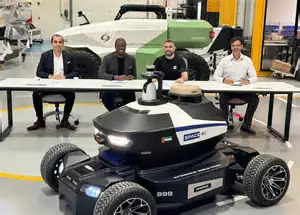
“S4 Integration hosted its Annual Technology Showcase in Port Elizabeth and Pretoria, unveiling advanced robotics and automation systems designed to boost South Africa’s industrial competitiveness. The event also highlighted partnerships with Nelson Mandela University to strengthen skills development and prepare the workforce for a robotics-driven future.”
On 21 August 2026, South Africa’s robotics sector took center stage at the S4 Integration Annual Technology Showcase, a landmark event that brought together industry leaders, academics, and policymakers. The showcase underscored the country’s growing commitment to leveraging robotics and automation to drive industrial innovation, enhance productivity, and prepare the workforce for the challenges of the Fourth Industrial Revolution.
Robotics in South African Industry
- S4 Integration, a leader in automation solutions, demonstrated how robotics can streamline manufacturing processes, reduce costs, and improve efficiency.
- Robotics applications showcased included automated assembly lines, robotic arms for precision manufacturing, and AI-driven quality control systems.
- These technologies are particularly relevant for South Africa’s automotive, mining, and industrial sectors, which face global competition and rising operational costs.
Skills Development Collaboration
- A key highlight was the partnership with Nelson Mandela University, focusing on skills development and training programs.
- Students and young professionals were given hands-on exposure to robotics systems, ensuring that South Africa builds a pipeline of skilled talent.
- This collaboration addresses the skills gap in robotics and automation, preparing graduates for high-demand roles in engineering and industrial technology.
Economic Impact
- Robotics adoption is expected to boost South Africa’s manufacturing output by 15–20% over the next five years, according to industry analysts.
- By reducing reliance on manual labor for repetitive tasks, companies can reallocate human talent to higher-value roles, fostering innovation and entrepreneurship.
- The showcase highlighted how robotics can help South Africa compete globally, particularly against Asian manufacturing hubs.
Case Studies from the Showcase
- DC Auto-Motion demonstrated robotic systems for automotive assembly, reducing error rates by 30%.
- PTSA Robotics presented AI-driven inspection drones for industrial plants, capable of detecting faults in real time.
- Okuhle Sosibo, a robotics engineer, emphasized how these innovations can reduce downtime and increase safety in hazardous environments.
Challenges and Opportunities
- Challenges: High upfront costs, limited local manufacturing of robotics hardware, and the need for continuous training.
- Opportunities: Export potential of South African-developed robotics solutions, integration with renewable energy systems, and expansion into healthcare robotics.
Policy and Government Support
- The South African government has pledged increased funding for robotics research and development, aligning with its broader Industrial Policy Action Plan (IPAP).
- Incentives for companies adopting robotics include tax breaks and grants for skills training.
- Policymakers emphasized that robotics adoption must be inclusive, ensuring that workers are retrained rather than displaced.
Global Context
- Globally, robotics adoption is accelerating, with countries like China and Germany leading the charge.
- South Africa’s showcase demonstrates its intent to position itself as a regional leader in robotics innovation, particularly within Africa.
- By fostering partnerships between academia and industry, South Africa aims to replicate successful models seen in Europe and Asia.
Future Outlook
- Robotics in South Africa is projected to grow into a multi-billion rand industry by 2030.
- The showcase signals a turning point, where robotics is no longer seen as futuristic but as an immediate driver of industrial competitiveness.
- With continued investment, South Africa could become a hub for robotics research, development, and deployment across Africa.



