




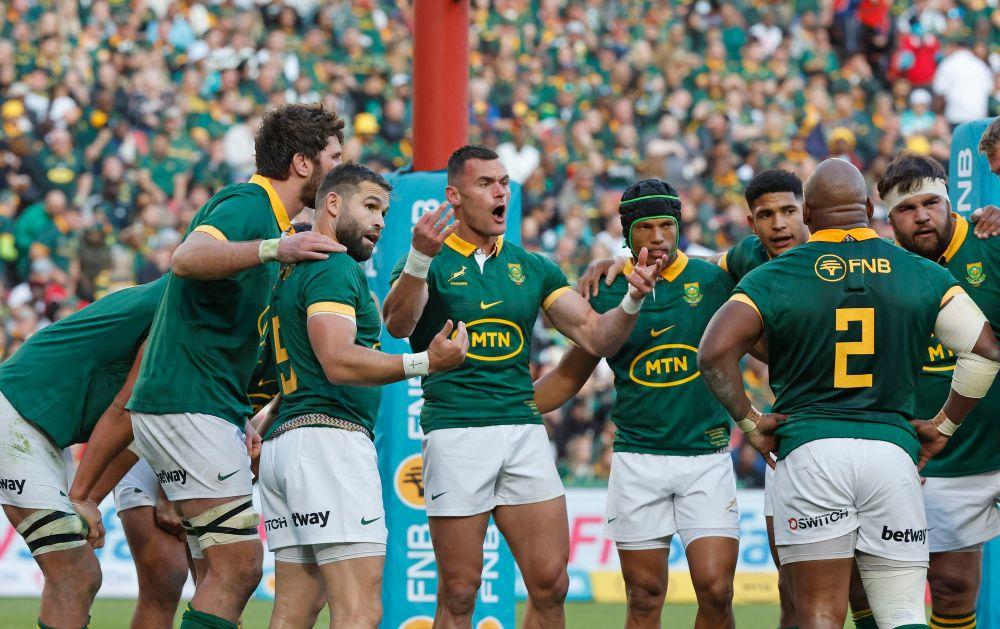
“SA Rugby has announced its support for the International Concussion in Sport Group’s Athlete Brain Health Symposium, scheduled for Cape Town on 25 and 26 November 2026. The development puts player welfare, concussion awareness and the long-term health of athletes in the spotlight as South African rugby continues to compete at elite international and domestic levels.”
SA Rugby Backs Athlete Brain Health Symposium in Cape Town as Player Welfare Gains Attention
A significant development for South African rugby
South African rugby has taken another step towards placing athlete welfare at the centre of discussions about the future of the game. The South African Rugby Union (SA Rugby) has expressed support for the International Concussion in Sport Group’s Athlete Brain Health Symposium, which is scheduled to take place in Cape Town on 25 and 26 November 2026.
The announcement, reported on 14 October, highlights an important subject for a sport built around physical contact, speed, strength and tactical pressure. Although rugby has traditionally celebrated toughness and the ability to withstand demanding collisions, the modern game increasingly requires players, coaches, medical professionals and administrators to consider the possible long-term consequences of repeated head impacts.
The symposium provides a timely opportunity to examine athlete brain health, concussion awareness and the responsibilities of sporting organisations. For South Africa, a country with a strong rugby culture and a substantial professional and amateur playing community, these discussions could have implications well beyond the Springboks.
The event should not be confused with a new concussion ruling or a confirmed change to South African rugby regulations. Rather, its significance lies in the attention it brings to a continuing challenge: protecting athletes while preserving the physical intensity and competitive character of rugby.
Why brain health matters in rugby
Rugby is a high-contact sport in which players regularly tackle, carry the ball into contact, contest possession and participate in scrums, rucks and mauls. These activities demand considerable physical preparation and create situations in which accidental head contact can occur.
A concussion is a traumatic brain injury that can follow a blow to the head or body that causes the brain to move rapidly inside the skull. Symptoms may include headache, dizziness, confusion, balance difficulties, sensitivity to light, nausea and problems concentrating. Symptoms do not always appear immediately, and a player may not recognise or report them during a match.
This makes awareness especially important. Players can feel pressure to remain on the field because their team needs them, because a match is important or because they fear losing their place in the squad. In community rugby, limited medical resources can make the recognition and management of suspected concussion more challenging.
Consequently, brain health cannot be treated as an issue that belongs exclusively to medical staff. Coaches, referees, teammates, parents, schools, clubs and governing bodies all have a role in creating an environment in which players can report symptoms without fear of punishment or embarrassment.
Why South Africa is an important setting
Rugby occupies a distinctive place in South African sporting life. The Springboks attract international attention, while provincial franchises, schools, universities, amateur clubs and community competitions provide opportunities for players to develop their abilities.
The country’s rugby system therefore includes athletes with very different levels of support. Professional players may have access to team doctors, physiotherapists, specialist assessments and structured recovery programmes. In contrast, smaller clubs and school teams may operate with limited budgets and fewer medical personnel.
This difference matters because safety guidance is only effective when it can be applied consistently. A policy understood by a professional team must also be translated into practical procedures that a school coach, volunteer referee or community club can follow.
Cape Town’s role as the venue for the planned symposium creates an opportunity to bring attention to these different needs. The event’s international focus also provides a setting for discussions across sporting disciplines, where medical researchers and sports organisations can compare approaches to protecting athletes.
However, the announcement alone does not establish that particular new measures will be introduced in South Africa. Any assessment of its practical impact will depend on the discussions, recommendations and subsequent actions that emerge from the event.
The challenge of recognising concussion
One of the most important issues in rugby safety is recognising when a player may have suffered a concussion. Some injuries are obvious, but others are less visible. A player might remain standing, continue speaking and appear physically capable of playing while experiencing symptoms that require medical assessment.
For this reason, suspected concussion should never be dismissed simply because a player wants to continue. Decisions about returning to play should follow appropriate medical procedures rather than being based on a player’s determination, a coach’s preference or the importance of the match.
Education can help participants recognise warning signs and understand why reporting symptoms is essential. Players need to know that hiding a possible head injury can put their health at risk. Coaches must understand that substituting an important player may be necessary even when the competitive consequences are significant.
Referees also contribute by enforcing the laws of the game and responding appropriately to dangerous play. Nevertheless, referees cannot independently diagnose concussion. Medical professionals must assess suspected injuries and guide decisions about treatment and recovery.
Clear communication between these groups is therefore essential. The objective is to ensure that concerns are recognised early, appropriate assessments are obtained and players are not encouraged to return before it is safe.
Prevention must accompany medical care
Concussion management involves more than responding after an injury has occurred. Prevention also requires attention to tackling technique, physical conditioning, coaching methods, officiating and the way teams prepare for contact.
Players need to learn safe and effective techniques appropriate to their positions and levels of experience. Coaches should reinforce correct body positioning, responsible tackling and respect for the laws designed to protect participants. Training sessions should provide opportunities to develop technical skills without unnecessary exposure to avoidable impacts.
At the same time, rugby authorities must regularly review available evidence and determine whether existing laws, education programmes and safety procedures are achieving their intended purposes.
No single intervention can eliminate all head injuries from a contact sport. Nevertheless, consistent coaching, appropriate officiating, informed medical care and a willingness to improve procedures can help reduce avoidable risks.
Equipment also requires careful consideration. Protective headgear may help with certain injuries, such as cuts and abrasions, but it should not be presented as a guarantee against concussion. Players must understand that wearing protective equipment does not remove the need for sound technique, responsible decisions and prompt medical attention.
Recovery and the return-to-play process
When concussion is suspected, the immediate priority is the player’s safety. The individual should be removed from participation when appropriate and assessed by a qualified healthcare professional. Emergency warning signs require urgent medical attention.
Recovery varies between individuals. Symptoms, medical history, age and the nature of the injury can influence the time needed before normal activities and sporting participation can resume. A player should not use the apparent recovery of a teammate as a reason to ignore their own symptoms.
Returning to rugby should involve a medically guided, gradual process consistent with applicable clinical guidance and sporting protocols. Increasing activity too quickly can be inappropriate when symptoms remain or when medical clearance has not been obtained.
For young players, these responsibilities are particularly important. Children and adolescents are still developing, and decisions about returning to school, training and competition should take their individual circumstances into account.
Clubs can support recovery by communicating with players and families, respecting medical advice and avoiding pressure to meet an arbitrary return date. This approach protects the individual and reinforces a culture in which health is treated as a fundamental part of sporting success.
The responsibilities of rugby administrators
Governing bodies have a responsibility to turn general concern about brain health into practical standards. These can include clear concussion procedures, coach education, medical support requirements, reporting systems and guidance for players at different levels of competition.
Implementation is often more difficult than announcing a policy. A club may understand the need for medical assessment but lack the resources to obtain timely support. A school may need training materials that explain symptoms in accessible language. Volunteer coaches may require guidance on what to do when a player reports dizziness after a collision.
National and provincial structures can help by providing consistent educational resources and establishing realistic procedures for clubs with different resources. Partnerships with healthcare institutions and researchers may also help improve understanding of injury patterns and the effectiveness of prevention measures.
The Cape Town symposium could contribute to this wider conversation by bringing relevant expertise into one setting. Its eventual value, however, should be assessed through concrete outcomes rather than the announcement alone.
Useful outcomes could include clearer educational guidance, stronger collaboration between sporting and medical institutions, improved awareness among coaches and players, or recommendations that organisations subsequently adopt. These are possible areas of impact, not confirmed commitments arising from the announcement.
The importance of research and evidence
Brain health discussions must be guided by reliable evidence. Public understanding of concussion can be influenced by personal stories, media reports and strongly expressed opinions, but effective policies require careful evaluation of medical research and clinical practice.
Researchers continue to investigate the effects of head impacts, recovery after concussion and the possible consequences of repeated exposure over time. These questions are complex, and findings must be interpreted carefully rather than reduced to unsupported conclusions about individual players or entire sporting populations.
Sports organisations should communicate what is known, acknowledge uncertainty where it exists and update their guidance as credible evidence develops. They must also distinguish between a confirmed diagnosis, a suspected injury and a possible long-term risk.
The symposium’s international character makes collaboration especially relevant. Different sports encounter different forms of physical contact, but they may share challenges involving injury recognition, athlete education, medical assessment and long-term follow-up.
Sharing knowledge can help organisations identify promising approaches while recognising that recommendations must be adapted to the circumstances of each sport and level of participation.
Protecting community and school rugby
The discussion should not end with professional rugby. South Africa’s future players are developed in schools, local clubs and community competitions, where early education can establish habits that continue throughout a sporting career.
Young athletes need to understand that reporting symptoms is responsible behaviour, not a sign of weakness. Parents should know what warning signs to look for, while coaches should have clear procedures for responding when an injury is suspected.
Schools and clubs can also make sure that emergency contacts, referral arrangements and basic injury-response procedures are understood before competition begins. Where resources are limited, partnerships with local healthcare providers may help organisations identify practical ways to improve support.
Importantly, education should be appropriate to the age and experience of the players. Technical medical information needs to be explained in language that young athletes can understand and use.
A safer environment benefits the whole rugby community. Players can participate with greater awareness, families can make better-informed decisions and coaches can focus on development without treating health concerns as obstacles to performance.
What the announcement means for the Springboks
The Springboks represent South African rugby internationally, but their influence extends into schools, clubs and communities. Their preparation, performances and public statements can shape how supporters understand the sport.
Attention to athlete brain health reinforces the idea that elite performance and player welfare should work together. Physical resilience remains important in international rugby, but resilience should not mean ignoring symptoms or treating avoidable injury as an unavoidable requirement of representing the country.
Professional teams can contribute through education, responsible medical decisions and consistent communication about player welfare. Their practices can also provide useful examples for other teams, provided that community organisations receive the resources and guidance needed to adapt those lessons.
The symposium announcement does not establish that the Springboks will adopt a particular new programme. Nevertheless, wider discussions about brain health are relevant to every level of the game, including the national team and the structures that develop future international players.
What happens next?
The next important milestone is the scheduled Athlete Brain Health Symposium in Cape Town on 25 and 26 November 2026. Attention will turn to the discussions held there, the evidence presented and any recommendations that emerge.
For journalists and rugby supporters, it will be important to distinguish between proposals, formal recommendations and measures that have actually been implemented. The same distinction applies to any future announcements by SA Rugby or other sporting organisations.
A symposium can create opportunities for collaboration, but lasting improvement requires continued work after the event. Education must reach players and coaches, medical procedures must be followed and safety policies must be reviewed as evidence develops.
South African rugby has an opportunity to use the discussion to reinforce a principle that should unite professional and community competitions: protecting players is part of protecting the future of the sport.
Conclusion
SA Rugby’s support for the International Concussion in Sport Group’s Athlete Brain Health Symposium places an important issue before South African rugby at a time when athlete welfare remains central to discussions about contact sports.
The planned Cape Town gathering offers a platform for examining concussion awareness, prevention, medical management and the long-term health of athletes. Its real significance will depend on how effectively knowledge and recommendations are translated into practical action.
For the Springboks, provincial franchises, schools and community clubs, the underlying responsibility is shared. Players must be encouraged to report symptoms, coaches must respect medical decisions, and administrators must support procedures that prioritise safety.
Rugby will always demand commitment, courage and physical effort. However, those qualities should exist alongside informed medical care and a willingness to improve the way injuries are prevented and managed.
The November symposium is an opportunity to advance that conversation. Whether it leads to meaningful improvements will ultimately be measured not by the announcement itself, but by the steps sporting organisations take to protect the people who play the game.



