




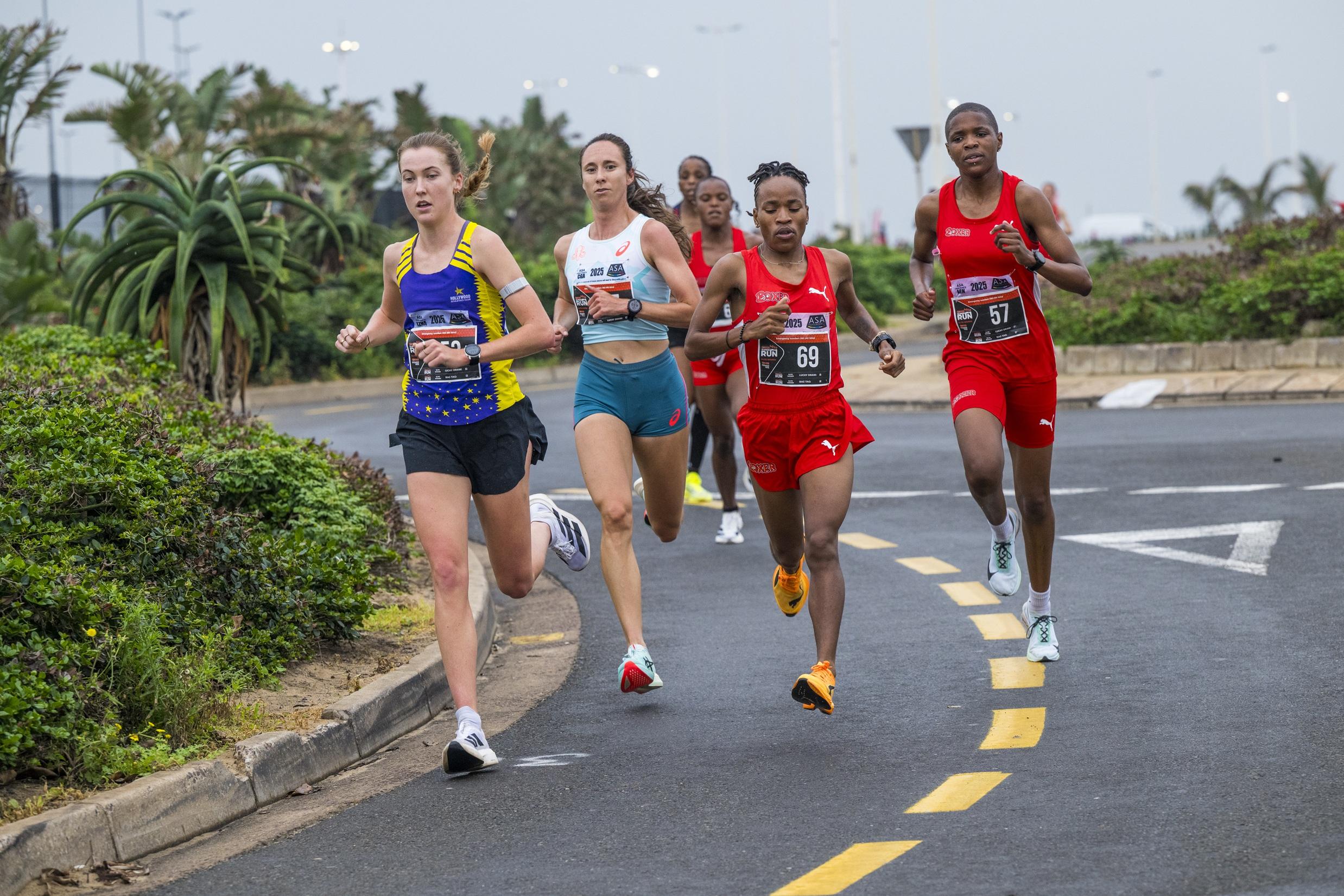
“South African distance-running star Glenrose Xaba is preparing to defend her Boxer Super Run Durban 5km title on 18 October 2026, aiming for a third victory after winning the inaugural race in 2023 and returning to triumph in 2025. Although her previous successes give her valuable course experience and confidence, Xaba says intelligent pacing, patience, adapting to her competitors and executing her coach’s race plan will be essential to winning again.”
Glenrose Xaba Targets Historic Third Boxer Super Run Durban Victory
South African distance-running champion Glenrose Xaba is preparing for another important appearance on the national road-running calendar as she targets a third victory at the Boxer Super Run Durban 5km on Sunday, 18 October 2026. The experienced athlete returns to a competition that has already played a memorable role in her career, bringing confidence from previous victories while recognising that a new race presents a different challenge.
According to a report published by The Top Runner, Xaba won the inaugural Durban edition in 2023 before returning in 2025 to claim another title. Her performances have established her as one of the leading competitors associated with the event, and her upcoming appearance will give her an opportunity to strengthen that record against another competitive field.
A champion returns to a familiar course
Xaba’s history at the Boxer Super Run Durban provides a strong foundation for her latest campaign. She won the first edition in 2023 in 16 minutes and three seconds, demonstrating her ability to compete effectively over the short road-running distance. She subsequently missed the 2024 edition because it coincided with her marathon debut, before returning in 2025 and winning in 15 minutes and 27 seconds.
Those results demonstrate the importance of consistency, preparation and adapting to different competitive circumstances. The improvement between her recorded winning times also provides an interesting perspective on her performances, although individual race times cannot be compared without considering conditions, pacing, competition and other factors.
For Xaba, the Durban event has become more than another opportunity to collect a medal. Her previous victories have created lasting memories and given her additional motivation to return. She has described the experience of winning twice as a source of confidence, while emphasising that success in earlier editions cannot guarantee another victory.
That distinction is important in athletics. Every competition presents a fresh combination of opponents, physical conditions, tactical decisions and individual performance levels. A defending champion must prepare for the race ahead rather than rely exclusively on past achievements.
Why a third title would matter
A third Boxer Super Run Durban victory would be a significant personal achievement for Xaba. Having already won the inaugural event and returned to the top of the podium two years later, she now has the opportunity to demonstrate that she can remain competitive in a race where other athletes will be equally determined to succeed.
However, the outcome will depend on what happens on race day. The 5km distance requires athletes to balance speed and endurance while making rapid decisions about positioning and pace. Unlike longer road races, there is relatively little time to recover from a tactical mistake or an unnecessarily aggressive opening kilometre.
Xaba understands that challenge. Her stated approach is to concentrate on executing the plan developed with her coach rather than becoming excessively preoccupied with the finishing time. That strategy places attention on the factors she can control: preparation, concentration, pacing and her response to the competition.
The approach also reflects a broader principle in elite running. Athletes can establish performance goals, but they cannot completely control the pace set by rivals, the conditions encountered or how their bodies respond during a race. A flexible strategy can therefore be more valuable than an inflexible commitment to a particular finishing time.
Tactical discipline over five kilometres
Although 5km road races are relatively short, they demand considerable tactical awareness. Athletes must decide how aggressively to start, when to respond to changes in pace and how much energy to reserve for the final stages.
Starting too quickly can create fatigue before the decisive section of the race. Conversely, remaining too cautious may allow competitors to establish an advantage that becomes difficult to overcome. Successful runners must find a balance between maintaining a competitive position and conserving enough strength to finish strongly.
Xaba has explained that understanding the course gives her an opportunity to race intelligently and exercise patience when necessary. She also intends to remain relaxed, respond to her opponents and retain sufficient strength for the final kilometre.
These priorities suggest that her race plan will involve more than simply chasing the fastest possible opening pace. The ability to recognise changes in the race and respond appropriately could be decisive when the field begins to separate.
Nevertheless, the precise tactics will depend on the circumstances on Sunday. The available report does not establish the complete starting list, individual opponents’ current form or the conditions expected during the event. Those details should not be assumed in advance.
The importance of coaching and preparation
Behind every major road-running performance is a period of structured preparation. Athletes typically combine endurance training, faster sessions, recovery, nutrition and race-specific planning to develop the physical capacity required for competition.
Xaba’s emphasis on following a plan agreed with her coach highlights the importance of preparation in her approach to defending the title. A well-designed programme helps an athlete arrive at the start line ready to perform while avoiding unnecessary exertion before the event.
In the days leading up to a race, training generally becomes more focused on maintaining readiness rather than building substantial new fitness. Recovery, sleep, hydration and appropriate nutrition can help athletes manage fatigue accumulated during previous training sessions.
The balance differs between individuals, and there is no basis for claiming that Xaba follows a particular training schedule unless her coaching team confirms it. What is clear from her reported comments is that she intends to rely on preparation and disciplined execution rather than allow the pressure of defending her title to dictate her decisions.
That mindset may be particularly valuable for an experienced competitor. Familiarity with a race can provide confidence, but it can also create expectations. Maintaining concentration on the present challenge helps prevent previous achievements from becoming a distraction.
Strong competition can raise the standard
Xaba has welcomed the prospect of competing against athletes who challenge her. She believes demanding races offer valuable learning opportunities and hopes the upcoming contest will provide an enjoyable spectacle for spectators.
Competitive pressure can encourage athletes to make tactical improvements, maintain concentration and discover how effectively they can perform under demanding conditions. Close races may also produce faster results when runners push one another throughout the distance.
For spectators, an unpredictable contest can make the event particularly engaging. A strong field gives audiences opportunities to watch athletes employ different strategies, from maintaining a consistent pace to making a decisive move in the closing stages.
However, competition should not be reduced to a single athlete’s pursuit of victory. Every runner arrives with individual objectives, whether improving a personal best, returning from a difficult period, gaining experience or achieving a high placing. These different ambitions contribute to the depth and character of road-running events.
For Xaba, the presence of challenging opponents appears to be a source of motivation rather than a reason for concern. Her focus remains on producing a well-executed performance and responding to what happens during the race.
South African road running continues to attract attention
The upcoming Durban competition arrives during a busy period for South African road running. The national athletics calendar features events that attract elite competitors, club athletes, developing runners and recreational participants.
Such races contribute to the visibility of athletics by bringing competition into public spaces and creating opportunities for spectators to engage with the sport. Short road races are particularly accessible to audiences because the distance is easy to understand and the action unfolds over a relatively brief period.
At the elite level, athletes such as Xaba help demonstrate the demands of competitive running and the discipline required to sustain high performance. Their participation can also encourage aspiring runners to explore structured training, join local clubs and establish achievable goals.
The wider development of athletics, however, requires more than prominent champions. Coaches, event organisers, sponsors, volunteers, clubs and local communities all contribute to the environment in which athletes develop.
Well-organised competitions can offer younger runners examples of sporting excellence while helping established competitors maintain competitive opportunities. Community participation also reinforces the idea that athletics can serve different purposes, from elite achievement to fitness, social connection and personal development.
Durban’s event therefore has significance beyond the immediate question of who wins the women’s 5km race. It provides another occasion for the sport to reach audiences and showcase the commitment required to compete.
Durban’s role in the athletics calendar
The Boxer Super Run Durban is scheduled for 18 October 2026, giving runners and spectators a clear date to anticipate. Xaba’s participation adds a compelling storyline because she has already demonstrated that she can win the event and now has an opportunity to extend her record.
For Durban, major running events can also offer a platform for community participation and public engagement with sport. Road races bring athletes and spectators together, creating opportunities for local organisations, volunteers and event partners to contribute to the sporting atmosphere.
The long-term value of such events depends on effective organisation, participant safety and continued interest from runners. Clear communication about routes, schedules and spectator arrangements can help participants prepare and allow the public to follow the competition responsibly.
For elite athletes, meanwhile, each appearance provides another opportunity to assess their competitive readiness. Even when a runner has won the same event previously, the new edition presents different circumstances and fresh decisions. Xaba’s comments reflect an understanding that her earlier achievements should inform her preparation without determining her expectations.
The wider significance of experienced athletes
Xaba’s return also illustrates the importance of experience in distance running. Athletes learn from repeated competitions, developing a better understanding of their strengths, limitations and responses to pressure.
Experience does not remove uncertainty, but it can help athletes make more informed decisions. Recognising when to conserve energy, how to react to a rival’s acceleration and when to commit to a finishing effort are skills that develop through preparation and competition.
For younger runners, watching experienced athletes compete can provide useful examples of patience and discipline. Success is rarely determined by physical ability alone; it also depends on preparation, decision-making and the capacity to remain composed when circumstances change.
At the same time, established champions must continue adapting. Competitors improve, strategies evolve and every season introduces new challenges. Xaba’s recognition that every race is different captures this reality and explains why a previous victory cannot substitute for preparation.
Her goal of winning a third title is therefore both a continuation of past success and a new test of her abilities.
What to watch on race day
The key questions heading into Sunday’s event concern pacing, the strength of the opposition and Xaba’s execution of her race plan.
First, her opening pace will be important. An efficient start should help her establish a competitive position without exhausting energy needed later. Second, her response to other athletes could influence the shape of the contest, particularly if the leading group remains close during the early stages.
Third, the final kilometre may provide the clearest indication of whether her tactical approach has worked. Xaba has specifically highlighted the need to retain enough strength for that stage, suggesting that finishing power will be an important element of her strategy.
The official results will ultimately determine whether she secures another victory. Until the race takes place, predictions should remain cautious, and her previous winning performances should be treated as evidence of experience rather than a guarantee of the outcome.
Conclusion: Another opportunity for South African athletics
Glenrose Xaba’s attempt to win a third Boxer Super Run Durban title is a significant storyline in South African athletics this week. Her victories in 2023 and 2025 have established a strong record at the event, while her planned return on 18 October presents a fresh challenge against competitors seeking their own success.
Her emphasis on patience, intelligent pacing, responding to the field and following her coach’s plan offers an insight into the preparation required for a demanding 5km race. These principles are relevant not only to elite competitors but also to developing athletes who are learning to balance ambition with disciplined execution.
Beyond the individual contest, the event provides another opportunity to showcase South African road running, encourage community participation and celebrate the work of athletes and the people supporting them.
Whether Xaba wins a third title or another runner emerges victorious, the competition will demonstrate the uncertainty that makes athletics compelling. Past achievements establish expectations, but performances must be earned again on race day.
For now, Xaba returns to Durban with experience, confidence and a clear objective. Her challenge is to translate those advantages into another strong performance when the starting signal sounds on Sunday.



