




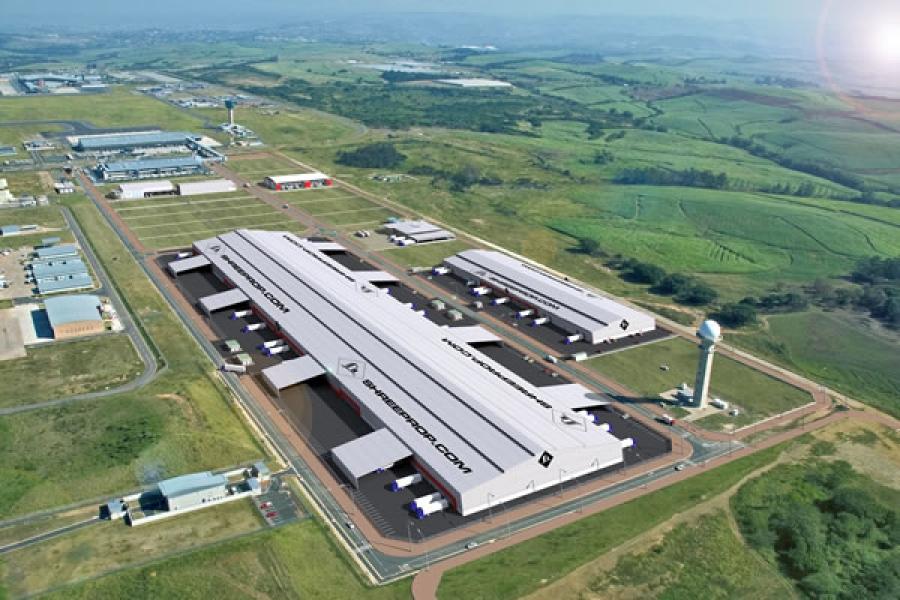
“Shree Property Holdings plans to invest R2 billion over three years in KwaZulu-Natal, including approximately R1.6 billion to redevelop two former industrial properties on South Coast Road in Durban into modern logistics facilities totalling about 80,000 square metres of warehouse space. The developments are expected to strengthen the region’s industrial property infrastructure near the Port of Durban, with occupation targeted for March and December 2028, respectively.”
South Africa’s industrial property development gains momentum as Shree commits R2 billion to KwaZulu-Natal
A major investment in industrial property
South Africa’s real estate development sector continues to attract investment in strategically located industrial and logistics facilities, with KwaZulu-Natal emerging as an important destination for projects connected to trade, distribution and manufacturing. A significant recent announcement from Shree Property Holdings illustrates how developers are repositioning established industrial sites to serve changing commercial requirements.
The privately owned property group has committed R2 billion to investments across KwaZulu-Natal over the next three years. A substantial portion of this programme will focus on redeveloping two properties along South Coast Road in Durban’s South Durban Industrial Basin. The company intends to transform the sites into modern distribution hubs serving logistics and warehousing businesses.
According to reporting by Moneyweb, approximately R1.6 billion is allocated to the two Durban properties, while the remaining R400 million is intended for a warehousing facility at Woodmead Industrial Park in Shakaskraal, within the iLembe District Municipality. The announcement forms part of the group’s broader strategy of expanding its industrial property portfolio across the province.
The investment is significant because industrial property supports the movement of goods between ports, manufacturers, distributors, retailers and consumers. As supply chains become increasingly dependent on efficient storage and distribution, suitable warehouse facilities can play an important role in regional economic activity.
However, the proposed developments remain projects with future completion targets. Their ultimate contribution will depend on construction progress, tenant demand, infrastructure capacity and wider economic conditions.
Former industrial sites receive a new purpose
The two principal development sites are located at 1236 South Coast Road and 1400 South Coast Road. Both properties have industrial histories, having been associated with Plascon and Tiger Brands, respectively. The latter site was previously used as a Beacon chocolates factory.
Rather than establishing entirely new industrial developments on undeveloped land, Shree Property Holdings intends to reposition existing industrial properties for logistics and distribution activities. This approach can make use of established industrial locations while adapting their buildings and supporting infrastructure to contemporary business needs.
The properties each cover approximately 60,000 square metres. Current plans provide for around 40,000 square metres of warehouse space at each site, supported by hardened container yards intended to accommodate large-scale logistics operations.
The distinction between total site area and warehouse floor space is important. A logistics facility requires more than enclosed storage. It also needs circulation space, loading areas, vehicle access, parking and outdoor areas for handling containers. The final design must accommodate these functions while maintaining safe and efficient operations.
Redeveloping established industrial sites can also present challenges. Existing buildings may require demolition, remediation, engineering assessments or infrastructure upgrades before construction can proceed. The available reports do not provide a complete breakdown of these potential costs or the detailed construction programme.
Nevertheless, the scale of the planned warehouse space indicates a substantial commitment to increasing the supply of modern industrial facilities in the Durban area.
Construction timetable extends to 2028
The two projects have separate occupation targets, reflecting their individual development schedules.
The redevelopment at 1236 South Coast Road is expected to be completed for occupation by March 2028. The second development, at 1400 South Coast Road, is targeted for occupation by December 2028. Both dates are targets rather than guarantees.
These timelines matter to potential tenants and investors because businesses frequently plan their distribution networks well in advance. Companies considering new warehouse space may need to coordinate equipment purchases, staffing, transport contracts and changes to their existing leases with the expected availability of a facility.
For developers, construction schedules influence financing costs, contractor arrangements and the timing of rental income. Delays can increase project expenses, especially when funding costs and professional fees continue while a site remains under development.
Successful delivery will therefore depend on effective project management, the availability of construction materials, contractor performance and the completion of necessary approvals and infrastructure connections.
The published information does not establish that both developments have completed all regulatory requirements or that every aspect of construction financing has been finalised. Those matters should be confirmed through subsequent project updates.
Why the Port of Durban matters
The Port of Durban is a central factor in the commercial rationale for these developments. Its role in South Africa’s maritime trade creates demand for facilities capable of receiving, storing, consolidating and distributing goods moving through the supply chain.
Warehouses located near ports and major transport corridors can help businesses reduce the distance between cargo handling and storage. Depending on operational arrangements, proximity can also improve coordination between shipping schedules, road freight and distribution to customers across the country.
The South Durban Industrial Basin has an established manufacturing and industrial presence. Shree Property Holdings argues that its existing transport links and proximity to the port position the area for further logistics investment.
However, location alone does not guarantee commercial success. Logistics operators also consider road congestion, freight reliability, security, electricity availability, operating costs and access to skilled workers.
For the new developments to achieve their intended purpose, their advantages must translate into measurable operational benefits for tenants. The facilities will need to compete on rental terms, accessibility, building specifications and the reliability of the surrounding infrastructure.
South Africa’s logistics sector also depends on broader improvements in freight movement. Efficient warehouse facilities can support distribution, but they cannot independently resolve delays or capacity constraints elsewhere in the transport network.
Strong demand supports the investment case
The industrial and logistics property sector has attracted interest from property owners and investors seeking assets connected to essential business activities. Warehouses can serve a range of customers, including manufacturers, retailers, freight companies, wholesalers and third-party logistics providers.
Moneyweb’s reporting quotes Galetti Corporate Real Estate chief executive John Jack describing demand for industrial and logistics property around the Port of Durban as exceptionally strong. The article also cites independent property analyst Keillen Ndlovu, who points to relatively low national industrial property vacancies. The figures reported in that article indicate a national industrial vacancy rate of 1.9% to June 2026, compared with 2.2% a year earlier, based on MSCI data.
These figures offer context for the investment decision, but they should not be interpreted as proof that the new Durban warehouses will be fully occupied. National statistics can conceal differences between locations, building specifications and rental levels.
A modern facility in a well-connected industrial area may attract tenants more readily than an outdated property. Nevertheless, demand depends on the requirements of individual businesses and the supply of competing space.
Developers must also consider the possibility that economic growth could weaken, import volumes could fluctuate or tenants could delay expansion. Long-term success requires a combination of appropriate design, competitive costs and sustained demand.
A wider property footprint across KwaZulu-Natal
The Durban redevelopment is part of a larger investment strategy. Shree Property Holdings has also identified Woodmead Industrial Park in Shakaskraal as a destination for additional investment.
The company has indicated that its existing KwaZulu-Natal property portfolio exceeds one million square metres. It also intends to pursue further acquisitions and development opportunities, with a stated ambition to add approximately 200,000 square metres of high-grade industrial space across its strategic locations.
The North Coast investment is relevant because industrial development often follows broader patterns of residential, commercial and infrastructure growth. As businesses expand, they may require warehouses closer to new customers, production facilities or regional distribution routes.
Industrial parks can also provide shared advantages through planned layouts, organised access, utilities and space for businesses with related requirements. These benefits depend on adequate planning and effective management.
The wider programme therefore signals confidence in the region’s industrial property market. However, the stated investment commitment should not be confused with money already spent, completed buildings or confirmed employment figures. Each project will need to be assessed against its actual implementation milestones.
Economic and employment implications
Large property developments can support economic activity through several stages. During construction, projects require contractors, engineers, architects, quantity surveyors, equipment suppliers and construction workers. Once operational, warehouses can support employment in inventory management, transport coordination, administration, security, maintenance and distribution.
The precise number of jobs associated with the two South Coast Road developments has not been established in the reporting reviewed. It would therefore be premature to assign an employment figure to the projects.
The wider economic benefits will also depend on the types of tenants that occupy the facilities. Warehouses supporting expanding local manufacturers may strengthen domestic supply chains, while distribution facilities may improve the availability of goods and support retail operations.
Property development can generate additional demand for local services and suppliers. However, the scale of these benefits depends on how much procurement takes place locally, the duration of construction and the long-term viability of the businesses using the properties.
For communities near the developments, responsible construction management will be important. Traffic, noise, dust, stormwater management and road safety should be considered throughout the building process and after occupation.
Developers and relevant authorities should also ensure that infrastructure can accommodate the additional activity. Without appropriate planning, increased freight movements could place pressure on surrounding roads and neighbourhoods.
Redevelopment, sustainability and infrastructure
The conversion of established industrial properties offers an opportunity to reconsider how industrial land is used. Reusing an existing industrial location may reduce pressure to develop undeveloped land elsewhere, although the environmental benefits depend on the condition of the site and the scope of redevelopment.
A comprehensive project assessment should consider energy efficiency, water use, waste management, stormwater drainage and the durability of construction materials. These issues are especially important for facilities that operate for extended hours or handle large volumes of freight.
Warehouse design can incorporate efficient lighting, suitable insulation, energy monitoring and provisions for renewable energy where technically and financially viable. Water-efficient systems and carefully designed drainage can also help reduce operating costs and manage environmental risks.
The public information reviewed does not confirm which sustainability measures will be incorporated into the two South Coast Road projects. Such features should therefore be treated as opportunities for the development team rather than confirmed specifications.
Infrastructure reliability is equally important. Logistics operations depend on dependable electricity, telecommunications, access roads and municipal services. Investors must consider these requirements when determining construction budgets and operational plans.
Risks and questions for the market
Despite the positive investment announcement, several factors will determine whether the developments achieve their intended outcomes.
First, construction costs and financing conditions can change between the planning and completion stages. Second, delays in approvals or infrastructure connections can affect occupation dates. Third, rental demand may change as competing properties enter the market or businesses adjust their distribution strategies.
There is also a broader question about the future economic role of former manufacturing sites. Converting factories into warehouses can preserve industrial land for productive commercial use, but it does not necessarily replace the manufacturing employment or production activity that existed previously.
The net effect will depend on which businesses ultimately occupy the new facilities and what economic activities they undertake.
Investors and prospective tenants should seek verified information about construction progress, lease commitments, completion specifications, operating costs and infrastructure capacity. Communities should be able to understand how traffic and environmental impacts will be managed.
These questions do not diminish the scale of the investment. Instead, they identify the practical measures needed to turn a development announcement into a functioning commercial asset.
Outlook for South African property development
Shree Property Holdings’ proposed R2 billion investment demonstrates the continuing importance of industrial property within KwaZulu-Natal’s real estate market. The two South Coast Road developments are particularly notable because they aim to deliver approximately 80,000 square metres of warehouse space close to a major national trade gateway.
If delivered successfully, the facilities could strengthen regional distribution capacity and provide modern premises for businesses operating in manufacturing, wholesale trade and logistics. Their performance will ultimately depend on construction delivery, tenant demand, infrastructure reliability and commercial viability.
The programme also highlights a wider trend in property development: established industrial locations can be adapted to meet new economic requirements. Such redevelopment can create opportunities for investors while supporting businesses that need strategically located facilities.
For South Africa, the long-term significance will be measured not only by the amount of capital committed but also by completed buildings, productive business activity, sustainable operations and employment generated.
Conclusion: The R2 billion KwaZulu-Natal investment programme is a major recent development in South Africa’s industrial real estate sector, with the largest share directed towards two logistics hubs in Durban. Although the story was published before 23 October 2026 and is not confirmed as today’s breaking news, it is a well-supported recent example of how developers are reshaping industrial property to serve the country’s evolving logistics economy.



