




“South Africa is advancing plans for a 5,200 MW nuclear power expansion as Electricity and Energy Minister Kgosientsho Ramokgopa prepares an evidence-based position paper and public consultation process ahead of a proposed ministerial determination in 2027. The programme is intended to strengthen long-term electricity security, support industrialisation and complement renewable energy, although financing, environmental considerations, public participation and implementation risks remain important challenges.”
South Africa Pushes Ahead With 5,200 MW Nuclear Expansion as Government Prepares Public Consultation
South Africa is moving forward with plans to expand its nuclear energy capacity by 5,200 megawatts (MW), marking a significant development in the country’s long-term electricity strategy. Electricity and Energy Minister Kgosientsho Ramokgopa has reaffirmed the government’s commitment to nuclear power while preparing an evidence-based position paper and public consultation process intended to support the proposed expansion.
The announcement comes as South Africa continues to strengthen electricity generation following years of severe power shortages, operational challenges at Eskom and growing pressure to provide reliable electricity for households, businesses and industrial development.
The proposed nuclear programme is included in the country’s Integrated Resource Plan (IRP) 2025 and is intended to diversify electricity generation while providing dependable, low-carbon power. Government considers nuclear energy an important component of its broader strategy to establish a sustainable and secure electricity system capable of supporting economic growth.
According to reporting published on Tuesday, 10 November 2026, the government intends to publish a position paper outlining its case for nuclear expansion towards the end of November. The document will accompany a proposed ministerial determination under the Electricity Regulation Act and provide an opportunity for public participation before the programme proceeds to procurement.
The proposed consultation represents an important stage in the development of South Africa’s nuclear ambitions.
Government Prioritises Evidence-Based Nuclear Consultation
Ramokgopa delivered his position during the South African Nuclear and Clean Energy Conference in Irene, Pretoria, where policymakers, energy specialists, industry representatives and international participants discussed the country’s electricity future.
The minister indicated that nuclear expansion should be evaluated through scientific evidence, economic considerations and technical assessments rather than ideological disagreements.
Government intends to explain why additional nuclear capacity is necessary, how it could contribute to electricity security and what considerations should inform investment decisions.
The consultation process is particularly important because previous nuclear procurement initiatives faced legal challenges and criticism over transparency, affordability and public participation.
In 2024, government withdrew an earlier determination involving 2,500 MW of nuclear capacity following legal opposition and demands for additional consultation.
The new process is intended to reduce uncertainty by strengthening the technical and legal foundation of the proposed programme.
According to TechCentral, the government is targeting a ministerial determination during 2027, with April identified as an intended milestone and finalisation expected before June.
The determination would provide a statutory basis for procurement activities.
The National Nuclear Regulator would retain independent responsibility for nuclear safety oversight and licensing.
Government has emphasised that public submissions will be considered on their merits, making the consultation an important opportunity for communities, civil society organisations, businesses and technical experts to participate in shaping the programme.
Nuclear Energy and South Africa’s Electricity Security
South Africa’s electricity system has historically depended heavily on coal-fired generation.
Although coal remains a significant component of the national energy mix, the country has increasingly recognised the importance of diversifying electricity generation to reduce environmental impacts, improve reliability and accommodate changing electricity demand.
Nuclear energy offers several characteristics that distinguish it from other electricity sources.
Nuclear power stations can produce electricity continuously, independently of sunshine or wind conditions, making them suitable for providing baseload generation.
This reliability is particularly relevant as South Africa increases its renewable energy capacity.
Solar and wind installations are expected to contribute substantially to future electricity generation. However, their output varies according to weather conditions and the time of day.
Nuclear generation could complement renewable electricity by providing consistent output when renewable production declines.
Government argues that a diversified electricity system combining nuclear, renewable energy, coal and other technologies could improve energy security while supporting environmental objectives.
Ramokgopa has described nuclear power as dependable, low-carbon and potentially cost-effective over its operating life.
Nevertheless, the economic benefits will depend on construction costs, financing arrangements, operating performance and the ability to complete projects within reasonable timelines.
The government must also ensure that new generation capacity is supported by transmission infrastructure capable of delivering electricity to consumers.
Consequently, nuclear expansion is not simply a generation project. It forms part of a broader infrastructure strategy involving electricity networks, industrial development, skills training and investment planning.
Eskom Identifies Potential Nuclear Development Sites
Eskom has identified Duynefontein in the Western Cape and Thyspunt in the Eastern Cape as potential locations for the country’s nuclear expansion programme.
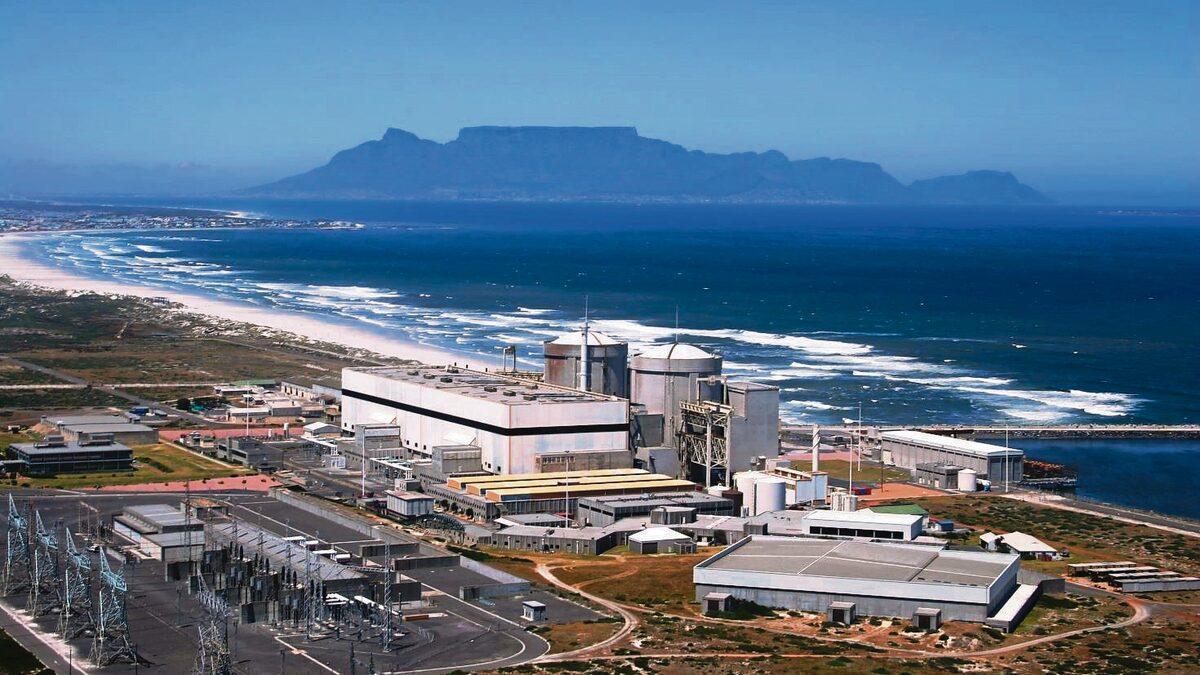
Duynefontein is situated near the existing Koeberg Nuclear Power Station, while Thyspunt has been identified as a preferred site for further assessment.
These locations form part of the environmental and planning considerations surrounding the proposed programme.
However, the final allocation of the planned 5,200 MW between potential sites has not been confirmed.
Thyspunt has attracted particular attention because of environmental, cultural heritage and community concerns.
Local stakeholders have raised questions about possible impacts on livelihoods, marine ecosystems and sensitive landscapes.
The proposed development therefore requires careful environmental assessment and meaningful engagement with affected communities.
The South African Heritage Resources Agency has also provided provisional Grade I cultural landscape protection for Thyspunt, adding another important consideration to the site’s future development.
Environmental authorisations, nuclear safety requirements and community consultation will remain essential components of the programme.
The government will need to demonstrate that site selection decisions are supported by technical assessments, environmental evidence and transparent decision-making.
These considerations could influence the programme’s implementation timetable and investment requirements.
First New Reactors Could Enter Service by 2036
Eskom has indicated that the programme could follow an approximately 10-year implementation timeline after the necessary determinations and procurement processes.
This means the first new nuclear reactor could potentially begin operating around 2036.
The timeline highlights the long-term nature of nuclear infrastructure development.
Nuclear power stations require extensive planning, engineering, environmental assessments, licensing, financing and construction.
Their development also involves specialised equipment and international technical partnerships.
South Africa will therefore need to coordinate the different stages of implementation carefully to avoid delays and cost overruns.
The country has experience operating nuclear facilities through Koeberg, but constructing new reactors presents different challenges.
The minister has acknowledged that South Africa has not built a nuclear power station in approximately 50 years.
This creates a significant skills and experience gap that must be addressed before the country can successfully implement another major nuclear construction programme.
The development of domestic engineering capabilities will be particularly important.
South Africa will need specialists in nuclear engineering, project management, construction, safety systems, quality assurance and regulatory compliance.
Government has indicated that cooperation with international partners could help develop the necessary skills and technical expertise.
A successful programme could create opportunities for local companies, universities, research institutions and engineering professionals.
However, these opportunities will depend on how effectively the programme incorporates local participation into procurement and construction activities.
Financing Remains a Major Question
One of the most important unresolved issues surrounding South Africa’s nuclear expansion programme is financing.
Nuclear infrastructure requires substantial upfront investment, and the final cost depends on reactor technology, construction timelines, financing arrangements and project risks.
Government has not yet finalised the programme’s funding structure.
Potential financing arrangements include public-private partnerships, project finance and vendor financing.
Vendor financing could involve reactor suppliers supporting the financing and construction of facilities.
Although private-sector financing may help reduce immediate pressure on public finances, it does not automatically eliminate financial risks.
The government and Eskom will need to determine how financing obligations are allocated and how electricity tariffs may be affected.
This is especially important because electricity affordability remains a major concern for households and businesses.
South Africa has experienced substantial electricity price increases in recent years, placing pressure on consumers and industrial competitiveness.
The government must therefore balance the need for new electricity capacity against the requirement to maintain affordable electricity prices.
Financial transparency will be essential to building public confidence.
Investors and electricity consumers will need clarity regarding project costs, procurement arrangements, financing commitments and expected economic benefits.
The programme’s financial sustainability will ultimately depend on disciplined project management and realistic investment planning.
Lessons From Medupi and Kusile
The proposed nuclear programme comes against the background of major challenges experienced during the construction of Medupi and Kusile power stations.
Both projects experienced extensive delays, cost overruns and technical difficulties.
Government has acknowledged that these experiences provide important lessons for future electricity infrastructure development.
Ramokgopa has emphasised the need to avoid repeating mistakes associated with poor planning and project execution.
The nuclear programme will require strong oversight, effective procurement systems, skilled project leadership and clear accountability.
Construction contracts must be carefully managed to minimise unnecessary expenditure and delays.
Independent monitoring and transparent reporting could help identify problems before they become major financial or operational challenges.
The government will also need to establish effective coordination between Eskom, regulators, international contractors and relevant departments.
Because nuclear facilities involve highly specialised safety requirements, project management standards must be particularly rigorous.
The lessons from previous electricity projects should therefore inform every stage of nuclear development, from feasibility studies to commissioning.
Successful implementation would demonstrate that South Africa can deliver complex infrastructure projects while maintaining public accountability.
Nuclear Energy and Renewable Electricity
South Africa’s nuclear expansion plans are closely linked to its renewable energy ambitions.
The Integrated Resource Plan 2025 envisages a future electricity system with substantial renewable generation.
Solar and wind energy are expected to play increasingly important roles in meeting electricity demand.
However, their intermittent nature creates challenges for balancing supply and demand.
Nuclear generation could provide dependable electricity while renewable generation fluctuates.
Battery storage, transmission expansion, flexible generation and improved electricity market arrangements will also be important.
The government’s approach is based on adding different electricity technologies rather than relying exclusively on one source.
This strategy could support a more diversified energy system and reduce exposure to individual generation technologies.
Coal is also expected to remain relevant during the transition, although its future role will depend on plant conditions, environmental requirements and economic considerations.
Eskom chairman Mteto Nyati has argued that South Africa should consider emissions reduction alongside the question of coal plant retirement.
The broader challenge is to provide reliable electricity while progressively reducing environmental impacts.
Nuclear power could contribute to that objective, provided that safety, waste management and financing concerns are appropriately addressed.
Koeberg’s Latest Safety Milestone Reinforces Nuclear Experience
While government advances plans for new nuclear infrastructure, Eskom announced another important development involving the country’s existing nuclear power station.
On 10 November 2026, Koeberg Unit 2 successfully completed its Integrated Leak Rate Test.
The test confirmed the structural integrity and leak-tightness of the unit’s containment building, which is a critical nuclear safety barrier designed to prevent the uncontrolled release of radioactive material.
Independent analysis by internationally recognised nuclear specialists confirmed that the unit met the required acceptance criteria.
The test forms part of Koeberg’s mandatory licensing requirements and is conducted every 10 years.
The milestone supports Koeberg’s continued operation following the National Nuclear Regulator’s approval of a 20-year operating licence extension.
Unit 2 will continue with outage and maintenance activities before returning to service.
The achievement highlights the importance of maintaining nuclear safety standards and retaining specialised technical capabilities.
Koeberg remains an important source of dependable electricity for South Africa, particularly the Western Cape.
Its operational experience could provide valuable lessons for the proposed nuclear expansion programme.
The successful test also demonstrates the importance of independent verification and regulatory oversight in nuclear energy development.
Public Participation Will Shape the Programme
The proposed nuclear expansion is likely to generate significant public debate.
Supporters argue that nuclear power could improve electricity security, support industrialisation and reduce dependence on fossil fuels.
Critics have raised concerns about construction costs, environmental impacts, nuclear waste management and the risks associated with large infrastructure projects.
Communities near proposed development sites may also seek greater clarity about land use, employment opportunities and potential environmental effects.
The public consultation process provides an opportunity for these concerns to be examined.
Government will need to explain the programme’s objectives, financial implications, environmental considerations and safety requirements.
The credibility of the consultation will depend on whether participants can access relevant information and whether their submissions receive meaningful consideration.
Transparent decision-making could help reduce uncertainty and improve confidence in the programme.
It will also be important to distinguish between political debate and technical assessments while recognising that public concerns remain legitimate.
Nuclear infrastructure affects communities over long periods, making public trust essential to its successful implementation.
Conclusion: A Long-Term Decision for South Africa’s Energy Future
South Africa’s proposed 5,200 MW nuclear expansion represents one of the most significant long-term electricity developments currently under consideration.
The programme could strengthen energy security, support industrial growth and complement renewable electricity generation.
However, its success will depend on transparent public consultation, sound financing, effective environmental assessments, technical expertise and disciplined project execution.
The proposed position paper and ministerial determination will provide important opportunities to establish the programme’s legal and policy foundations.
As government prepares the next phase of consultation, South Africa faces a crucial task: ensuring that future electricity investments deliver reliable, affordable and sustainable power.
The country’s nuclear ambitions are therefore not simply about constructing additional power stations.
They represent a broader decision about how South Africa will balance economic development, electricity security, environmental responsibility and public accountability over the coming decades.
If implemented successfully, the programme could contribute significantly to the country’s energy future. If poorly managed, it could create additional financial and institutional challenges.
The decisions taken during the coming consultation and procurement stages will consequently shape South Africa’s electricity system for generations.



