




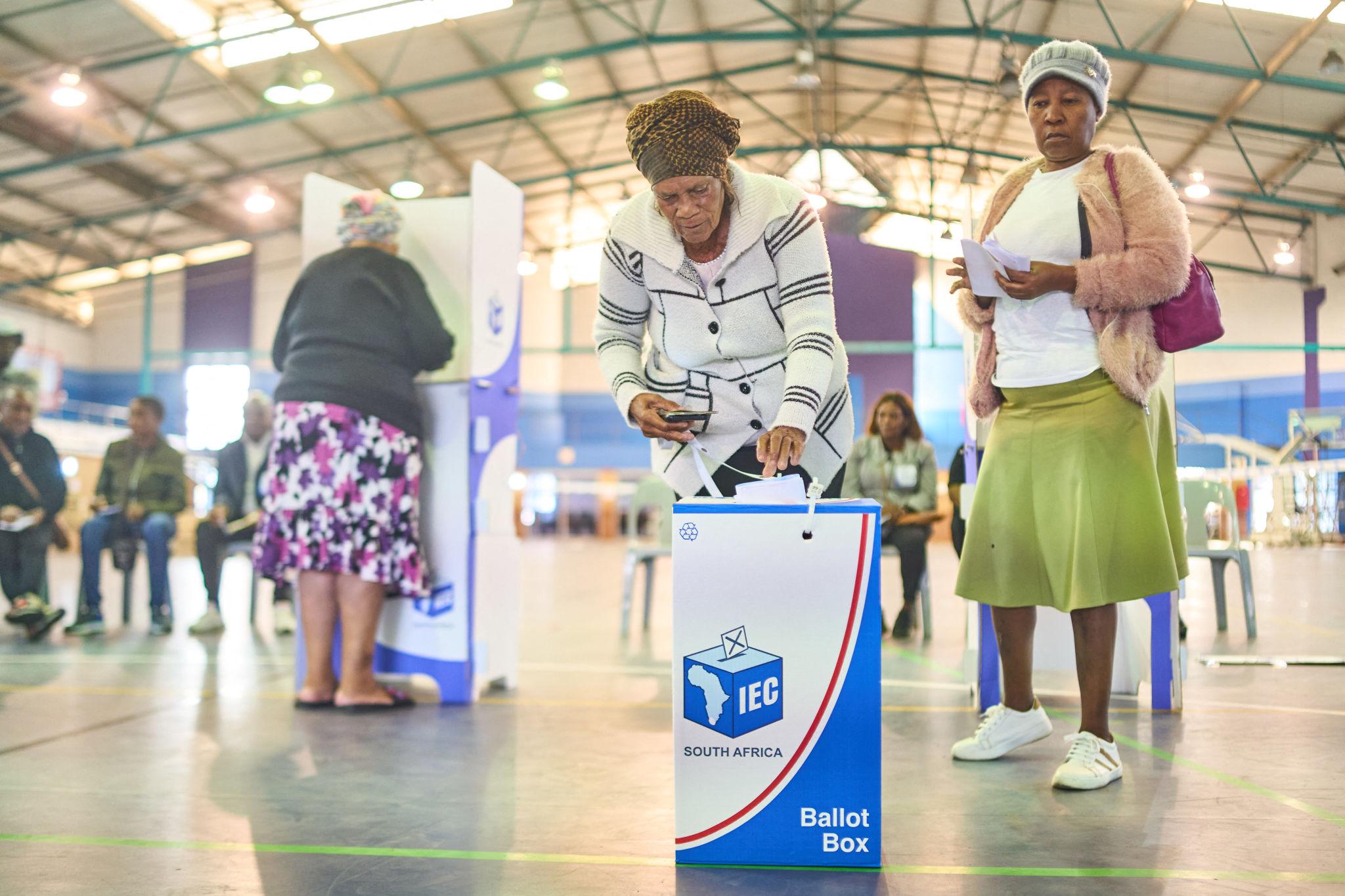
”South Africa has begun special voting for the 2026 Local Government Elections, with approximately 2.65 million special vote applications approved by the Independent Electoral Commission (IEC), a 131% increase compared with the 2021 municipal elections. The voting process takes place on 2 and 3 November ahead of the nationwide election on 4 November, amid intense political competition, concerns about municipal service delivery and expectations of further coalition governments.”
South Africa Begins Special Voting as 2026 Local Government Elections Enter Critical Final Stage
Integrated Elections News Article | 2 November 2026
Special voting marks the beginning of a decisive electoral week
South Africa has entered one of the most important stages of its 2026 Local Government Elections, with special voting beginning on Monday, 2 November, ahead of the nationwide election scheduled for Wednesday, 4 November. The Independent Electoral Commission (IEC) has approved approximately 2.65 million special vote applications, representing a substantial increase compared with the previous municipal elections in 2021. The development places electoral administration, voter participation, political accountability and municipal governance at the centre of national attention.
The special voting process allows eligible voters who cannot visit their polling stations on Election Day to participate through approved arrangements. These include voting at their registered voting stations or receiving home visits from electoral officials where applications have been approved. The IEC has scheduled special voting for 2 and 3 November, ensuring that eligible participants can exercise their constitutional voting rights before the main electoral day.
A significant election for South Africa’s political landscape
The 2026 municipal elections represent an important test for South Africa’s political parties following the changing electoral environment established by the 2024 national elections. The African National Congress (ANC), which historically dominated national politics, lost its parliamentary majority for the first time since the democratic transition in 1994. This development significantly altered political competition and increased the importance of coalition arrangements.
The upcoming municipal elections will determine the composition of councils responsible for governing municipalities across the country. These councils oversee essential services, infrastructure maintenance, local economic development, sanitation, electricity distribution and water provision. Consequently, electoral outcomes will directly influence how communities experience government in their everyday lives.
President Cyril Ramaphosa has described the elections as an important opportunity to strengthen democracy and improve municipal performance. In his election message published on 2 November, he encouraged registered voters to participate and emphasised the importance of municipalities in delivering services and supporting economic development.
Millions of special vote applications demonstrate electoral demand
The approval of approximately 2.65 million special vote applications highlights the scale of preparations required for the 2026 electoral process. According to the IEC, approved applications have increased by approximately 131% compared with the 2021 Local Government Elections.
This substantial increase creates logistical responsibilities for electoral officials, including the preparation of ballot papers, coordination of home visits, deployment of personnel and verification of voter eligibility. The commission must ensure that special voting procedures remain accessible, secure and consistent with electoral regulations.
Voters have also been encouraged to verify their special vote approval status before attempting to participate. This is particularly important because an application alone does not automatically guarantee approval. The IEC’s voter communication efforts are intended to minimise confusion and ensure that eligible participants understand where and how they can vote.
The special voting period is therefore not simply an administrative exercise. It represents an essential component of electoral inclusion, allowing people whose circumstances prevent ordinary Election Day participation to remain involved in democratic decision-making.
Municipal service delivery dominates electoral debate
Water shortages, electricity reliability, sanitation, unemployment and deteriorating infrastructure have emerged as major concerns shaping political discussions ahead of Election Day.
Municipalities are responsible for delivering many of the services that directly affect households and businesses. However, persistent infrastructure challenges and financial pressures have contributed to dissatisfaction among residents in several metropolitan areas.
Johannesburg, Tshwane, Cape Town and eThekwini remain particularly important political battlegrounds. These municipalities face different combinations of infrastructure requirements, financial constraints, employment challenges and population growth.
Water availability has become especially prominent during the election campaign. Infrastructure maintenance, leaking pipes, ageing distribution networks and growing demand have placed pressure on municipal authorities. Electricity provision and sanitation similarly remain important indicators of municipal effectiveness.
Reuters reported on 2 November that water, employment, crime and affordable housing were among the principal concerns influencing South African voters ahead of the municipal elections. These issues have strengthened public scrutiny of political parties and their promises regarding local government.
Political parties confront a changing electoral environment
The ANC enters the elections facing significant pressure to demonstrate that it can restore confidence in municipal administration and improve service delivery. Although the party remains a major political force, declining support and competition from opposition parties have increased uncertainty surrounding electoral outcomes.
The Democratic Alliance (DA) is seeking to strengthen its position in municipalities where it believes voters are dissatisfied with existing governance arrangements. Its campaign has emphasised administrative competence, infrastructure management and municipal accountability.
Meanwhile, the Economic Freedom Fighters (EFF), uMkhonto weSizwe Party and ActionSA are competing for influence in different communities. Smaller political parties and independent candidates are also expected to play important roles in determining council compositions.
President Ramaphosa’s election message identified 546 political parties and nearly 137,000 candidates participating in the electoral contest. This extensive political participation demonstrates the breadth of electoral competition and the increasing diversity of political representation in South Africa.
Coalition governments become increasingly important
One of the defining questions surrounding the 2026 Local Government Elections is whether coalition governments will become more widespread.
Ipsos research published on 30 October indicated that no political party commands strong majority support nationally ahead of the municipal elections. The findings point towards continued fragmentation and the possibility of additional coalition arrangements in municipalities.
Coalitions have become increasingly important following the ANC’s loss of its national parliamentary majority in 2024. Municipal governments have also experienced political instability, disagreements between coalition partners and changes in executive leadership.
For voters, coalition negotiations may become as consequential as the election itself. Parties that secure relatively small numbers of council seats could influence mayoral appointments, municipal budgets and governing agreements.
However, coalition arrangements can also create difficulties when partners disagree about policy priorities, leadership appointments or procurement decisions. Their effectiveness ultimately depends on political cooperation, transparent governance and the ability to maintain stable administrative structures.
The election therefore represents an important opportunity for political parties to demonstrate whether coalition government can provide effective municipal leadership.
Johannesburg remains a major political battleground
Johannesburg is among the municipalities attracting considerable national attention because of its economic importance and continuing governance challenges.
The city’s municipal administration has faced difficulties involving infrastructure maintenance, financial management, water distribution and political instability. Its coalition arrangements have also experienced repeated leadership changes.
The upcoming elections could reshape political control in Johannesburg and influence how municipal authorities approach infrastructure investment, service delivery and financial sustainability.
Political parties have placed considerable emphasis on improving urban administration, strengthening accountability and restoring public confidence. Residents are expected to evaluate candidates according to their ability to address practical challenges affecting neighbourhoods, businesses and public facilities.
The contest in Johannesburg also illustrates the broader importance of municipal elections in South Africa. Metropolitan governments manage significant budgets and provide services to millions of residents, making their political leadership particularly consequential.
Electoral administration and security remain priorities
The IEC faces considerable responsibilities in ensuring that the elections are conducted efficiently and credibly.
Election preparations include coordinating voting stations, distributing ballot papers, training electoral personnel, managing voter information and implementing security arrangements.
The South African Police Service and other security institutions have undertaken operational planning intended to support peaceful voting. Authorities have also emphasised the importance of preventing intimidation, violence and disruptions during the electoral process.
The Presidency has called on political parties, candidates and communities to ensure that the electoral contest remains peaceful. Concerns about violence involving political candidates and municipal representatives have reinforced the importance of protecting democratic participation.
A credible electoral process depends not only on the counting of votes but also on the ability of citizens to participate freely without intimidation or interference.
Voter participation will influence political legitimacy
Voter turnout remains another significant concern as South Africa approaches Election Day.
Political parties must persuade registered voters that participating in municipal elections can produce meaningful improvements in local governance. Residents experiencing unreliable services, unemployment or corruption may question whether electoral participation will change their circumstances.
However, municipal elections provide communities with an opportunity to evaluate political leadership and select representatives responsible for addressing local priorities.
The special voting period offers an early indication of the administrative scale of participation, although the final turnout figures will only become available after the broader voting process.
Electoral participation is particularly important because municipal councils exercise authority over decisions affecting households, businesses and neighbourhood development.
Election outcomes could influence future governance reforms
The elections are taking place alongside renewed discussions about strengthening local government institutions.
The Presidency’s 2 November statement highlighted proposals contained in the new White Paper on Local Government, including improved financial management, stronger revenue collection and more effective infrastructure maintenance.
The proposed reforms also emphasise professional municipal administration, accountability for public resources and measures intended to reduce corruption and procurement irregularities.
These issues are closely connected to electoral competition because voters increasingly expect political representatives to demonstrate measurable improvements in governance.
Municipal authorities will face pressure to strengthen financial sustainability while maintaining essential services and addressing infrastructure backlogs.
Conclusion: South Africa prepares for a consequential democratic decision
South Africa’s 2026 Local Government Elections are entering their decisive phase as special voting begins across the country.
The elections represent a significant opportunity for citizens to influence municipal leadership, evaluate political performance and determine the future direction of local governance.
With millions of special vote applications approved, extensive political competition and growing expectations surrounding service delivery, the electoral process carries considerable national importance.
The results could reshape municipal coalitions, influence political party strategies and establish new expectations for accountability in local government.
Ultimately, the significance of the elections will extend beyond political victories and council seat allocations. Their lasting importance will depend on whether elected representatives can translate democratic participation into reliable services, improved infrastructure, transparent administration and stronger public confidence.
South Africans will cast their votes on 4 November 2026, making this electoral contest a defining moment for municipalities and the country’s evolving democratic landscape.



