




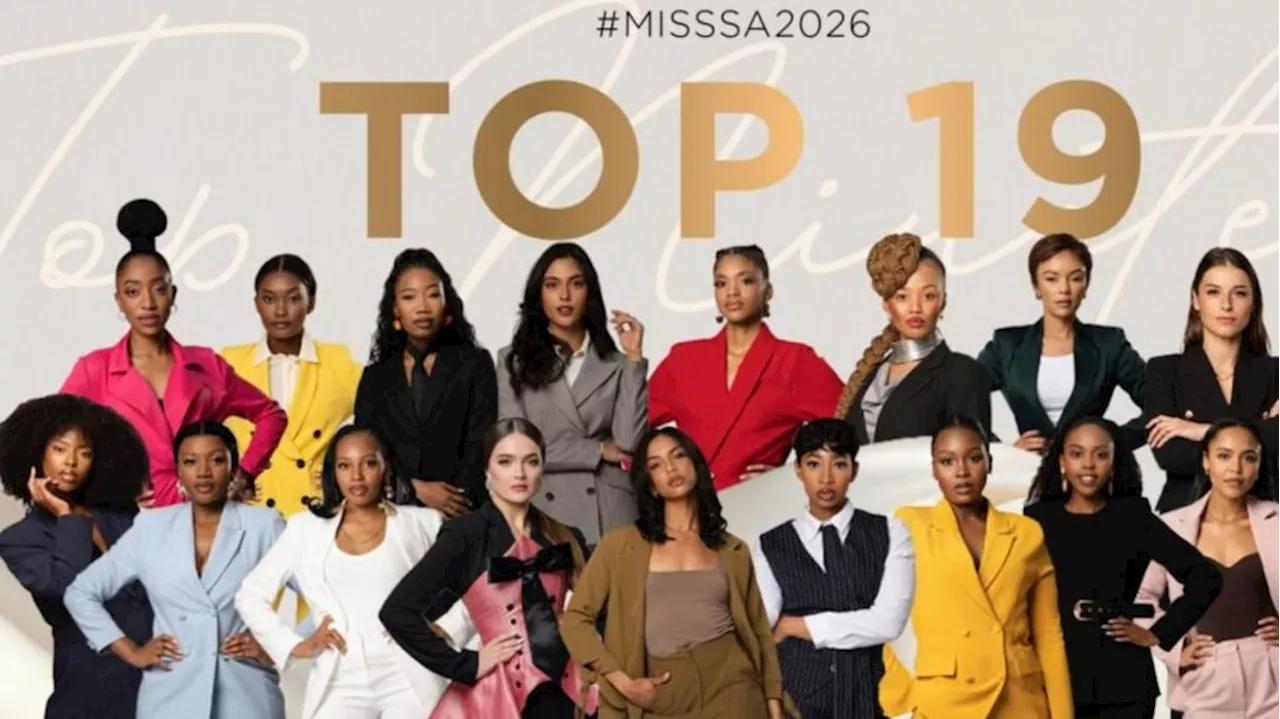
“The Miss South Africa 2026 competition has revealed its Top 12 finalists, bringing the contestants one step closer to the national crown at the Sandton Convention Centre on 14 November 2026. The announcement highlights the continuing connection between beauty, fashion, personal branding and women’s representation in South Africa.”
South Africa’s beauty and fashion conversation is turning towards a familiar national stage: the Miss South Africa competition. The organisation has revealed the 12 finalists who will compete for the 2026 title at the Sandton Convention Centre on Saturday, 14 November. The announcement places twelve women from different professional and community backgrounds in the public spotlight, while reinforcing a broader message that the modern pageant is expected to represent leadership, purpose and social contribution as well as appearance.
The shortlist was reported by IOL on 29 October and subsequently updated. It is therefore the most prominent recent South African beauty-pageant story located for this report, but it should not be described as first published on 1 November.
The finalists are Alia Khan Koumantarakis, Amogelang Bunu, Bonolo Marang Motau, Cwenga Koyana Kotu-Rammopo, Katlego Malebye, Lesego Khumo Nyathela, Makhosazana Azana Masango, Ndivanga Muravha, Palesa van Rooyen, Simone Nonhlanhla Tshituka, Tiyani Makamu and Zoalize Jansen Van Rensburg. The names are listed alphabetically by first name in the announcement, rather than ranked. Their selection marks the next stage of a process that began with a larger group of hopefuls and involved multiple rounds of assessment.
According to the Miss South Africa organisation, candidates were assessed on leadership potential, communication skills, a sense of purpose and commitment to social impact. Those criteria suggest that the competition is seeking more than a polished stage presence. Such expectations are increasingly important to pageants, which operate in a media environment where audiences can scrutinise public statements and community work long after the final broadcast.
The 2026 finale will take place at the Sandton Convention Centre in Johannesburg. Viewers will also be able to watch the event live on Mzansi Magic, DStv channel 161, from 7.30pm. Tickets have been advertised from R450 and are available through Ticketpro, with the IOL report also identifying House of Nala outlets at Sandton City and Oceans Mall as sales points. Prospective attendees should confirm current ticket availability and event details with the official sellers before making plans.
A significant part of this year’s announcement is what happens after the finalists are named. All twelve women are expected to become ambassadors for Empower Youth Africa, the organisation’s impact platform. That means the public-facing value of the competition is not limited to the individual who eventually receives the crown. The other finalists are also being positioned to contribute to programmes and partnerships intended to expand opportunities for young people in South Africa and, through the platform’s wider ambitions, across the continent.
Empower Youth Africa identifies five areas of focus: technology and digital inclusion; entrepreneurship and enterprise development; education and future-focused skills; health and wellness; and civic leadership and Pan-African collaboration. The themes connect the pageant to challenges that affect young people’s everyday prospects. Digital access can influence whether learners and jobseekers can participate in an increasingly online economy. Enterprise development can help aspiring business owners build practical skills. Education and future-focused training can prepare young people for changing workplaces, while health and civic leadership support stronger communities.
The organisation’s official announcement says the finalists are already championing causes that include literacy, mental health, youth employment and financial wellness. These priorities give the contestants opportunities to connect their public profiles to issues beyond fashion and entertainment. They also provide audiences with a way to assess the candidates through their ideas, experience and proposed contribution, rather than relying only on photographs, styling or stage performance.
This broader approach is important to the beauty industry because pageants have a visible influence on how beauty is presented and discussed. Contestants appear in professional photography, interviews, fashion styling, makeup looks and televised events. Their visibility can create opportunities for designers, makeup artists, hairstylists, photographers, production teams and other creative professionals. At the same time, the competition can influence conversations about confidence, representation and the standards used to define beauty in contemporary South Africa.
However, a responsible reading of the announcement should avoid reducing the twelve women to their appearance or assuming that a pageant title alone guarantees social change. The organisation’s stated emphasis on leadership and impact creates an expectation that the finalists’ work should be judged by what they do, what they communicate and whether their initiatives produce meaningful outcomes. Public visibility can help draw attention to an issue, but lasting progress generally requires partnerships, resources, continuity and measurable results.
The competition is also giving audiences a closer look at the journey through The Mandate, a seven-part documentary series. The series is intended to show the experiences, challenges and personal development involved in pursuing the title. Behind-the-scenes storytelling can help viewers understand the preparation required for a national pageant: public speaking, interviews, media engagement, personal presentation and the ability to discuss community priorities under pressure. It can also give the finalists space to explain their motivations in their own words.
For the fashion and beauty sectors, the finale will be a high-profile showcase of local talent and event production. Pageant stages typically bring together clothing, beauty preparation, lighting, choreography, music and broadcast presentation. South African designers and creative workers can benefit from the attention generated by a nationally followed event, particularly when contestants and organisers highlight local work. Yet the available announcement does not identify every designer, makeup artist or supplier involved in the finale, so specific commercial partnerships should not be assumed.
The public interest in the finalists also reflects the changing role of beauty pageants. In earlier eras, competitions were often criticised for placing too much emphasis on conventional physical ideals. Modern pageants increasingly present themselves as platforms for communication, advocacy and leadership. That shift does not remove questions about appearance standards, inclusion or the pressures placed on contestants. Instead, it makes transparency about judging, contestant welfare and the substance of social-impact projects especially important.
The finale on 14 November will determine which finalist receives the 2026 crown. Nevertheless, the organisation’s decision to make all twelve Empower Youth Africa ambassadors indicates that the competition wants the group’s influence to continue beyond the televised result. The real test will be whether the programme sustains the finalists’ involvement, supports their projects and reports clearly on outcomes after the event.
For audiences, the announcement offers several ways to follow the competition. Viewers can learn about the finalists’ professional backgrounds and community interests, watch The Mandate, and follow the finale broadcast. Supporters can also look beyond gowns and beauty looks by asking what each candidate hopes to achieve and how she plans to involve the communities she represents.
The Top 12 announcement is therefore a significant recent development in South Africa’s beauty-pageant calendar. It brings twelve new public figures into focus, creates a platform for fashion and beauty creativity, and sets expectations for leadership and youth engagement. One woman will be crowned on 14 November, but the larger measure of the 2026 competition will be whether all twelve finalists can translate attention into sustained, practical contributions.
For now, the next milestone is the Sandton finale. As the contestants prepare for the stage, the story is no longer only about who looks the part. It is about who can communicate a clear purpose, represent a diverse country with care and use the visibility of a national title to create opportunities for others.



