




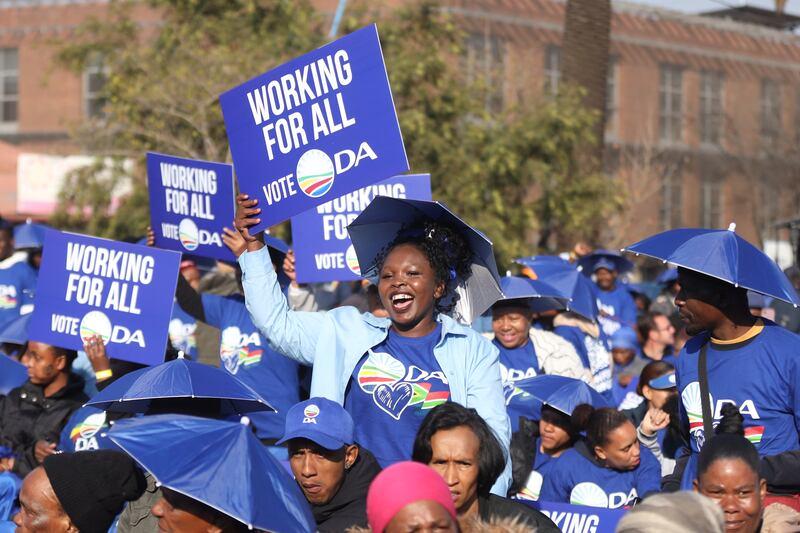
”South Africa’s 4 November local government elections have placed municipal policy, infrastructure, water security, unemployment, housing and service delivery at the centre of the political debate, as voters prepare to assess the performance of councils across the country. The election is also expected to test coalition governance, with political parties competing to demonstrate how their policies can improve municipal accountability, economic development and essential services.”
South Africa’s Local Elections Put Service-Delivery Policy at the Centre of a National Political Test
South Africa’s local government elections, scheduled for Wednesday, 4 November, have become a defining test of the country’s policy choices on water, electricity, housing, jobs and municipal accountability. With voters preparing to choose councils across the country, the campaign is exposing a widening gap between constitutional promises of reliable local services and the daily experience of residents confronting broken infrastructure, unemployment and uneven municipal performance.
The policy debate is especially consequential in major metropolitan areas. Johannesburg, Tshwane, eThekwini and Cape Town face different combinations of infrastructure pressure, financial constraints and service-delivery demands. Reuters reported on 2 November that water, employment and crime are among the central issues shaping voter concerns, while urbanisation and housing costs are intensifying pressure on municipalities. The election is therefore not simply a contest between parties: it is a public judgment on how local government should plan, finance and deliver essential services.
Water infrastructure has become a defining policy issue
Water is one of the clearest examples of the distance between policy commitments and lived reality. Ageing pipes, leaks, illegal connections and maintenance backlogs have weakened reliability in several cities. Reuters reported that these problems account for substantial water losses in Johannesburg and eThekwini, while Tshwane faces maintenance challenges. Cape Town has invested in infrastructure but still confronts long-term water-security risks.
The implications reach far beyond household inconvenience. Water interruptions affect schools, clinics, businesses, sanitation and the ability of communities to remain healthy and productive. When supply is unreliable, households may have to spend time and money securing alternatives; businesses face operational disruption; and public confidence in local institutions declines.
The policy question is whether municipalities can move from emergency responses to sustained asset management. That requires accurate infrastructure inventories, preventative maintenance, transparent procurement, skilled technical staff and budgets that prioritise repairs before systems fail. It also requires coordination among municipal water services, provincial authorities and national government where responsibilities or funding overlap.
Campaign promises to fix water systems will be judged against practical plans: which pipes will be repaired, how losses will be measured, what funding is available, and how residents will receive timely information about outages. Voters increasingly need measurable commitments rather than broad declarations.
Electricity, roads and waste expose municipal capacity
Water is part of a wider infrastructure challenge. Residents in Johannesburg have reported rubbish accumulation, unreliable water and electricity, potholes and deteriorating public spaces. The Guardian’s 1 November reporting described visible infrastructure failures in Alexandra and other parts of the city, alongside a large infrastructure backlog and financial distress affecting municipalities nationally. The article also noted that Johannesburg has experienced repeated mayoral changes, complicating efforts to sustain long-term plans.
infrastructure is likely to struggle with economic development and public health. Poor roads raise transport costs and damage vehicles; unmanaged waste can contaminate waterways and create health risks; unreliable electricity undermines local businesses and municipal operations.
The policy response must combine infrastructure investment with operational discipline. Capital projects alone do not guarantee functioning services: municipalities need maintenance schedules, credible contractors, engineers, reliable billing systems and consequences for corruption or non-performance. Political leadership must also avoid abandoning projects whenever coalitions or administrations change.
Jobs and local economic development remain urgent
Unemployment is another major pressure on municipal policy. Reuters’ election reporting placed joblessness among the principal concerns in the metros, with particularly high reported rates in Johannesburg and Tshwane. These figures underline how difficult it is for local government to meet residents’ expectations when economic opportunities are scarce.
Municipalities cannot independently solve national unemployment, but they influence the environment in which businesses operate. Efficient planning approvals, dependable infrastructure, safer public spaces, accessible transport, transparent procurement and support for small enterprises can make local economies more attractive. Councils can also use procurement and development programmes to widen opportunities, provided they are fair, competitive and accountable.
The challenge is to distinguish genuine local economic development from politically attractive but ineffective projects. Voters should look for proposals that explain how jobs will be sustained, how small businesses will participate and how outcomes will be measured. Temporary work programmes can provide income and experience, but they are not substitutes for a stronger productive economy.
Housing and urban growth require joined-up planning
Rapid urbanisation is increasing pressure on housing, transport, sanitation and municipal services. Reuters reported that housing affordability and service access are key concerns in the largest metros, with rising rents and property prices in Cape Town and sanitation backlogs in eThekwini among the challenges.
Housing policy is inseparable from infrastructure policy. New developments require water, electricity, roads, public transport and waste services. If planning is disconnected from investment, settlements can expand without adequate facilities, while households face long commutes and expensive transport. Municipalities must therefore coordinate land-use decisions with infrastructure budgets and realistic delivery schedules.
Affordable housing also depends on access to well-located land and transparent development processes. Councils need to balance private investment, public housing, informal-settlement upgrading and environmental protection. The most credible plans will explain where housing can be built, what services will accompany it and how residents will be included in decisions.
Coalition politics raises questions about policy continuity
The elections are unfolding in a political environment where no single party may secure outright control in several major cities. Reuters reported on 2 November that a fragmented electorate is likely to make coalition negotiations central to governing metropolitan councils. Johannesburg has become a prominent example of how shifting alliances and leadership changes can affect stability and service delivery.
Coalitions can broaden representation and require parties to negotiate policy priorities. They can also become unstable when partners disagree over appointments, budgets or the distribution of authority. The risk is that political bargaining consumes time and weakens accountability for municipal performance.
A more durable approach would be to negotiate public coalition agreements with clear service-delivery targets, budget commitments, reporting requirements and procedures for resolving disputes. Residents should be able to assess whether coalition partners have agreed on a common programme—and identify which party is responsible when commitments are missed.
Election security is part of protecting policy choices
The government’s immediate priority is ensuring that the vote can take place safely. On 1 November, the National Joint Operational and Intelligence Structure (NATJOINTS) said security arrangements were in place across the country, with national and provincial operational structures activated. Authorities reported 139 election-related crime dockets since the election process began, including intimidation, assaults and other offences, and said specialised police capacity was investigating serious incidents.
The security cluster has warned against intimidation, coercion and attempts to influence voters unlawfully. It has also said that ordinary policing responsibilities will continue while election arrangements are strengthened. SABC News reported that NATJOINTS was monitoring political violence, protests and other threats ahead of special voting and the main election day.
These measures matter because democratic participation depends on voters being able to make choices without fear. Security policy must, however, protect constitutional rights and remain proportionate. Law enforcement should prevent violence and intimidation without treating peaceful political participation as a threat.
What voters should demand after election day
The election will produce new councils, but the policy test begins after ballots are counted. Municipal leaders will need to translate campaign commitments into budgets, implementation plans and public reporting. The most important indicators will be practical: fewer water losses and outages, improved maintenance, cleaner streets, reliable waste collection, transparent procurement, better financial management and credible progress on housing and local economic development.
South Africa’s municipal challenges are not identical, and a single national solution will not fit every city or town. Yet the underlying principles are widely applicable: competent administration, honest leadership, long-term planning, community participation and accountability for public money.
The national political significance is substantial. The African National Congress faces pressure over its record in local government, while opposition parties and smaller formations are competing to demonstrate that alternative leadership or coalition arrangements can improve delivery. The election is also a test of whether parties can move beyond campaign slogans and offer workable policy programmes.
A vote on the everyday state
The 4 November local government elections are, at their core, a referendum on the everyday state: the institutions residents encounter when a tap runs dry, rubbish is not collected, a road deteriorates or a business seeks permission to expand. Water, electricity, housing, employment and public safety are not isolated campaign topics; they are connected outcomes of municipal policy and administrative capacity.
The public’s expectations are straightforward, even if the solutions are complex. Residents want services that work, decisions that are explained, money that is accounted for and leaders who remain answerable after election day. Parties that win office—or enter coalitions—will need to show that their plans can survive political disagreements and financial constraints.
South Africa’s policy challenge is therefore not merely to announce ambitious programmes. It is to rebuild the systems that turn policy into reliable services. The election offers voters an opportunity to influence that direction. Its lasting measure will be whether the next councils deliver visible improvements in daily life, and whether citizens can hold them accountable when they do not.



