




“South Africa’s National Treasury has lowered its economic growth forecast for 2026 from 1.6% to 1.2%, citing weaker economic momentum and the effects of global energy disruptions, while projecting a gradual recovery over the following years. The government’s latest medium-term budget also reports progress in stabilising public finances and introduces temporary fuel levy reductions worth R10 billion, but inflation, unemployment, infrastructure constraints and weak investment remain major obstacles to stronger economic growth.”
South Africa’s Economic Outlook Weakens as Government Balances Fiscal Stability Against Rising Living Costs
South Africa’s economic recovery faces renewed pressure after the National Treasury revised its growth forecast for 2026 down to 1.2%, highlighting the challenge of generating sustainable economic expansion while international energy disruptions, inflation and domestic structural constraints continue to weigh on activity.
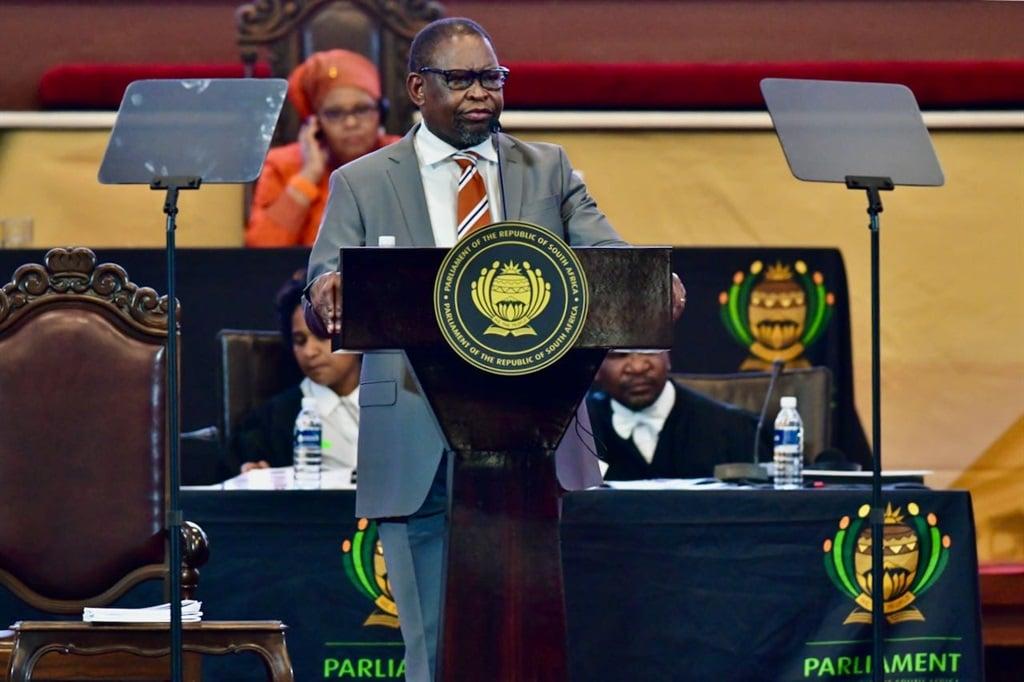
The revised outlook was presented by Finance Minister Enoch Godongwana in the Medium-Term Budget Policy Statement on 21 October. Although the government reported progress in stabilising public finances, the weaker growth projection underlines the distance between improved fiscal indicators and the stronger economic performance needed to create jobs, attract investment and improve household living standards.
Growth slows as external shocks intensify
The reduction from the February forecast of 1.6% to 1.2% reflects a more difficult international environment and softer domestic economic momentum. South Africa remains exposed to fluctuations in global commodity markets, international trade and energy prices because its economy depends on imported fuel and exports of minerals and other commodities.
The government identified the conflict in the Middle East and disruptions affecting oil supplies through the Strait of Hormuz as important risks to the global outlook. Higher energy prices increase transportation and production costs, placing pressure on manufacturers, agricultural businesses, logistics companies and households.
National Treasury expects growth to improve gradually to 1.6% in 2027 and reach 2% by 2029. However, these projections depend partly on the effectiveness of structural reforms, improved infrastructure delivery and a more supportive global environment. The forecast therefore represents a gradual recovery rather than a rapid economic turnaround.
The implications extend beyond headline economic statistics. Sustained growth is necessary to expand business activity, increase tax revenue and create employment opportunities. When economic expansion remains weak, companies may delay investment, limit recruitment or postpone expansion plans because future demand is uncertain.
For a country confronting persistent unemployment and unequal economic opportunities, the challenge is to convert macroeconomic stability into broader participation in productive economic activity.
Public finances show signs of improvement
Despite the weaker growth outlook, the government’s fiscal position has shown encouraging signs. The Medium-Term Budget Policy Statement reported that the debt-to-GDP ratio stabilised at 78.4% in the 2025/26 financial year, while the budget deficit was projected to narrow to 3.9% of GDP in 2026/27.
The government also intends to strengthen its primary surplus, which measures the difference between revenue and expenditure before interest payments. A stronger primary surplus can reduce borrowing requirements and help limit the amount of public money consumed by debt servicing.
This matters because debt-service costs compete with expenditure on essential services and infrastructure. When a growing share of government revenue is used to pay interest, fewer resources remain available for schools, healthcare, transport networks, water systems and other development priorities.
Nevertheless, debt stabilisation does not automatically produce faster economic growth. Its benefits depend on whether the government uses improved fiscal credibility to support productive investment, strengthen public institutions and encourage private-sector participation.
The government’s fiscal strategy therefore seeks to balance spending discipline with investments that can improve the economy’s long-term productive capacity.
Fuel prices add to household and business pressure
Energy prices have become a particularly important concern for South Africa’s economic outlook. Rising international oil prices have pushed up domestic fuel costs, adding to transportation expenses and increasing the cost of moving goods across the country.
Higher fuel prices affect households directly through motorists’ expenses and indirectly through food distribution, public transport, delivery services and the operating costs of businesses.
Statistics reported by Reuters showed that consumer inflation increased to 4.5% year on year in September 2026, compared with 4.4% in August. Transport inflation accelerated to 10.8%, reflecting the growing contribution of transportation costs to overall price pressures.
In response, the government announced temporary fuel levy reductions expected to provide R10 billion in relief. From 4 November to 1 December 2026, the levy reduction is set at R1.50 per litre for petrol and R3 per litre for diesel. Lower reductions will continue from December through 5 January 2027.
The intervention is intended to cushion consumers and businesses against elevated fuel prices while avoiding a permanent deterioration in the public finances. However, the announced levy reductions do not guarantee equivalent declines in pump prices, which also depend on international oil prices, exchange rates and other fuel-pricing components.
The temporary nature of the intervention is significant. Although it can provide short-term breathing room, sustained relief will depend on developments in global energy markets and the government’s ability to preserve fiscal flexibility.
Inflation complicates monetary policy
Higher fuel costs also create a difficult environment for the South African Reserve Bank. Monetary policymakers must prevent temporary price shocks from becoming persistent inflation while avoiding unnecessary damage to already weak economic activity.
The Reserve Bank raised its policy rate to 7.25% in September 2026, amid concerns about inflation and international supply disruptions. Its October Monetary Policy Review warned that inflation could remain elevated into 2027 before gradually returning towards the central bank’s 3% target.
Higher interest rates can help restrain inflation by moderating borrowing and demand. However, they also increase financing costs for households and businesses, potentially discouraging property purchases, business investment and consumer spending.
This creates a difficult policy trade-off. If inflation persists, monetary authorities may need to maintain restrictive conditions for longer. If growth deteriorates further, expensive borrowing could place additional pressure on businesses and consumers.
The eventual direction of monetary policy will depend on incoming inflation data, fuel-price developments, inflation expectations and evidence of underlying price pressures. The September inflation figures alone cannot determine the outcome of the Reserve Bank’s November meeting.
Structural reforms remain essential
The government’s medium-term economic strategy places considerable emphasis on structural reforms, particularly in energy, rail, logistics, water infrastructure and municipal administration.
These sectors influence the cost and reliability of doing business. Unreliable electricity, inefficient freight transport and inadequate water infrastructure can increase operating costs, delay production and make South African businesses less competitive.
Improvements could help companies move goods more efficiently, increase output and attract investment into productive activities. However, reform announcements must be followed by implementation, measurable results and effective oversight.
Infrastructure investment is particularly important because it can improve immediate economic activity while increasing productive capacity over time. Treasury reported that approved fiscal support through its Budget Facility for Infrastructure exceeded R100 billion, while infrastructure bonds had raised more than R14 billion since their initial issuance in December 2025.
The economic benefits will depend on whether projects are delivered efficiently, completed on time and maintained adequately. Funding commitments alone do not guarantee that infrastructure will improve business productivity or service delivery.
Municipal financial management is another critical issue. Poor revenue collection, unfunded budgets and deteriorating services can undermine local economies. Stronger accountability and better project management could help municipalities provide more reliable infrastructure for residents and businesses.
Investment and employment remain the central tests
South Africa’s improved fiscal indicators may help strengthen investor confidence, but long-term investment decisions depend on more than government borrowing figures.
Businesses also assess the likely growth of consumer demand, the availability of reliable infrastructure, policy certainty, labour productivity and the cost of capital.
A 1.2% growth rate creates a challenging environment for expanding employment at the scale required by the economy. Although individual industries may perform better than the national average, sustained job creation generally requires stronger and more broadly distributed economic activity.
The government faces the task of encouraging private investment without undermining fiscal discipline. Predictable regulation, efficient public services, competitive logistics and dependable energy supplies can help reduce investment risks and support business expansion.
Improved growth would also strengthen public finances by expanding the tax base. Higher employment and business earnings can generate additional revenue without requiring repeated tax increases, helping government finance essential services while managing its debt burden.
Risks and prospects for 2027
Several uncertainties will influence the outlook over the coming months. Continued disruption to international oil supplies could raise transportation and production costs further. Weather-related pressures could also affect agricultural output and food prices, while weaker global demand could limit export opportunities.
At the same time, stronger infrastructure delivery and effective structural reforms could improve domestic productive capacity and encourage private investment.
The government’s projected recovery to 1.6% growth in 2027 should therefore be understood as a forecast rather than a guaranteed outcome. Progress will depend on domestic policy implementation as well as international developments beyond South Africa’s control.
Conclusion
South Africa’s latest medium-term budget presents a mixed economic picture: public finances are showing signs of stabilisation, but the growth outlook has weakened and households continue to face higher living costs.
The temporary fuel levy reductions offer targeted relief, while infrastructure investment and structural reforms could improve the economy’s longer-term prospects. However, these measures will need to translate into tangible improvements in productivity, business confidence, employment and household incomes.
Ultimately, the country’s macroeconomic challenge is not simply to stabilise debt or contain inflation. It is to establish the conditions for sustained, inclusive growth that enables more South Africans to participate in economic opportunity.
The coming months will test whether fiscal discipline and reform efforts can deliver that broader recovery.



