




“South Africa’s esports scene continues to develop through school competitions, university leagues and organised online tournaments, creating opportunities for young players to demonstrate their skills and pursue competitive gaming. On 24 October, the published Mettlestate Cash Cup schedule lists a Clash Royale competition, while recent reporting has highlighted the achievements of school teams and the importance of building pathways into the gaming industry.”
South African Esports Gains Momentum as National Championships and Competitive Gaming Opportunities Expand
South Africa’s esports industry continues to build a stronger presence within the country’s sporting and entertainment landscape, supported by organised competitions, school programmes, university leagues and opportunities for players to compete for prize money. Developments across these areas demonstrate how competitive gaming is creating new platforms for young South Africans to showcase their talent, represent their institutions and potentially pursue careers in the digital entertainment industry.
On 24 October 2026, two developments stand out in the competitive gaming calendar: the scheduled first day of Mind Sports South Africa’s Limpopo Championships and the Clash Royale Cash Cup listed by tournament organiser Mettlestate. Although neither announcement should be mistaken for a confirmed result published today, both illustrate the breadth of organised esports activity taking place in South Africa.
Limpopo championships highlight organised competition
Mind Sports South Africa (MSSA), the country’s nationally recognised governing body for mind sports, including esports, lists its eighth Limpopo Championships and fourth Limpopo Online Championships as taking place on 24 and 25 October 2026. The first day falls on Saturday, offering a timely example of regional competition within the national esports calendar.
Regional championships are important because they provide structured opportunities for players beyond the largest metropolitan gaming communities. By supporting competitive activity at provincial and online levels, esports organisers can help participants gain experience, test their skills and engage with other players in organised environments.
Online competition can also reduce some of the geographical barriers associated with traditional sporting events. Depending on the format and eligibility requirements, players may be able to participate without travelling to a central venue. However, access still depends on reliable internet connectivity, suitable equipment, competition rules and any applicable registration requirements.
For South African esports to continue developing, these regional opportunities need to connect with broader competitive structures. Clear schedules, transparent rules, reliable tournament administration and credible results help players understand how to progress from local participation towards higher levels of competition.
The MSSA event listing confirms the scheduled championships, but a complete list of participating players, match results and champions was not established by the available reporting. Those details should therefore be confirmed through the organiser’s official updates rather than assumed.
Cash-prize tournaments give players another competitive route
A second development is the Mettlestate Cash Cup schedule for the week of 19–25 October 2026. Esports Central reported that the programme includes five competitions across different gaming titles, with the events spread throughout the week.
The published schedule lists the Clash Royale Cup for Saturday, 24 October, at 14:00 South African Standard Time. It is described as a one-versus-one competition, with free entry and a base prize pool of R1,000 that can rise to R2,000 depending on participants’ premium or VIP status. The published prize structure allocates R500 to first place, R300 to second and R200 to third at the base level.
These competitions offer a different route from school and university leagues. Instead of representing an educational institution, players can enter an individual tournament or compete in the formats specified by the organiser. Repeated competitions may also give participants opportunities to learn how to manage pressure, prepare strategically and evaluate their performance against unfamiliar opponents.
Nevertheless, a prize pool should not be confused with a guaranteed income. Winning depends on performance, and players may face substantial competition. Anyone planning to enter should confirm the official registration requirements, eligibility rules, tournament format and closing times before attempting to participate.
The schedule also demonstrates the diversity of South African competitive gaming. Football simulations, mobile strategy games and battle royale titles can appeal to different audiences, creating multiple entry points for people interested in esports.
School esports is developing the next generation
One of the clearest signs of longer-term growth is the expansion of competitive gaming in South African schools.
In a report published on 19 October, Eyewitness News profiled Seth Solomons, a Rocket League player for CDV Wolves Prime at Curro Durbanville High School in Cape Town. The report described the team’s back-to-back school championship success in 2025 and 2026, highlighting the preparation and teamwork involved in reaching the top of its competition.
Rocket League combines football-inspired objectives with vehicle-based gameplay. At competitive level, players must coordinate their movements, anticipate opponents’ decisions and make rapid adjustments as matches unfold. Success requires more than familiarity with the controls: team communication and consistent practice are also important.
The Eyewitness News report quoted Solomons describing the extensive time he had invested in developing his skills. His experience illustrates how competitive gaming can involve structured preparation rather than casual play alone. The report also discussed the support provided by the school community and the challenges of changing public perceptions about esports.
Tanya Neethling, the school’s esports manager, emphasised the need for greater recognition of competitive gaming as a serious activity. That recognition matters because school programmes need appropriate facilities, adult supervision, fair competition rules and an environment that allows learners to balance gaming with their academic responsibilities.
School esports can also help students develop transferable skills. Team-based competition encourages communication, cooperation, decision-making and learning from mistakes. These abilities may be useful in other sporting activities, education and future employment.
However, participation should be balanced with sufficient sleep, physical activity, schoolwork and time away from screens. A sustainable esports programme should encourage healthy routines rather than reward excessive playing hours.
University leagues provide a bridge to higher competition
Universities are another important part of South Africa’s esports development. Varsity Esports, launched in 2024 through a partnership involving Mettlestate and ASEM, has established a structured competitive platform for students representing their institutions.
An announcement published in September outlined the 2026 Split 2 qualification process and identified the University of Pretoria’s UP-Tuks as the host for the finals scheduled for 2 and 3 October. The competition’s broader format includes qualification stages, finals and a route towards the rAge Grand Finals.
The announcement reported almost 500 players participating in playoff rounds across university campuses during the qualification period. It also described prize allocations for the leading universities and additional prize money for players and teams across the competition’s three titles. These figures relate to the reported 2026 competition structure, not a new announcement made on 24 October.
University leagues have the potential to strengthen the transition between school participation and more advanced competitive environments. Students can represent their institutions, connect with teammates and gain experience in competitions with defined rules and schedules.
They may also encounter opportunities in areas beyond playing professionally, including coaching, broadcasting, tournament administration, event production, marketing and content creation. As with traditional sports, the competitive playing field is only one part of the wider ecosystem.
Commercial tournaments demonstrate audience demand
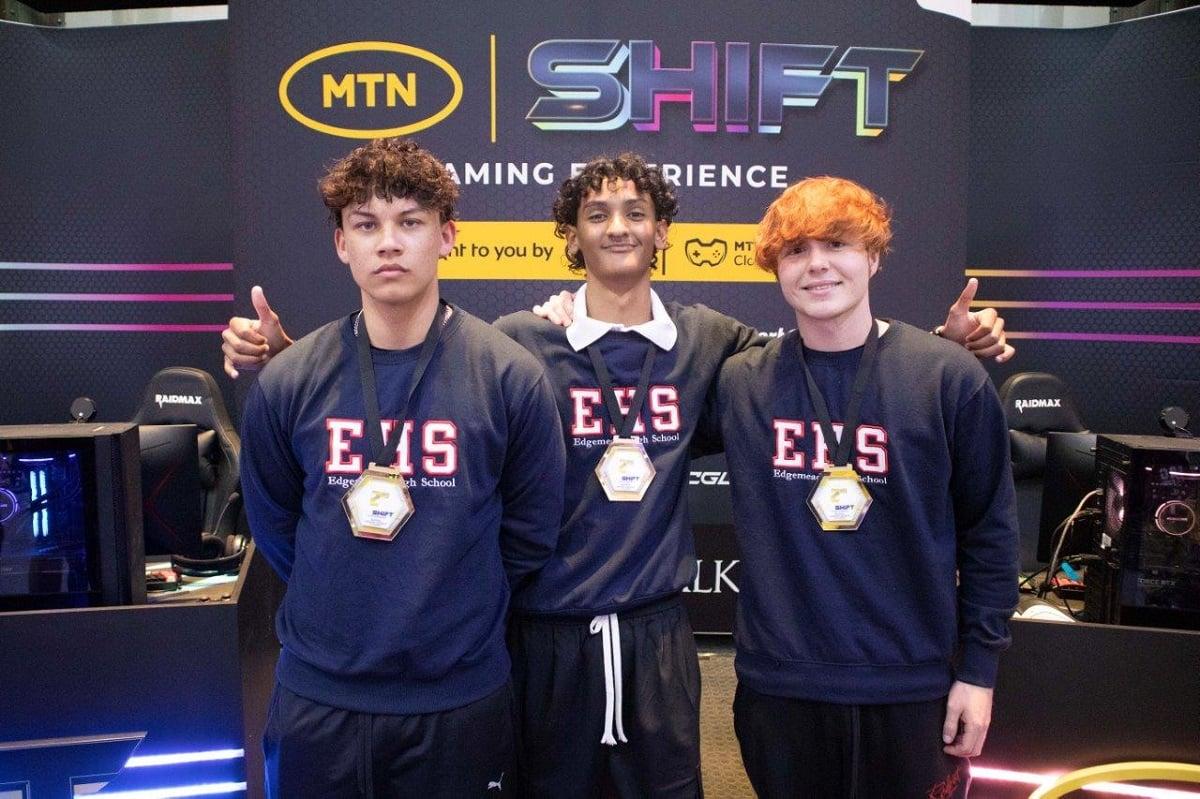
The commercial side of esports is also attracting attention. On 8 October, South Africa Today reported that Hyprop’s SHIFT Gaming Experience had concluded its national finals at Canal Walk after a tournament series across eight shopping centres.
According to the report, the series attracted 42,327 competitors and visitors and distributed R350,000 in prize money. The final crowned winners in EA Sports FC 26, Beat Saber and Brawlhalla.
The event demonstrates how shopping centres can provide physical venues where players compete while spectators watch. Such settings bring esports into public spaces and introduce competitive gaming to people who might not regularly follow online tournaments.
For sponsors and venue operators, tournaments can create opportunities for audience engagement and brand visibility. For players, live events can provide valuable experience competing in front of spectators.
However, the long-term value of these initiatives depends on whether they produce lasting participation, accessible competition and sustainable opportunities for players and organisers.
South African players are looking beyond national borders
International competition is another important measure of progress. Esports Central reported on 5 October that South Africa had qualified a team for the FIFAe World Cup 2026 featuring Rocket League, scheduled for 20–25 October in Jeddah, Saudi Arabia.
The report named David Morgenrood, Gareth Spiers and Brayden Keith as the players, with Nicholas Fourie as coach. It stated that South Africa qualified through the FIFAe Continental Championship 2026 Africa.
The qualification offered South African players an opportunity to compete against international opposition. Such tournaments can expose teams to different tactical approaches and higher levels of competition while giving local audiences a reason to follow their national representatives.
Qualification alone does not establish how the team performed at the World Cup. Final standings and match outcomes require separate confirmation from reliable event reporting.
International representation also highlights the importance of coaching, consistent practice, team selection and access to competitive facilities. Developing those resources can help South African players prepare for future regional and global tournaments.
Challenges that still need attention
Despite its progress, esports faces several challenges. Access to gaming hardware, stable internet connections and suitable practice environments remains important, particularly for learners from communities with limited resources.
The Toyota Gaming Engine School Challenge is one initiative aimed at widening access. Its official programme announcement described school and community participation, regional qualifiers and collaboration with the African Cyber Gaming League to create opportunities for young players.
Another challenge is ensuring that competitions are administered fairly. Clear eligibility rules, transparent prize arrangements, appropriate safeguarding for minors and reliable dispute-resolution processes help protect participants and maintain public confidence.
Schools, parents, sponsors and organisers also need to recognise that gaming is not automatically a professional career. Players who aspire to compete at a high level need realistic expectations, education and alternative career pathways.
Outlook for South African esports
Taken together, the scheduled Limpopo championships, the Mettlestate Cash Cup calendar, school achievements, university competition and commercial gaming events point to a varied esports environment in South Africa.
The next stage of development will depend on maintaining accessible competitions, strengthening pathways between different levels of play and building reliable partnerships among organisers, educational institutions and sponsors.
For players, the opportunities are varied: participate in a regional event, enter an online tournament, represent a school or university, or work towards international qualification. Each route requires commitment, preparation and an understanding of the relevant competition rules.
The most important development is not simply the number of tournaments on the calendar. It is whether those events create meaningful opportunities for more people to participate, improve and progress.
As South African esports continues to evolve, organised competition and youth development are likely to remain central to its future. The events scheduled for 24 October provide a useful snapshot of that momentum, even as the results and next milestones await confirmation.



