




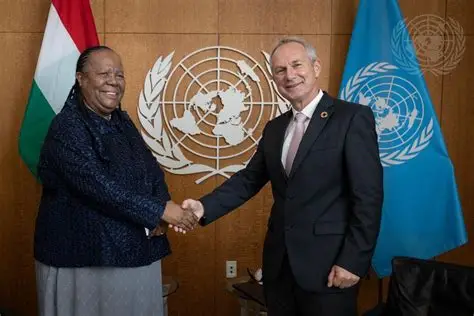
“South Africa is under intense diplomatic scrutiny after xenophobic campaigns forced more than 178,000 migrants—mainly from Zimbabwe, Mozambique, and Malawi—to flee the country. The crisis has sparked calls within the African Union to address xenophobic violence, while President Cyril Ramaphosa insists on respecting national sovereignty, drawing criticism for failing to confront regional authoritarianism.”
South Africa’s international relations are being tested as xenophobic violence and mass migration dominate the regional agenda. The crisis, which has displaced over 178,000 migrants, is not only a humanitarian emergency but also a diplomatic flashpoint, exposing Pretoria’s strained balancing act between domestic politics and regional leadership.
Background of the Crisis
- Xenophobic campaigns have surged ahead of local elections, with organized groups targeting foreign nationals.
- Migrants from Zimbabwe, Mozambique, and Malawi have borne the brunt, fleeing in unprecedented numbers.
- The violence has created lawlessness in urban centers, undermining South Africa’s image as a regional stabilizer.
Diplomatic Fallout
- Ghana formally requested that the African Union (AU) place xenophobic violence on its summit agenda.
- Pretoria attempted to redirect the AU’s focus toward migration push factors, but this move highlighted South Africa’s role in regional instability.
- The Democratic Alliance (DA) challenged Ramaphosa in Parliament, accusing his government of ignoring democratic backsliding in Zimbabwe, which they argue directly fuels migration.
Ramaphosa’s Position
- Ramaphosa insists that sovereignty must be respected, arguing governance issues in neighboring states are for their citizens to resolve.
- Critics counter that this non-interference policy is inadequate, as authoritarian collapse in Zimbabwe and elsewhere inevitably spills over into South Africa.
- His stance reflects a delicate domestic balancing act: appeasing nationalist voters while maintaining regional credibility.
Regional Implications
- Zimbabwe’s democratic decline has been a major driver of migration, with economic collapse and political repression pushing citizens across borders.
- South Africa’s refusal to confront Zimbabwe’s governance crisis has created diplomatic friction with neighbors who see Pretoria as shirking its leadership role.
- The AU summit could become a turning point, forcing South Africa to either embrace a more proactive regional stance or risk isolation.
Domestic Political Context
- The xenophobic campaigns are tied to local election mobilization, with populist groups exploiting anti-immigrant sentiment.
- The ruling African National Congress (ANC) faces pressure to show strength domestically, while the DA positions itself as the defender of democratic values in foreign policy.
- This dynamic complicates Pretoria’s ability to craft a coherent international relations strategy.
International Reactions
- Western observers have criticized South Africa’s handling of migration, warning of reputational damage in multilateral forums.
- Regional partners demand stronger leadership, particularly in addressing Zimbabwe’s collapse.
- The crisis risks undermining South Africa’s credibility in the African Union and broader global institutions.
Why It Matters
- Humanitarian impact: 178,000 migrants displaced, straining resources in neighboring states.
- Diplomatic credibility: South Africa’s leadership role in Africa is questioned.
- Political stability: Domestic populism threatens to derail Pretoria’s foreign policy coherence.
Conclusion
South Africa’s international relations are at a crossroads. The xenophobic violence and migration crisis expose the limits of Ramaphosa’s sovereignty-first approach, while regional partners demand stronger leadership against authoritarianism. The coming AU summit will test whether Pretoria can recalibrate its foreign policy or remain trapped in defensive isolation.



