




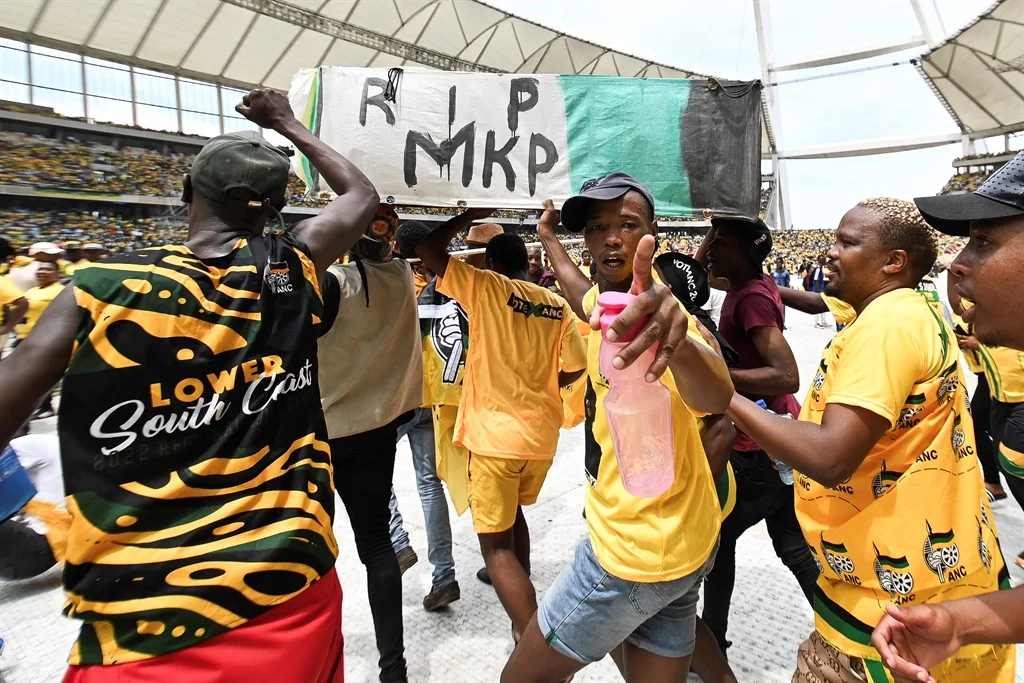
“Former President Jacob Zuma expelled several uMkhonto weSizwe Party members after they disrupted a multi-faith prayer meeting in Durban to protest alleged irregularities in candidate list submissions. The incident underscores growing internal tensions within the MK Party as it prepares for the November 4 elections.”
South Africa’s political landscape is once again in the spotlight as former President Jacob Zuma, now leader of the uMkhonto weSizwe Party (MKP), took decisive action against internal dissent. On September 21, 2026, Zuma expelled several party members who staged a protest during a prayer meeting in Durban, highlighting the fragile balance between activism, discipline, and democratic representation within the MKP. This episode reveals the challenges facing new political movements in South Africa as they attempt to consolidate power while maintaining credibility among grassroots supporters.
Background: MK Party’s Rise
The MK Party, founded under Zuma’s leadership, has positioned itself as a populist alternative to the African National Congress (ANC). It appeals strongly to disenfranchised Black South Africans who feel neglected by mainstream politics. Since its inception, the MKP has emphasized grassroots democracy, promising to amplify the voices of ordinary citizens. However, the recent candidate list controversy has exposed cracks in this narrative.
The Durban Incident
Hundreds of supporters gathered at a multi-faith prayer meeting in Durban, organized to promote peaceful elections. Instead of unity, the event was disrupted by chanting protesters waving placards demanding transparency in candidate list submissions. Zuma attempted to calm the crowd, acknowledging administrative glitches but insisting that public protests were not the appropriate channel for resolution. When the disruption escalated, he ordered the removal of the protesters, effectively expelling them from the party.
Party Leadership Response
MK Party Secretary-General Sibonelo Nomvalo condemned the protest, calling it “the highest form of ill discipline.” He stressed that grievances must be addressed through internal channels, not public demonstrations. Nomvalo emphasized that the party had already initiated corrective measures, including meetings with affected candidates and ward representatives. He argued that respecting majority community choices was essential to upholding democratic principles.
Activism vs. Discipline
This incident raises a critical question: where does activism end and party discipline begin? On one hand, the protesters embodied grassroots activism, demanding accountability from leadership. On the other, their actions threatened party unity and electoral momentum. Zuma’s decision to expel them reflects a prioritization of discipline over activism, a move that may alienate some supporters but strengthen organizational control.
Electoral Implications
With elections scheduled for November 4, the MK Party cannot afford internal chaos. Candidate list irregularities risk undermining credibility, especially in municipalities where the party has strong support. Nomvalo expressed confidence that despite setbacks, the MKP would secure victories in key areas. However, the expulsions could weaken grassroots enthusiasm, particularly among communities that feel sidelined by the candidate selection process.
Broader Political Context
South Africa’s political environment is increasingly fragmented. The ANC faces declining support, while opposition parties struggle to present unified alternatives. The MKP’s rise reflects widespread dissatisfaction, but internal disputes threaten its stability. Activism within political parties is not new in South Africa; however, balancing activism with organizational discipline remains a persistent challenge.
Public Perception
For many South Africans, the Durban incident symbolizes the tension between democratic ideals and political pragmatism. Supporters who view the MKP as a voice for marginalized communities may see the expulsions as betrayal. Conversely, others may applaud Zuma’s firm stance, interpreting it as necessary to maintain order and focus ahead of elections.
Activism in South African Politics
Activism has long been central to South Africa’s political identity, from anti-apartheid movements to contemporary struggles against inequality. The MKP’s internal protest reflects this tradition, but also demonstrates the risks of activism within party structures. When activism challenges leadership authority, it can destabilize movements, especially during critical electoral periods.
Conclusion
Jacob Zuma’s expulsion of protesting MK Party members in Durban highlights the complex interplay between activism, discipline, and democracy in South African politics. As the November 4 elections approach, the MKP must navigate internal divisions while maintaining credibility among supporters. Whether Zuma’s decision strengthens or weakens the party remains to be seen, but the incident underscores the enduring importance of activism in shaping South Africa’s political future.



