




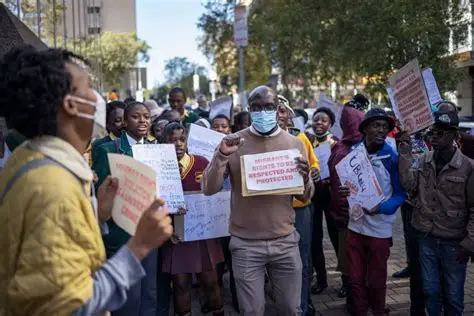
“South Africa has witnessed a wave of anti-migrant protests, resulting in over 900 arrests and violent clashes, as activist groups escalate tactics from mass marches to door-to-door campaigns. Human rights organizations warn that this vigilantism threatens constitutional democracy and Pan-African unity.”
In June 2026, a coalition of more than 20 civil society groups, including the prominent March and March movement, issued an ultimatum demanding undocumented migrants leave South Africa by June 30. Demonstrations erupted in Johannesburg, Durban, and Cape Town, with protesters chanting “Abahambe!” (“They must go!”). While many marches were peaceful, sporadic violence led to looting, assaults, and fatalities.
Escalation into Door-to-Door Campaigns
By July 9, activists adopted a new tactic: small groups of 50–100 people moving through neighborhoods, identifying immigrant households, and demanding departures. Unlike mass marches, these campaigns are intimate and confrontational, leaving residents unsettled. Reports describe activists knocking on doors—sometimes politely, sometimes aggressively—urging foreign nationals to leave.
Human Impact
The consequences have been devastating. Tens of thousands of migrants, including many with legal documentation, have fled South Africa. Zimbabwe reported over 60,000 citizens returning home, while Malawi repatriated 38,000 nationals. Families have been uprooted, businesses abandoned, and communities fractured. Migrants describe living in fear, with some saying they no longer feel safe even with valid residency papers.
Government Response
President Cyril Ramaphosa convened emergency meetings with protest organizers, acknowledging public concerns about illegal immigration and strained public services. However, he condemned vigilantism, warning: “Taking the law into one’s own hands has no place in our constitutional democracy.” Despite these appeals, arrests surged—over 900 people detained nationwide for violence, robbery, and immigration violations.
Violence and Security Measures
In Johannesburg’s Alexandra township, police confirmed one person was shot dead during looting of foreign-owned shops. Soldiers were dispatched to Hillbrow after a shooting injured two people, including a 17-year-old. In Durban, thousands marched chanting anti-migrant slogans, while in Cape Town, sporadic clashes broke out in migrant-heavy neighborhoods.
Regional and Diplomatic Fallout
The activism has triggered diplomatic tensions across Africa. Nigeria, Ghana, and Mozambique reported deaths of their nationals in xenophobic attacks. Zimbabwe and Malawi organized mass repatriations, while Ghana postponed a planned visit by President Ramaphosa. The African Union is expected to discuss “Afrophobia” at its next summit, highlighting the regional implications of South Africa’s unrest.
Human Rights Concerns
Human rights groups, including Amnesty International South Africa, condemned the targeting of migrants, arguing they are scapegoats for deeper socioeconomic failures such as unemployment and a backlogged asylum system. Activists warn that the door-to-door campaigns represent a dangerous slide into vigilantism, undermining South Africa’s constitutional democracy and Pan-African commitments.
Conclusion
South Africa’s anti-migrant activism has evolved from mass protests into localized intimidation, leaving migrants vulnerable and communities fractured. With over 900 arrests, mounting violence, and diplomatic fallout, the crisis underscores the urgent need for balanced immigration policy, stronger law enforcement, and regional cooperation to prevent further escalation.



