




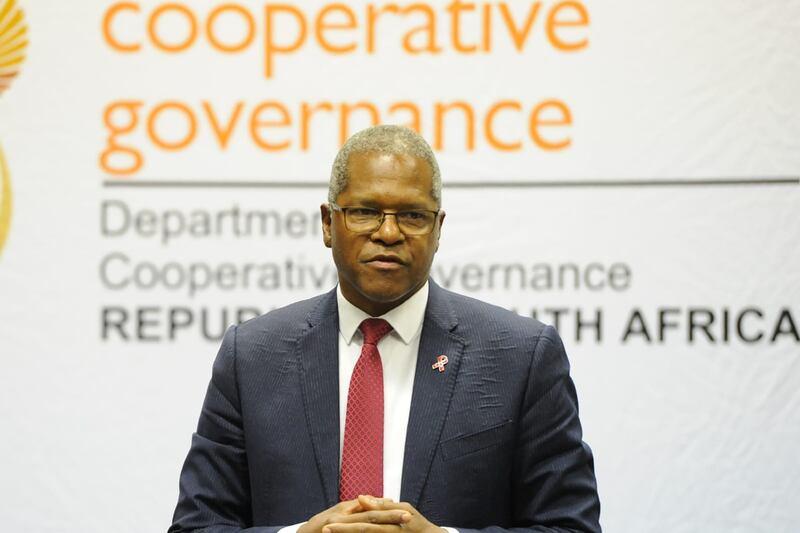
“South Africa’s Department of Cooperative Governance and Traditional Affairs (Cogta) has issued new guidelines intended to promote stable, accountable and functional coalition governments following the country’s 2026 local government elections. The policy intervention comes as approximately 138 municipalities face the challenge of establishing councils by 26 November, amid widespread electoral fragmentation and negotiations between political parties.”
South Africa Introduces Coalition Governance Guidelines as Municipalities Face Critical Political Negotiations
South Africa has introduced new guidelines aimed at strengthening coalition governance and stabilising municipal administrations following the country’s 2026 local government elections. The policy intervention comes as political parties prepare to negotiate governing arrangements in municipalities where electoral outcomes have left councils without outright majorities, creating significant implications for political accountability, administrative continuity and public service delivery.
The Department of Cooperative Governance and Traditional Affairs (Cogta), under Minister Velenkosini Hlabisa, has issued the Guidelines for Stable Coalitions in Local Government following approval by the Ministerial Meeting of Members of Executive Councils (MINMEC). The framework seeks to prevent political instability from undermining municipal institutions while encouraging parties to establish workable, transparent and accountable governing partnerships.
Election Results Create New Governance Challenges
South Africa’s local government elections, held on 4 November 2026, produced a highly fragmented political landscape. Numerous municipalities now require coalition arrangements because no single political party obtained sufficient council seats to govern independently.
Reports indicate that approximately 138 municipalities face coalition negotiations or related council-formation challenges. The outcome represents a substantial increase in the number of municipalities requiring coalition agreements compared with the previous local government election cycle.
The fragmentation is particularly significant in metropolitan areas, where political parties must negotiate governing partnerships to establish executive structures, elect mayors and speakers, and determine administrative priorities.
The election results have consequently placed municipal coalition governance at the centre of South Africa’s political and institutional policy debate.
According to reporting by Central News, more than 120 municipalities, including seven of the country’s eight metropolitan areas, failed to produce outright majorities for individual parties.
These outcomes demonstrate the increasing importance of coalition arrangements in determining how local government operates.
Government Introduces Guidelines for Stable Coalitions
The newly issued guidelines are designed to provide practical assistance to political parties and municipalities negotiating coalition arrangements.
Cogta developed the framework using lessons from previous coalition governments, municipal governance research and consultations involving provincial governments, the South African Local Government Association and other stakeholders.
The guidelines seek to establish a common approach to coalition negotiations while protecting municipal administrations from political instability.
According to Cogta spokesperson Pearl Maseko-Binqose, the framework provides practical guidance for managing coalition arrangements, resolving disputes and ensuring political stability without compromising municipal operations or service delivery.
The policy recognises that coalition governments are legitimate democratic arrangements. However, it also acknowledges that prolonged negotiations, frequent leadership changes and disagreements between political parties can weaken municipal institutions.
The government therefore intends to encourage political maturity, mutual respect and cooperation between parties entering coalition arrangements.
Written Agreements and Shared Policy Priorities
One of the important features of the guidelines is their encouragement of written coalition agreements.
Political parties entering governing partnerships are encouraged to establish agreements that clearly outline shared policy priorities, political responsibilities, decision-making arrangements and procedures for resolving disagreements.
The framework also provides a template coalition agreement that political parties can adapt to individual municipalities.
Written agreements are intended to reduce uncertainty surrounding coalition governance and provide a clearer foundation for political cooperation.
They can also assist municipalities in maintaining continuity when disagreements arise between coalition partners.
Although the guidelines encourage formal agreements, coalition arrangements remain political agreements between parties and do not replace existing constitutional or legislative requirements.
The government expects parties to approach negotiations responsibly and prioritise the interests of residents rather than focusing exclusively on political positions.
Protecting Municipal Administration From Political Interference
Another important policy objective concerns the protection of municipal administrations from political interference.
The guidelines seek to safeguard administrative processes, particularly decisions involving appointments, procurement and the awarding of municipal tenders.
This provision reflects longstanding concerns about political instability and interference in municipal administrative systems.
Municipal administrations are responsible for implementing council decisions, managing public resources and maintaining essential services.
When political disagreements interfere with administrative responsibilities, municipalities can experience delays in procurement, disruptions in planning and difficulties implementing approved programmes.
The framework therefore encourages stronger governance arrangements, clearer delegation systems and appropriate council rules.
These measures are intended to ensure that political disagreements do not unnecessarily interrupt municipal operations.
Municipal Council Formation Deadline Approaches
The introduction of the guidelines comes as municipalities face an important statutory deadline.
Following the publication of election results in the Government Gazette on 11 November 2026, metropolitan and local municipal councils are required to convene within the prescribed 14-day period.
The council-formation window runs from 12 November to 26 November 2026.
During this period, municipalities must establish their councils and complete the necessary processes for electing political office-bearers.
District municipal councils can subsequently be constituted once the relevant local councils have appointed their representatives.
Cogta has urged political parties and municipalities to ensure that negotiations do not delay council formation.
The department has also called on provincial governments and Members of Executive Councils responsible for local government to provide support to municipalities throughout the process.
Municipalities that fail to constitute councils within the prescribed period must be dealt with according to applicable legislative provisions and procedures.
Service Delivery Remains the Central Policy Concern
The government’s coalition guidelines place service delivery at the centre of municipal governance.
South African municipalities are responsible for providing essential services, including water, electricity, sanitation, refuse removal and local infrastructure management.
Political instability can affect the implementation of municipal budgets, infrastructure projects and service-delivery programmes.
Frequent changes in leadership may also delay decisions, weaken institutional accountability and create uncertainty among municipal employees and communities.
The government argues that residents should not suffer because political parties cannot reach agreements.
The guidelines therefore encourage coalition partners to maintain administrative continuity and ensure that municipal operations remain functional during political disagreements.
This approach is particularly important in municipalities already experiencing administrative weaknesses or significant service-delivery challenges.
Municipal Coalitions Bill Remains Before Parliament
The new guidelines also form part of a broader legislative reform process.
The Local Government: Municipal Structures Amendment Bill of 2026, commonly known as the Municipal Coalitions Bill, remains before Parliament.
The proposed legislation seeks to establish a more formal framework for coalition governance.
Among its proposed measures are requirements for written coalition agreements, publication of agreements, adjustments to council-formation timelines in certain circumstances and limitations on frequent motions of no confidence.
However, because the legislation has not yet become law, the guidelines provide an interim framework for municipalities navigating coalition arrangements.
The government expects the framework to assist political parties while the legislative process continues.
The relationship between the guidelines and the proposed legislation will remain important as South Africa considers longer-term reforms to municipal governance.
Provincial Governments Expected to Provide Oversight
Provincial governments will play an important role in implementing the guidelines.
Cogta has called on provincial departments and MECs responsible for local government to distribute the framework, monitor compliance with statutory requirements and intervene where instability threatens municipal operations.
Provincial authorities are expected to support municipalities experiencing political deadlocks or difficulties establishing governing arrangements.
This support is particularly important in municipalities where negotiations involve several political parties with competing priorities.
The guidelines also form part of broader efforts to strengthen local government institutions and improve accountability.
Cabinet has approved a revised White Paper on Local Government that outlines longer-term reform objectives.
The coalition framework is intended to complement these broader institutional reforms.
Political Negotiations Could Shape Municipal Priorities
Coalition negotiations will determine more than the allocation of mayoral positions and council leadership responsibilities.
They will also influence municipal policy priorities, budget decisions and infrastructure programmes.
Political parties entering coalition agreements must negotiate their approaches to development planning, public spending, service delivery and administrative oversight.
The guidelines encourage parties to establish shared priorities and clear decision-making procedures.
These arrangements could help municipalities maintain policy continuity even when coalition partners disagree on particular issues.
However, the effectiveness of the framework will depend on whether political parties implement its recommendations responsibly.
Coalition agreements alone cannot guarantee administrative efficiency or improved service delivery.
Municipalities will still require competent leadership, financial discipline, effective administration and strong accountability mechanisms.
Accountability and Public Expectations
South Africans will closely monitor how political parties respond to the new coalition environment.
Residents expect municipal representatives to address practical challenges affecting their communities.
These include unreliable water supplies, electricity interruptions, inadequate sanitation, deteriorating roads and weaknesses in municipal financial management.
The guidelines therefore place considerable responsibility on political parties to demonstrate that coalition governance can produce effective administration.
Public accountability will remain essential throughout the process.
Municipal councils must continue to exercise oversight over administrative performance and public expenditure.
Coalition partners will also need to communicate clearly with residents about governing agreements, municipal priorities and implementation progress.
Transparent decision-making can help strengthen public confidence in municipalities operating under coalition arrangements.
Conclusion: A Critical Test for South African Local Government
South Africa’s coalition governance guidelines represent an important policy response to the changing political landscape following the 2026 local government elections.
By encouraging written agreements, protecting municipal administration, strengthening dispute-resolution arrangements and prioritising service delivery, the government seeks to reduce the risks associated with unstable coalition governments.
The immediate challenge is ensuring that municipalities establish functioning councils before the 26 November deadline.
Beyond council formation, political parties must demonstrate that coalition agreements can translate into effective governance and improved municipal performance.
The success of the guidelines will ultimately depend on cooperation between political parties, municipal administrations, provincial governments and communities.
South Africa’s growing coalition environment presents both institutional challenges and opportunities for democratic accountability.
The government’s central objective remains clear: political negotiations must produce municipalities capable of delivering essential services, managing public resources responsibly and responding effectively to residents’ needs.
As municipalities begin establishing their new governing arrangements, the implementation of these guidelines will become an important test of South Africa’s commitment to stable, accountable and functional local government.



