




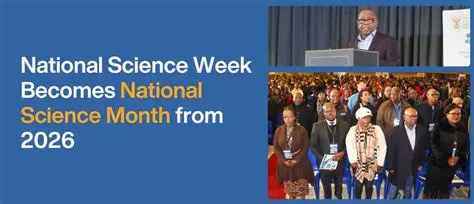
“South Africa has officially launched its inaugural National Science Month (NSM), transforming the former National Science Week into a month-long program to expand public engagement in science and innovation. The initiative brings together government, academia, industry, and civil society to strengthen the country’s National System of Innovation and inspire future STEM leaders.”
On 4 July 2026, South Africa marked a historic milestone in its innovation journey with the launch of National Science Month (NSM) at the Vaal University of Technology. This initiative, spearheaded by the Technology Innovation Agency (TIA) and the Department of Science, Technology, and Innovation (DSTI), represents a bold expansion of the country’s science engagement agenda. By extending the former National Science Week into a month-long program, South Africa is signaling its determination to embed science and innovation into the fabric of society.
Background and Context
South Africa has long recognized the importance of science and technology in driving economic growth, social development, and global competitiveness. The Decadal Plan 2022–2032 set ambitious goals to transform the country’s innovation landscape, including raising gross expenditure on research and development to 1.5% of GDP. National Science Month is a practical manifestation of these ambitions, designed to foster inclusive participation and strengthen the National System of Innovation (NSI).
Key Stakeholders
The launch event featured prominent figures such as Minister Blade Nzimande, TIA CEO Dr. Zwanani Titus Mathe, and TIA Board Chairperson Loyiso Tyira. Major institutions including the Council for Scientific and Industrial Research (CSIR), National Research Foundation (NRF), South African National Space Agency (SANSA), and the Academy of Science of South Africa (ASSAf) pledged active participation. Their involvement underscores the collaborative nature of NSM, bridging government, academia, and industry.
Program Structure
National Science Month is organized around 14 thematic areas, ranging from technology and innovation to climate change, human health, science diplomacy, and decolonisation of knowledge systems. Exhibitions, workshops, and public engagement activities will be hosted across the country, ensuring that science is accessible to diverse communities. The program also emphasizes STEM career promotion, aiming to inspire young South Africans to pursue paths in science and technology.
Economic and Social Impact
The initiative is expected to generate significant economic benefits by stimulating innovation-driven industries and creating opportunities for small businesses in the science and technology sector. Socially, NSM seeks to build a science-literate society, empowering citizens to make informed decisions about issues such as health, energy, and climate change. By embedding innovation literacy into everyday life, South Africa hopes to cultivate resilience and adaptability in an increasingly complex global environment.
Strategic Importance
National Science Month aligns with South Africa’s broader innovation priorities, including artificial intelligence, energy security, space exploration, and vaccine manufacturing. These areas are critical for the country’s long-term sustainability and competitiveness. The initiative also strengthens international partnerships, particularly within Africa and the Global South, positioning South Africa as a leader in science diplomacy.
Public Engagement
One of the most significant aspects of NSM is its emphasis on public engagement. By involving schools, universities, civil society organizations, and local communities, the program ensures that science is not confined to laboratories but becomes part of everyday discourse. Interactive exhibitions, science journalism initiatives, and community dialogues will help demystify complex scientific concepts and highlight their relevance to ordinary citizens.
Challenges and Opportunities
While the launch of NSM is a major achievement, challenges remain. South Africa must address issues such as inequality in access to education, digital divides, and limited research infrastructure in certain regions. However, the opportunities presented by NSM—such as fostering innovation-driven entrepreneurship, strengthening STEM education, and enhancing global competitiveness—far outweigh these challenges.
Conclusion
The launch of National Science Month 2026 marks a turning point in South Africa’s innovation journey. By expanding public participation, strengthening institutional collaboration, and promoting STEM careers, the initiative lays the foundation for a more inclusive and resilient innovation ecosystem. As Minister Nzimande emphasized, the future depends on the country’s willingness to use innovation to advance justice, equality, and peace. National Science Month is not just a celebration of science—it is a strategic investment in South Africa’s future.



