




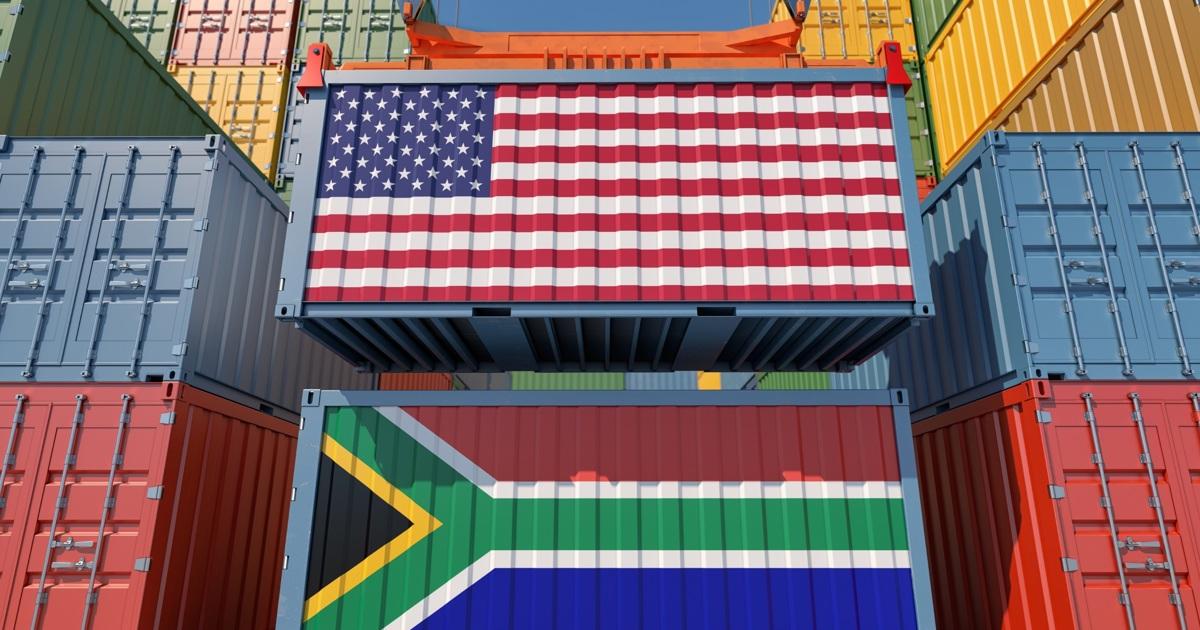
“South Africa is intensifying negotiations with the United States to preserve its preferential access to the American market under the African Growth and Opportunity Act (AGOA), with Trade, Industry and Competition Minister Parks Tau confirming that Pretoria has made substantial proposals involving market access for American poultry and pork. The outcome of the US eligibility review, expected on 2 November 2026, could have significant implications for South African exporters, manufacturing, agricultural businesses, investment and employment.”
South Africa makes fresh trade concessions to the United States as crucial AGOA decision threatens export market access
South Africa’s trade negotiations enter a decisive period
South Africa’s economic relationship with the United States is approaching an important turning point as the government works to preserve preferential access to the American market through the African Growth and Opportunity Act (AGOA). With Washington expected to announce its annual eligibility review decision on 2 November 2026, South African policymakers, exporters, manufacturers and business organisations are closely monitoring developments that could influence the country’s international trade prospects.
Trade, Industry and Competition Minister Parks Tau has confirmed that South Africa has presented what the government describes as generous proposals to American officials in an effort to strengthen bilateral trade relations. These discussions include market-access arrangements involving American pork and poultry products, two commodities that have become important subjects in negotiations between Pretoria and Washington.
The discussions are taking place against a backdrop of wider diplomatic disagreements, changing international trade policies and growing uncertainty about the future of preferential trading arrangements. For South Africa, the stakes extend beyond diplomatic relations because the outcome could influence export competitiveness, investment decisions, manufacturing activity and employment.
According to reports published on 30 October, the government has maintained that it remains committed to constructive negotiations while protecting its constitutional obligations, domestic producers and consumers.
Understanding the importance of AGOA
The African Growth and Opportunity Act was introduced by the United States Congress in 2000 to strengthen economic relations between America and eligible sub-Saharan African countries.
The programme provides qualifying African exporters with preferential access to the American market for a wide range of products. These include agricultural goods, manufactured products, clothing, vehicles and other merchandise that meet the applicable eligibility and rules-of-origin requirements.
For South Africa, the programme has contributed to the development of commercial relationships with American importers and supported businesses seeking access to one of the world’s largest consumer markets.
South African exports to the United States include vehicles, automotive components, jewellery, ferroalloys, fruit, nuts, beverages and other manufactured and agricultural products.
The importance of this relationship is reflected in bilateral trade figures. According to reporting on Minister Tau’s recent engagement, trade between South Africa and the United States reached approximately $28.8 billion in 2025.
Furthermore, more than 600 American companies operate in South Africa, supporting approximately 134,600 jobs. These commercial relationships demonstrate that the two economies have substantial connections extending beyond individual export agreements.
Poultry and pork become important negotiating issues
One of the most significant developments in the latest negotiations is South Africa’s willingness to discuss improved market access for American poultry and pork products.
Minister Tau confirmed that the country’s proposals address these agricultural commodities, although he declined to disclose the complete details of the offers.
The negotiations involve complicated commercial and regulatory considerations. American exporters are interested in increasing access to the South African market, while South African authorities must consider domestic agricultural production, food safety, animal health and consumer interests.
Poultry is particularly important to South Africa because the domestic chicken industry contributes to food production, agricultural investment and employment. Local producers also operate within a competitive environment influenced by production costs, imports, feed prices and consumer purchasing power.
Consequently, any adjustments to import arrangements must be considered carefully.
The pork market presents similar questions concerning product standards, animal health regulations, import competition and the interests of local producers.
South Africa’s negotiating position therefore involves finding practical arrangements that can improve bilateral trade without undermining domestic economic priorities.
The government has indicated that its proposals are consistent with constitutional requirements and World Trade Organization obligations. However, the American response remains important in determining whether the discussions will produce a mutually acceptable arrangement.
The precise terms of the proposals have not been publicly disclosed, and it would therefore be premature to assume that particular concessions have already been agreed.
Land reform and transformation remain constitutional priorities
Although South Africa has demonstrated a willingness to negotiate on commercial matters, the government has emphasised that certain domestic policy principles are not negotiable.
Land reform and racial transformation remain central elements of South Africa’s constitutional and developmental framework.
Minister Tau has explained that the government is prepared to engage with American representatives on practical trade and investment arrangements. However, it will not abandon constitutional responsibilities in pursuit of preferential market access.
This position reflects the wider challenge facing South Africa as it attempts to maintain strong international economic relationships while pursuing domestic development priorities.
The disagreements between Pretoria and Washington have extended beyond tariffs and agricultural imports. They also involve differing perspectives on land policy, transformation and foreign relations.
These issues have contributed to uncertainty surrounding South Africa’s continued eligibility for AGOA benefits.
Nevertheless, maintaining diplomatic channels remains important because both countries have substantial commercial interests in preserving stable economic relations.
For South Africa, the objective is to reach an arrangement that supports exporters and investors without compromising national sovereignty or constitutional principles.
The November 2 decision could influence South African exporters
The upcoming American eligibility review is particularly important because it could determine whether South Africa continues receiving preferential treatment under AGOA for 2027.
The United States has been conducting its annual review of participating countries, assessing their eligibility against the programme’s requirements.
South Africa is one of the most significant beneficiaries of the arrangement, making the outcome especially important for industries that depend on American market access.
If the country retains its eligibility, qualifying exporters could continue benefiting from the programme’s preferential arrangements, subject to applicable trade rules and other tariffs.
However, exclusion or suspension could increase the cost of exporting affected products and reduce the competitiveness of South African businesses.
Companies operating in the automotive, agricultural, manufacturing and consumer-goods industries would need to assess the implications for their international supply chains.
Exporters could face additional financial pressure if higher import duties make their products more expensive for American buyers.
This could influence purchasing decisions, contract negotiations and future investment commitments.
Businesses that rely heavily on the United States may also need to accelerate efforts to identify alternative markets.
Importantly, losing AGOA preferences would not automatically prohibit South African companies from trading with the United States. Trade could continue under other applicable arrangements, although the commercial conditions could become less favourable.
South Africa’s government has emphasised that exporters will continue trading regardless of the review outcome.
Trade diversification becomes an increasingly important strategy
South Africa is also accelerating efforts to reduce excessive dependence on individual export markets.
Minister Tau has highlighted the importance of expanding commercial relationships across Africa, Asia, Europe, the Middle East and other international markets.
The African Continental Free Trade Area (AfCFTA) offers an important opportunity to increase trade within Africa by reducing barriers and encouraging the movement of goods between participating countries.
For South African manufacturers, regional markets could provide additional opportunities to sell machinery, processed foods, vehicles, construction materials, consumer goods and industrial products.
The Southern African Development Community (SADC) also remains important because neighbouring countries are closely connected through transport networks, manufacturing supply chains and regional investment.
Beyond Africa, South Africa is exploring commercial opportunities in India, China, the European Union, the United Kingdom, ASEAN countries and Mercosur markets.
These relationships could help South African businesses reach new customers and reduce their exposure to uncertainty in the American market.
However, diversification requires more than identifying alternative destinations.
Exporters need reliable transport infrastructure, competitive production costs, international marketing capabilities, suitable product standards and consistent access to buyers.
Companies also need to understand different countries’ customs procedures, certification requirements and import regulations.
Therefore, expanding trade relationships will require cooperation between government, financial institutions, logistics companies and the private sector.
Agriculture and manufacturing face important opportunities and risks
South Africa’s agricultural sector is particularly exposed to changes in international market access.
Products such as citrus, avocados, grapes and apples are important components of the country’s agricultural export portfolio.
Access to overseas consumers helps farmers generate revenue, support agricultural employment and attract investment into production, packaging, storage and logistics.
When trade conditions become uncertain, agricultural businesses may need to reconsider their export destinations, shipping schedules and commercial agreements.
The automotive industry faces similar challenges.
South Africa has established itself as an important vehicle manufacturing and exporting location, supported by international manufacturers, component suppliers and specialised industrial infrastructure.
Maintaining access to overseas markets is essential for sustaining production volumes and encouraging investment.
The government has also highlighted progress in arrangements with the European Union intended to protect hybrid and electric vehicle exports, alongside interim arrangements involving steel.
These developments illustrate the importance of maintaining multiple trade relationships rather than relying on a single preferential agreement.
For manufacturers, market diversification can provide greater commercial flexibility and reduce the risks associated with sudden policy changes in individual countries.
Employment and investment remain central concerns
The potential consequences of changing trade arrangements extend beyond companies involved directly in exporting.
International trade supports employment throughout supply chains, including farming, manufacturing, packaging, warehousing, transportation, shipping and professional services.
When exporters experience reduced demand or higher operating costs, the effects can spread to suppliers, employees and surrounding communities.
Small and medium-sized enterprises may be particularly vulnerable because they often have fewer financial resources to absorb unexpected tariff increases or changes in international regulations.
Large manufacturers may also reconsider expansion plans if uncertainty makes future export revenues difficult to predict.
The reported presence of more than 600 American companies in South Africa demonstrates the importance of maintaining a predictable investment environment.
These businesses contribute to economic activity through employment, procurement, technology transfer and commercial partnerships.
At the same time, South African companies need opportunities to expand their own international presence.
A stable trade relationship can therefore benefit both countries by supporting investment, strengthening supply chains and creating opportunities for businesses on either side.
South Africa must strengthen its trade competitiveness
Regardless of the AGOA outcome, South Africa faces the challenge of improving its international competitiveness.
Market access alone cannot guarantee export growth.
Businesses must be able to produce goods efficiently, meet international quality standards and deliver products to customers at competitive prices.
Reliable electricity, efficient ports, functional rail networks and effective customs procedures are important components of a successful export economy.
Transport delays and logistical bottlenecks can increase business costs and weaken South Africa’s position against competing exporters.
The government therefore needs to combine trade diplomacy with practical improvements to domestic infrastructure and industrial development.
Supporting local manufacturers, encouraging investment in technology and developing skilled workers can also help strengthen the country’s export capacity.
For agricultural producers, investment in cold-chain infrastructure, packaging technology and efficient transportation can improve the ability to supply international customers.
For manufacturers, access to finance and reliable industrial infrastructure can encourage companies to expand production and develop new products.
These improvements would make South Africa more competitive across multiple international markets.
The outlook for South African trade
The days ahead will be important for South Africa’s economic relationship with the United States.
The 2 November eligibility announcement will provide greater clarity about the immediate future of the country’s AGOA participation, although the broader relationship will continue to depend on negotiations, diplomatic engagement and commercial developments.
South Africa’s latest proposals demonstrate that the government is seeking practical ways to maintain market access while protecting its constitutional and economic priorities.
The country’s longer-term strategy will depend on its ability to strengthen existing international partnerships, develop new export destinations and improve domestic production capacity.
For exporters, the priority should be preparing for different trade scenarios rather than assuming that preferential access will automatically continue.
For government, the challenge is to maintain constructive negotiations while supporting companies and workers who may be affected by changes in international trade conditions.
For investors, a predictable policy environment and stronger infrastructure will remain important considerations.
Ultimately, South Africa’s trade future should not depend entirely on the outcome of one international agreement. AGOA remains significant, but a broader and more diversified export strategy could provide the country with greater economic resilience.
The upcoming American decision is therefore more than an eligibility announcement. It represents an important test of South Africa’s trade diplomacy and its capacity to protect existing commercial relationships while developing new opportunities in an increasingly competitive global economy.
Key trade figures to monitor
| Indicator | Reported figure |
|---|---|
| SA–US bilateral trade (2025) | $28.8 billion |
| US companies operating in SA | More than 600 |
| Jobs supported by US companies | Approximately 134,600 |
| AGOA eligibility announcement | 2 November 2026 |
| South Africa’s alternative markets | Africa, China, India, EU and others |



