




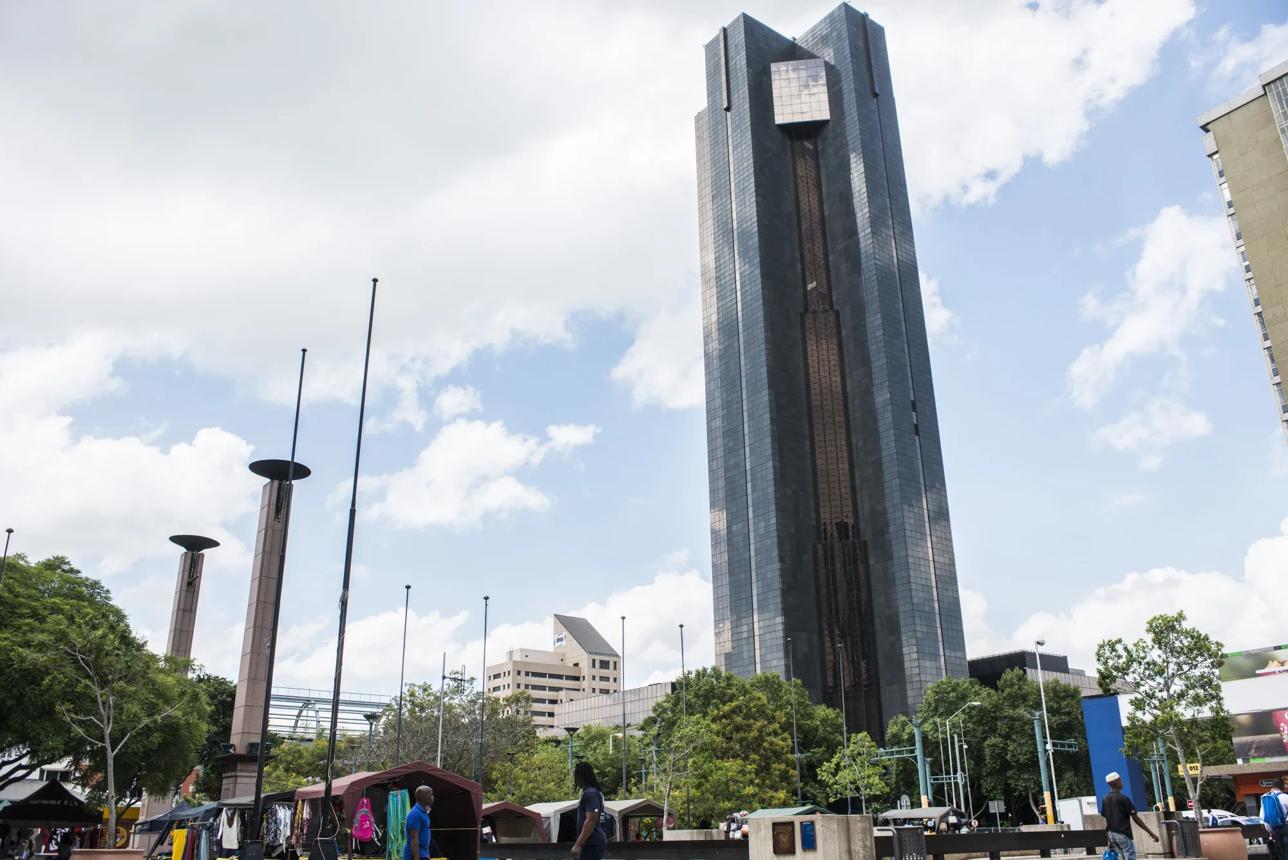
“The South African Reserve Bank (SARB) and the People’s Bank of China (PBOC) have renewed their bilateral currency swap agreement for five years, allowing the two central banks to exchange local currencies worth up to CNY30 billion (approximately R74 billion). The arrangement is designed to support trade and direct investment between South Africa and China while providing an additional mechanism for addressing short-term balance-of-payments pressures.”
South Africa and China Renew R74 Billion Currency Swap Agreement as Banking Cooperation Deepens
A five-year agreement strengthens financial cooperation
South Africa and China have taken another important step towards strengthening their financial relationship following the renewal of a bilateral currency swap agreement between their central banks. The agreement, announced by the South African Reserve Bank on 30 October 2026, provides a framework for exchanging the two countries’ currencies up to a maximum value of 30 billion Chinese yuan, equivalent to approximately R74 billion.
The renewed arrangement will remain effective for five years from 23 October 2026. It represents an important development for South Africa’s banking sector because it provides an additional financial mechanism through which the country can support international trade, investment and financial cooperation with one of its major trading partners.
The agreement involves the South African Reserve Bank and the People’s Bank of China. Both institutions play important roles in maintaining monetary and financial stability in their respective economies.
Through this arrangement, the two central banks can exchange their national currencies when required, subject to the agreement’s conditions and limits. The objective is to make financial cooperation easier while helping to address certain short-term pressures that may arise in international payments.
Importantly, the R74 billion figure represents the maximum potential exchange facility. It does not mean that South Africa has received R74 billion in cash, nor does it establish that the entire facility has been used.
Understanding the R74 billion currency swap facility
A currency swap agreement is a financial arrangement between two parties that allows them to exchange currencies under agreed conditions. In this particular case, the South African and Chinese central banks have established a framework that allows them to exchange their respective currencies up to the agreed limit.
The facility is particularly relevant because international businesses frequently need access to foreign currencies to settle payments for imported goods, exported products, services and investments.
For example, a South African business purchasing machinery from China may need to make payments in Chinese yuan. Similarly, a Chinese company investing in South Africa may need access to South African rand.
Where international transactions depend heavily on a third currency, businesses can face additional exchange-rate exposure and transaction costs. Local-currency settlement arrangements can provide another possible route for facilitating financial transactions.
However, the currency swap agreement does not automatically eliminate foreign-exchange costs or guarantee cheaper transactions for every business. Its practical benefits will depend on how participating financial institutions and eligible counterparties use the facility.
The SARB has confirmed that the agreement allows exchanges of up to CNY30 billion, equivalent to approximately R74 billion.
What the agreement means for South African banks
The renewed agreement has potential implications for South Africa’s commercial banking industry.
Banks play an essential role in facilitating international payments, foreign-exchange transactions, trade finance and investment transfers. Consequently, stronger financial cooperation between the central banks could create opportunities for financial institutions supporting businesses that trade with China.
South African banks serving importers and exporters may benefit from an environment in which local-currency settlement arrangements become more accessible.
For businesses, international transactions can involve several financial considerations, including exchange-rate movements, payment processing, settlement periods and access to foreign currency.
A more developed local-currency settlement framework could help eligible businesses explore alternatives to conventional payment arrangements.
Nevertheless, the agreement is between the two central banks. It should not be interpreted as a guarantee that every South African commercial bank will automatically receive additional liquidity or that every customer will immediately obtain access to yuan-denominated banking services.
Commercial banks would still need to comply with applicable regulations, operational requirements and the relevant arrangements governing international payments.
The agreement therefore provides a foundation for potential improvements rather than an immediate change to all banking products and services.
Strengthening trade between South Africa and China
China is an important trading partner for South Africa, with economic cooperation covering manufacturing, mining, machinery, technology, consumer products and infrastructure-related activities.
South African businesses purchase a wide range of products from Chinese suppliers. At the same time, South African exporters seek opportunities to supply agricultural products, minerals and other goods to international markets.
International trade requires reliable financial infrastructure. Companies must be able to receive payments, settle invoices, manage foreign-exchange exposure and finance commercial activities.
The currency swap agreement could support these activities by providing the central banks with an additional mechanism for exchanging local currencies.
For smaller businesses, international payments can be particularly challenging because they may have fewer financial resources and less bargaining power than large multinational companies.
If the renewed arrangement contributes to more accessible local-currency settlement options, it could potentially improve the financial environment for businesses participating in bilateral trade.
However, the Reserve Bank has not announced specific reductions in transaction fees, new lending products or guaranteed benefits for individual exporters and importers.
The practical effect will therefore depend on implementation and the participation of financial institutions.
Managing short-term balance-of-payments pressures
One of the central objectives of the renewed agreement is to help mitigate short-term balance-of-payments pressures.
A country’s balance of payments records transactions between residents and the rest of the world. These transactions include imports, exports, investment income, financial investments and other international financial movements.
South Africa’s international financial position can be influenced by global economic conditions, commodity prices, capital movements and changes in investor confidence.
When international payment pressures emerge, access to foreign currency and reliable financial arrangements becomes particularly important.
The renewed swap facility gives the two central banks an additional instrument that may assist with eligible liquidity requirements connected to their financial cooperation.
Nevertheless, it is important to distinguish between a currency swap facility and South Africa’s overall foreign-exchange reserves.
The agreement does not replace the Reserve Bank’s existing monetary policy responsibilities, foreign-reserve management or other financial-stability instruments.
Nor does it guarantee that South Africa will avoid future balance-of-payments challenges.
Instead, it adds another possible source of support within the broader framework of international central-bank cooperation.
The importance of the ZARONIA interest-rate benchmark
Another important feature of the renewed agreement concerns the interest rate applicable to South African rand funds used under the arrangement.
According to the Reserve Bank, interest on any rand funds utilised will be referenced to the South African Rand Overnight Index Average, commonly known as ZARONIA.
ZARONIA is an overnight reference interest rate used in South Africa’s financial markets.
Its use is relevant because financial institutions require transparent and reliable benchmarks when calculating interest obligations and managing funding arrangements.
The inclusion of this benchmark provides an established reference for determining the interest applicable to rand funds used under the swap facility.
It also reflects the continued development of South Africa’s domestic financial-market infrastructure.
However, the Reserve Bank’s announcement does not provide a detailed breakdown of every possible transaction cost, the applicable yuan-side interest arrangements or the precise conditions governing individual drawings.
Those details should not be assumed without further official documentation.
A longer history of financial cooperation
The renewed agreement builds on an existing relationship between the South African Reserve Bank and the People’s Bank of China.
The Reserve Bank has highlighted the importance of the 2013 agreement that allows it to invest in China’s onshore bond market.
This history demonstrates that financial cooperation between the two institutions extends beyond a single currency swap arrangement.
Over time, international central banks have increasingly explored ways to improve financial cooperation, strengthen market connections and facilitate international investment.
For South Africa, maintaining strong relationships with major international financial institutions is important because the country participates actively in global trade and investment markets.
China’s economic importance makes the relationship particularly relevant.
The five-year renewal also provides a longer period within which both central banks can maintain their agreed framework.
Potential benefits for South African businesses and consumers
Although the arrangement operates at central-bank level, its broader implications may extend to businesses and consumers.
Businesses involved in importing and exporting could potentially benefit from improved financial channels if commercial banks develop services that make local-currency settlement more accessible.
Manufacturers, wholesalers, agricultural exporters and companies purchasing equipment from China may be among the businesses interested in these developments.
For consumers, any indirect benefits would depend on whether businesses experience improvements in payment efficiency, financing or transaction costs.
For example, an importer that manages international payments more efficiently may be better positioned to manage operating expenses.
However, it would be premature to suggest that the agreement will immediately reduce the prices of imported products or lower consumer inflation.
Product prices depend on several factors, including exchange rates, shipping costs, production expenses, taxation and domestic market competition.
The currency swap is one financial instrument within a much wider economic environment.
What investors and financial institutions should watch
South African banks, financial-market participants and investors will be interested in how the renewed agreement is implemented over the coming years.
Important developments to monitor include whether the facility is drawn upon, how participating financial institutions use the arrangement and whether local-currency settlements become more widely available.
The amount actually utilised will be particularly important.
A facility’s maximum value indicates its potential capacity, but it does not demonstrate the level of financial activity taking place.
Investors should also distinguish between the agreement’s potential benefits and the wider economic factors influencing the rand, interest rates and international capital flows.
The renewal does not establish a guaranteed improvement in the rand’s exchange rate or provide a direct forecast for South African economic growth.
Instead, it demonstrates continued institutional cooperation between two major central banks.
Strengthening South Africa’s position in international banking
The renewal comes at a time when international financial institutions are exploring ways to diversify payment arrangements and improve cross-border financial connectivity.
For South Africa, stronger relationships with international partners can support its position as a financial centre serving businesses across the African continent.
The country has an established commercial banking industry, developed financial markets and institutions with experience in international transactions.
Cooperation with the People’s Bank of China could complement these existing capabilities by supporting financial links between South African and Chinese markets.
Nevertheless, successful implementation will require effective regulatory oversight, appropriate risk management and cooperation between relevant financial institutions.
Central banks must ensure that arrangements involving international currencies operate within their monetary, financial-stability and legal responsibilities.
Conclusion: A strategic development for South African banking
The renewal of the R74 billion currency swap agreement between the South African Reserve Bank and the People’s Bank of China represents an important development in South Africa’s international banking relationships.
The five-year arrangement provides a framework for exchanging up to CNY30 billion in local currencies, supporting bilateral trade and investment while helping address short-term balance-of-payments pressures.
Although the agreement does not guarantee immediate benefits for individual customers or businesses, it creates additional possibilities for financial cooperation.
Its long-term significance will depend on how effectively the two central banks and participating financial institutions use the arrangement.
For South Africa, maintaining reliable international financial relationships remains essential to supporting trade, investment and economic resilience.
The renewed agreement therefore represents more than a routine central-bank announcement. It is an important element of the country’s continuing efforts to strengthen international banking cooperation and improve its financial connections with global trading partners.



