




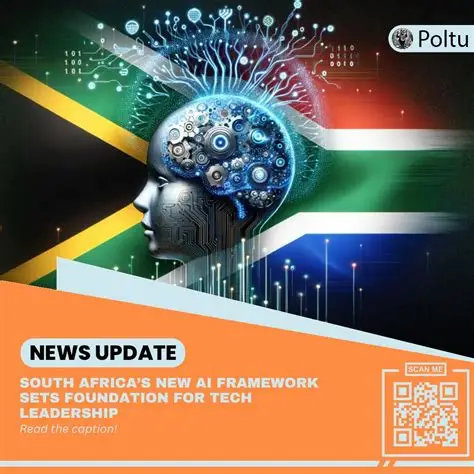
“South Africa’s Department of Communications and Digital Technologies, led by Minister Solly Malatsi, has confirmed that a revised national AI policy draft will be completed by November 2026 and opened for public comment early in 2027. The move follows the withdrawal of the initial draft after it was discovered that several academic references were fabricated, sparking debate over regulatory integrity and the future of AI governance in the country.”
Artificial Intelligence (AI) has rapidly become a cornerstone of technological advancement worldwide, and South Africa is no exception. The country’s push to establish a comprehensive AI policy framework reflects both the opportunities and challenges of integrating AI into governance, commerce, and society. On September 1, 2026, Communications and Digital Technologies Minister Solly Malatsi announced that the revised AI policy draft will be finalized by November 2026, marking a pivotal step in shaping South Africa’s digital future.
Background: The Withdrawn Draft
The original draft of South Africa’s national AI policy was published in April 2026, intended to guide ethical AI adoption and innovation. However, it was withdrawn in June after investigations revealed that six academic references cited in the document were fabricated—products of what experts call “AI hallucination.” This revelation undermined confidence in the policy process and prompted suspensions of two officials from the Department of Communications and Digital Technologies.
Why the Revised Policy Matters
The revised draft is expected to address several critical areas:
- Ethical AI governance: Ensuring AI systems do not perpetuate bias or discrimination.
- Procurement clarity: Establishing transparent guidelines for government acquisition of AI technologies.
- Public trust: Restoring confidence in regulatory processes after the citation scandal.
- Innovation support: Encouraging startups and established firms to invest in AI solutions with clear legal frameworks.
This policy is not just a bureaucratic exercise—it will directly influence how AI is deployed in sectors such as healthcare, education, finance, and public administration.
Stakeholder Reactions
Civil society groups, academia, and private sector stakeholders have expressed cautious optimism. While many welcome the government’s renewed commitment, concerns remain about whether the revised draft will adequately reflect South Africa’s unique socio-economic context. Critics warn against a “copy-and-paste” adoption of foreign AI laws, arguing that South Africa must craft regulations tailored to its own challenges, including inequality, digital divides, and environmental sustainability.
Ethical and Legal Dimensions
UCT researcher Nokuthula Olorunju has emphasized the need for a constitutional approach to AI regulation, highlighting risks such as racial bias, gender inequality, and environmental degradation linked to AI systems. Her work suggests that South Africa must integrate constitutional principles—privacy, equality, and freedom of expression—into its AI governance framework.
Economic Implications
The revised AI policy will also have significant economic ramifications. Procurement professionals anticipate new compliance requirements for government contracts involving AI solutions. This could reshape the vendor landscape, creating opportunities for local innovators while raising the bar for international firms seeking entry into South Africa’s public sector market.
Risks and Challenges
- Regulatory delays: Prolonged consultations could stall innovation.
- Public skepticism: The citation scandal has damaged trust in government-led AI initiatives.
- Global competition: South Africa risks falling behind if its policy framework is not finalized swiftly.
- Digital divide: Without inclusive measures, AI adoption could exacerbate inequality.
Looking Ahead
Minister Malatsi has committed to submitting the revised draft to Cabinet by November 2026, with public consultations expected to open in January 2027. This timeline underscores the urgency of establishing regulatory clarity in a rapidly evolving technological landscape.
Conclusion
South Africa’s journey toward a national AI policy reflects both the promise and peril of technological governance. The revised draft represents an opportunity to reset the narrative, ensuring that AI adoption is ethical, inclusive, and economically beneficial. If successful, South Africa could position itself as a leader in AI governance on the African continent, setting standards that balance innovation with accountability.



