




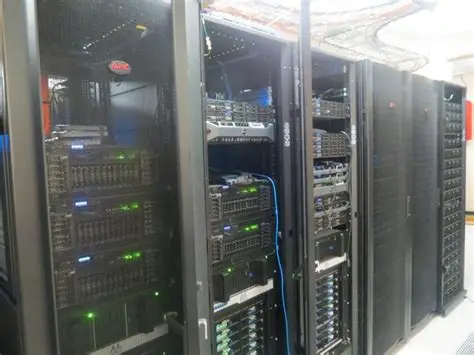
“South Africa has announced a landmark R292 million investment to replace its Lengau supercomputer with a cutting-edge 4-petaflop system, tripling national computing capacity. The project, led by the Department of Science and Innovation (DSI) and CSIR, will bolster research in genomics, climate modeling, AI, and astronomy, ensuring South Africa remains at the forefront of global scientific innovation.”
South Africa has taken a bold step into the future of computing with the announcement of a R292 million investment in a new supercomputer, slated for deployment in 2026/27. This initiative will replace the country’s current flagship system, Lengau, housed at the Centre for High Performance Computing (CHPC). The new system promises 4 petaflops of performance, tripling the nation’s computing capacity and cementing South Africa’s role as a leader in high-performance computing (HPC) across the African continent.
Legacy of Lengau
Launched in 2016, Lengau—meaning “cheetah” in Setswana—was once Africa’s most powerful supercomputer, delivering 1.3 petaflops of performance. It supported diverse applications:
- Weather and seismic modeling crucial for disaster preparedness.
- Drug discovery and genomics, including vital contributions during the COVID-19 pandemic in sequencing SARS-CoV-2.
- Fluid dynamics and computational chemistry, advancing industrial innovation.
- Astronomy projects like the Square Kilometre Array (SKA) and MeerKAT telescope, which rely on massive data processing.
Lengau’s contributions were pivotal, but as global computing demands surged, its limitations became increasingly apparent.
The New Supercomputer: A Leap Forward
The upcoming system will deliver 4 petaflops, a threefold increase in capacity. This leap is not just about raw speed—it represents a strategic investment in South Africa’s scientific and industrial future. The Department of Science and Innovation (DSI) and the Council for Scientific and Industrial Research (CSIR) are spearheading the project, ensuring alignment with national priorities.
Key areas of impact:
- Genomics: Accelerating personalized medicine and disease research.
- Climate modeling: Enhancing predictive capabilities for droughts, floods, and climate change adaptation.
- Artificial Intelligence (AI): Supporting machine learning research and industrial automation.
- Astronomy: Processing vast datasets from SKA and MeerKAT, reinforcing South Africa’s global leadership in radio astronomy.
Strategic Importance
This investment positions South Africa as a continental hub for HPC, attracting international collaborations and strengthening local innovation ecosystems. It also supports the country’s National Development Plan, which emphasizes science, technology, and innovation as drivers of economic growth.
Economic and Social Benefits
Beyond academia, the supercomputer will:
- Support industry: From mining to pharmaceuticals, enabling advanced simulations and product development.
- Boost education: Providing students and researchers access to world-class computing resources.
- Enhance public services: Improving disaster management, healthcare planning, and environmental monitoring.
Challenges and Considerations
While the investment is groundbreaking, challenges remain:
- Energy consumption: Supercomputers are power-intensive, requiring sustainable energy solutions.
- Skills gap: South Africa must invest in training HPC specialists to maximize the system’s potential.
- Cybersecurity: Protecting sensitive data from cyber threats is paramount, especially given recent attacks on public infrastructure like Rand Water.
Global Context
Globally, nations are racing to build ever-faster supercomputers. While South Africa’s new system will not rival exascale machines in the US or China, it represents a continental milestone. For Africa, this is a statement of intent: the continent is ready to compete in the digital and scientific arenas.
Conclusion
The deployment of South Africa’s new supercomputer marks a transformative moment in the nation’s technological journey. By tripling computing capacity, the country is not only investing in science but also in its future resilience, competitiveness, and innovation. As the world faces complex challenges—from pandemics to climate change—South Africa’s bold move ensures it will be part of the solution.



