




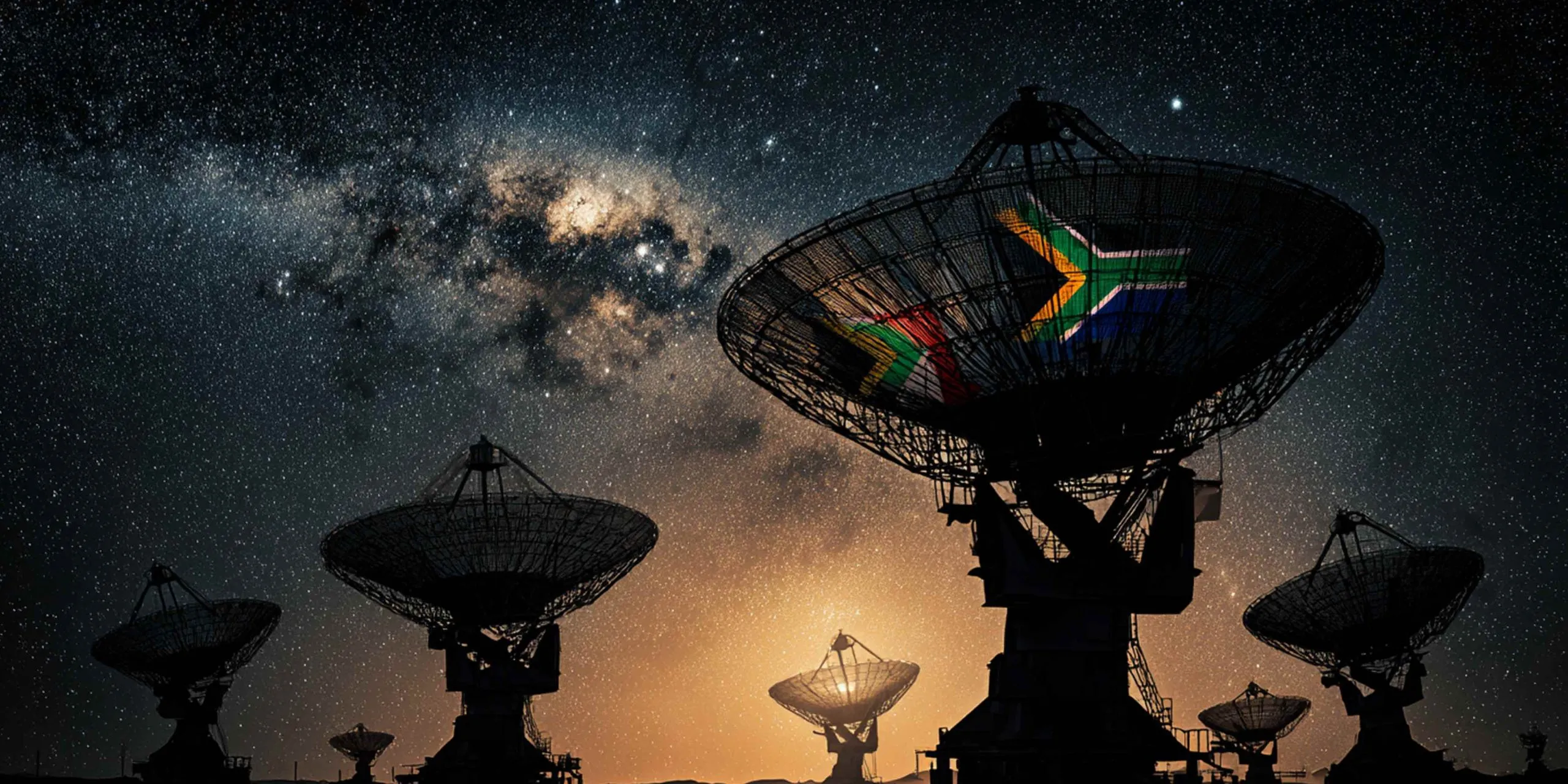
“The South African Astronomical Observatory has announced a series of public astronomy events from July 27–31, including stargazing sessions, guided tours, and free educational visits, to celebrate National Science Month. The initiative highlights South Africa’s rich astronomical heritage and aims to make science more accessible to families, learners, and enthusiasts.”
South Africa’s role in global astronomy continues to expand, and today’s announcement by the South African Astronomical Observatory (SAAO) marks a significant step in public engagement. As part of National Science Month, the Observatory will host a series of events designed to bring astronomy closer to everyday citizens, reinforcing the country’s reputation as a hub for space science and innovation.
Background
Founded in 1820, the SAAO is one of the oldest astronomical institutions in the Southern Hemisphere. It has played a pivotal role in both research and education, contributing to discoveries in astrophysics and supporting international collaborations such as the MeerKAT radio telescope and the Square Kilometre Array (SKA) project. These initiatives have positioned South Africa as a leader in space science, making the Observatory’s public outreach efforts particularly impactful.
Details of the Program
The July program will run from July 27 to July 31, 2026, and includes:
- Stargazing sessions using advanced telescopes, allowing visitors to observe planets, nebulae, and galaxies.
- Guided tours of the Observatory’s historic grounds, showcasing its legacy in Cape Town’s scientific development.
- Free educational visits for families, learners, and schools, designed to inspire the next generation of scientists.
These events are coordinated by the South African Agency for Science and Technology Advancement (SAASTA), which oversees National Science Month activities nationwide.
Significance
The initiative is not merely recreational; it is part of a broader national strategy to promote STEM education and encourage careers in science and technology. By opening its doors to the public, the SAAO is helping to demystify astronomy and highlight its relevance to everyday life, from healthcare innovations to satellite communications.
Public Engagement
Astronomy has long captured the imagination of South Africans, and the Observatory’s outreach program is expected to attract thousands of visitors. Families will have the opportunity to explore the universe together, while learners will gain hands-on exposure to scientific instruments and methods. This aligns with government efforts to increase science literacy and foster innovation-driven economic growth.
Broader Context
South Africa’s investment in astronomy is part of a continental push to strengthen Africa’s role in space exploration. Recent developments include:
- The launch of a state-backed satellite communications company to expand national connectivity.
- Efforts to build ground infrastructure for satellite operations across Africa.
These initiatives demonstrate how astronomy and space science are intertwined with broader technological and economic goals.
Challenges
Despite these advances, challenges remain. Funding constraints, limited access to advanced training, and the need for stronger international partnerships continue to affect the pace of progress. Public engagement programs like the one announced today are crucial in building grassroots support and ensuring that space science remains a national priority.
Conclusion
The SAAO’s July program represents more than just stargazing—it is a celebration of South Africa’s scientific heritage and a commitment to future innovation. By engaging the public, the Observatory is helping to ensure that astronomy remains a vibrant part of the nation’s cultural and educational landscape.



